
Bayesian Digital Twins Show Potential For Predicting Prognosis And Treatment Response
A conversation between Concr CSO Uzma Asghar, MBBS, BSc, MRCP, Ph.D., and Clinical Leader Executive Editor Abby Proch

Bayesian digital twins — virtual replicas of individual patients that continuously learn and adapt to real-world data — have the potential to replace conventional predictive models. Current methods rely on static data sets or single data types, while Bayesian digital twins integrate diverse clinical, genomic, and digital pathology inputs to simulate how, in the case of the VISION study, a patient’s cancer behaves and responds to treatment.
Concr’s retrospective observational VISION study demonstrated how multimodal data could be used to predict prognosis and optimize treatment selection for early triple negative breast cancer (TNBC). The study showcased how adaptive modeling could stratify patients and anticipate nonresponders, potentially reducing unnecessary toxicity and improving outcomes.
In the following Q&A, consultant medical oncologist, Uzma Asghar, MBBS, BSc, MRCP, Ph.D., discusses how Bayesian digital twins are trained, validated, and trusted in clinical settings, as well as explores regulatory trust and the potential for integrating these models into interventional trials.
Clinical Leader: What is a Bayesian digital twin, and how does it differ from conventional practices?
Uzma Asghar: It's a virtual replication of a system, which continuously evolves. So, for our study, a Bayesian digital twin was actually a digital twin of an individual cancer patient, but you can also create digital twins of organs or systems. A digital twin is connected to the real person. So, everything that's happening to the real person is being mimicked by the digital system. And that can happen only if the information is being input in real time. In a cancer patient, if they got a diagnosis of cancer, we could generate responses to that treatment before they started treatment and then follow that patient through their cancer journey. The Bayesian part is where it predicts what's going to happen based upon what it's learned before, either from patients or what the model's been trained upon.
Is there a point at which you're collecting data and then it tips over into the predictive part of things? Or is it always collecting and predicting as you move along?
To get the model up and running, we need to train the model. This model needs 7x less data than traditional models before generating accurate predictions and that's the beauty of having a Bayesian model. For a “true digital twin” you need to ideally collect data in real time, but the amount of data needed moving forward would be much smaller. So it might be, for example, at the time of breast cancer recurrence you have a cancer biopsy or a blood test looking at a ctDNA, and that data is input into the model to generate new predictions about treatment response.
How does this differ from any predictive technologies being used?
Currently, most of the predictive technologies such as gene platforms look at one particular dimension, such as genomics, to make predictions about future treatments. The difference here is that we are combining multiple different data modalities. Normally, most models are fixed in their ability to make predictions. But what the Bayesian digital twins do is adapt to real-world events. So, they will learn from things that are happening and then change their response accordingly. It’s effectively what we do as humans on a day-to-day basis.
How do you establish trust in this technology, that it's accurate in its predictions?
There's been a lot of work laying down regulatory frameworks with regard to the level of evidence needed. I'm treating digital twins like a diagnostic platform. I want to know: How accurately does it make a prediction? How many times does it make the wrong prediction? And that's important. To gain trust, you need to have transparency and understand technology limitations. Accuracy metrics provide information about how well this model performs compared to any other diagnostic. It’s about making it clear what the limitations of the model are and what the strengths of the models are.
People need explainability. They want to know what goes into the model. It's like buying something from the supermarket. You want to know the ingredients. The ingredients here are the information that's going into the model.
Specific to VISION, it combined clinical, genomic, and digital pathology data, but what other kind of data modalities could be included when generating digital twins?
VISION is an observational retrospective clinical study (UK) which successfully collected data from 149 women to help train and test the model, a step towards clinical validation of digital twin in triple negative breast cancer. We started off quite conservatively because the concept was so novel and we wanted to get people to buy into the concept. The study was a success. Moving forward, we could integrate data collected routinely as part of a cancer patient's journey, such as lifestyle factors like smoking status and diet or capturing drug toxicities. Certain cancer drugs cause abnormal blood sugar, and blood sugar can now be monitored in real time.
Liquid biopsy testing is relatively easy to do and may prove extremely useful for building molecular information into the model over time and help finesse its predictive and prognostic abilities. Effectively, you could build into the model most clinical/molecular features as long as you can quantify it and convert it into a number or a binary status.

How can digital Bayesian digital twins be used to stratify patients? We see this prospectively, but what challenges might arise when trying to use it in real time?
Data collected from the VISION study was used to train the model to stratify patients according to their prognosis. For example, approximately 40% of women with aggressive triple-negative breast cancer have a high probability of not being alive by the five-year time point despite receiving the “best” cancer treatment. The model can now predict prognosis and identify important high risk clinical features. Molecular information about the cancer i.e. “cancer biology” was extracted from the diagnostic sample. My decision to use a diagnostic sample in preference to a liquid biopsy was because I estimated that only a third of early breast cancer patients would have detectable ctDNA. Hypothetically all patients should have a diagnostic sample.
The second way we are training Bayesian digital models is to stratify treatment choice. The model is particularly good at predicting what treatments are NOT going to work (NPV 91% for anthracycline-taxanes). This could allow clinicians in the very near future to understand what treatments are going to be beneficial or not, so women are not exposed to unnecessary drug toxicities without benefiting.
Bayesian digital twin platform is like a prognostic or predictive biomarker platform. The advantage of Bayesian digital twin is its flexibility to make multiple predictions for different drugs and different clinical events platform, whereas the current standard is one biomarker for one drug. Hypothetically, an individual with initially early breast cancer relapses and develops metastatic disease, the same platform is relevant and links previous cancer responses to predict future cancer outcome. You don't need to switch over to a different diagnostic platform. And the other advantage is that the model has the capacity to continuously learn. As you train it on new drugs coming in, it can incorporate these into its predictions.
Integrating a complex Bayesian engine like this is challenging in a routine workflow. How do you get buy-in and develop frameworks to make sure it will be trusted in interventional trials, not just retrospective work?
There are two separate parts: a retrospective stage and a prospective stage. VISION, so far, is a retrospective study and more work is needed to build trust. The next step is testing the model in prospective interventional studies to understand if patients have better outcomes as a result of using the model.
Based upon the work that we've done, the best institutions to use test this technology are those that have strong genomic facilities available because the modeling needs genomic input. So, if they can cope with sequencing and giving their patients the results in time, the modeling can be easily integrated into the routine workflow. It forms a digital interface and then enables, for example, people to upload a genomic profile and enter some clinical details to generate the predictions.
For professionals in clinical development or clinical operations, what are some of your top lessons learned from VISION about how to successfully stand up a digital twin program? What are some wins or challenges?
The win is that we have created the one platform that can predict responses to different types of chemotherapies which can continuously learn and integrate new cancer drugs. Whereas, if you look at the current existing space, we must use different platforms for different drugs which is challenging because the tissue gets exhausted and there is no learning. The advantage with Bayesian digital twins is that you can do an unbiased test once, such as a whole exome sequencing and an RNA sequencing, and then generate predictions for several cancer drugs. In my opinion, this is a huge win.
The challenge is having enough tissue samples. At the moment, you need both DNA and RNA to get maximum accuracy for digital twins. The model was also trained FFPE samples which are poorer quality samples but hopefully this will allow implementation of the model in the real world. For some individuals, we had to deescalate to just the transcriptome due to low quality, and that is challenging.
The other challenge is being able to generate predictions for clinicians in real time, and that is very much reliant upon the local infrastructure.
Do academic sites and other partners need to develop a level of expertise or familiarity in order to fulfill their part of the equation as far as collecting the samples and the data that's needed? What’s the learning curve?
We think we have made it as simple as possible. Soon, local sites just need to upload genomic and clinical information onto a portal, which will generate a personalized prediction report, which they can choose to action.
The report will inform them of the “probability” that this person's is going to respond to this treatment, what the “best” treatment regimen based upon available choices, and what their current outcome would look like with treatment A versus treatment B versus treatment C.
Hopefully using digital twins will help simplify things. Several clinicians who didn't train in the era of genetics or genomics, can have trouble trying to understand what the mutations and copy number changes mean for their patient. The digital twin model takes the genomic and genetic data and converts it into actionable information, which means you don't need to be a genomics or genetics expert. You just need to be able to upload your patient's report and then the model will tell you the relevance of the genomic profile. And it doesn't focus on just one mutation. It's not looking at a TP53 or PIK3CA or a KRAS or a BRAF. It's looking at all the genetic changes in that sample and helping it understand the importance and then generated treatment predicting outcomes.
Do you need a human liaison to get some of these folks to contextualize the output?
To make it scalable, it needs to be self-explanatory. The report will help contextualize the predictions against standard of care. I imagine most people have never heard of a digital twin or understand the concept. In terms of raising awareness, some baseline education about the digital technologies, how you interpret the results, and understanding the limitations is necessary. Most of the time the regulatory processes mandate technology developers to fully characterized the features, similar to the Summary Product of Characteristics (SPC) for drugs.
About The Expert:
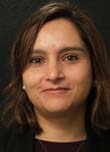 Uzma Asghar, MBBS, BSc, MRCP, Ph.D., is a consultant medical oncologist at Guy’s and St. Thomas’ NHS Foundation Trust (UK) specializing in breast cancer. She completed her Ph.D. at the Breast Cancer Now Institute of Cancer Research and is co-founder of Concr, an AI-enabled precision oncology start-up. She leads biomarker research and the VISION study in triple-negative breast cancer and is committed to advancing innovation to improve patient outcomes.