
Biotech Ecosystem Helps Advance A New Approach To Inflammation Into Trials
A conversation between BioAegis Therapeutics CEO Susan Levinson, Ph.D., and Clinical Leader Executive Editor Abby Proch
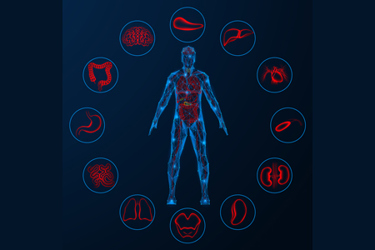
Inflammation is a normal part of the immune response, but it can become a risk factor for mortality. Yet, for conditions requiring treatment, the options are limited. Current approved therapies rely on suppressing the immune system, sometimes to the point of compromising patient safety.
What’s needed and currently in development, says BioAegis CEO Susan Levinson, is a therapy that addresses excessive inflammation while preserving the body’s ability to respond to infection and injury. The biotech is therefore advancing a novel platform based on plasma gelsolin (pGSN), a naturally occurring human protein that helps regulate the body’s inflammatory response and supports innate immunity.
Developing this therapy does not (and did not) happen with individual effort alone. In this Q&A, Levinson talks about the therapy’s unique MOA, but she also discusses the role outside players have in driving this potential lifesaving therapy through the clinic.
Clinical Leader: What makes your approach different from traditional anti-inflammatory therapies?
Susan Levinson, Ph.D.: Plasma gelsolin (pGSN), which is at the core of our immune system, is a major regulator of inflammation, designed to permit inflammation where it is needed to counter threats such as infection and injury but to also quench the fire when it is time to shift into a healing mode.
But there is a catch. The protein is consumed by the inflammatory process and if the levels fall too low, the patient is at risk of severe morbidity or mortality.
So, BioAegis’ approach is to simply restore the gelsolin levels, with the identical protein manufactured using recombinant technology, rhu-pGSN, to supplement the needs of the patient and bring inflammation back under control.
Rhu-pGSN provides precision modulation of the inflammatory process. It is unique in that it tempers the out-of-control inflammatory process but does this without suppressing immune function. All the existing approved powerful anti-inflammatories commercially available work by suppressing immune function to control inflammation.
BioAegis is based at the New Jersey Bioscience Center. How has that environment supported your growth and development?
It is important for development-stage companies to operate in a biotech ecosystem that is supportive in many aspects, including financial incentives provided by the state, access to talent to guide product development and all aspects of operations, as well as other companies at similar stages of development to share stories of how to move forward and help to solve the many issues associated with young and growing companies.
New Jersey has long been a global hub for pharmaceutical and biotech innovation, and that depth of expertise translates into meaningful advantages, ranging from access to experienced talent across clinical development and operations to proximity to leading academic institutions, industry partners, and service providers.
Equally important is the state’s commitment to fostering innovation through forward-thinking policies and programs. Initiatives from the New Jersey Economic Development Authority (NJEDA), such as the Net Operating Loss (NOL) Program and the Angel Investor Tax Credit Program, provide tangible value not only to companies like ours but also to the investors who support us. These programs help strengthen the capital formation environment by offering meaningful incentives, including tax credits that enhance investor returns and encourage continued investment in high-potential biotech companies.
Beyond financial support, being part of a collaborative ecosystem of like-minded companies at similar stages of development creates opportunities to share insights, navigate challenges, and accelerate progress. Taken together, the combination of strategic location, access to talent, state support, and a strong innovation network has played an important role in enabling BioAegis to advance our programs and move promising science closer to patients.

Additionally, BioAegis has received two FDA Fast Track designations for recombinant human plasma gelsolin (rhu-pGSN) in a single year. How does this regulatory validation shape your clinical and regulatory road map?
To qualify for Fast Track, the disease indication must be a condition with limited or no alternative treatments, and the company’s development program must have a strong rationale to address an important unmet medical need in that disease. We received two Fast Track designations because our development programs met these rigorous criteria in two separate diseases, acute respiratory distress syndrome and decompression sickness.
Fast Track designation acknowledges that we are pursuing a disease indication of great importance with no alternative options currently available. It provides some increased access to FDA and is the first step in seeking a Breakthrough designation once we have clinical proof of concept. This then opens the door to attractive incentives for faster approval for commercialization.
What are the key milestones you're focused on over the next 12 to 18 months?
In the next 12 to 18 months we expect to provide clinical proof of concept in both of the Fast Track indications that we are studying. We also anticipate moving forward to advance other programs in our portfolio. We also hope to integrate our AI collaboration into our clinical development program, further advancing a precision medicine approach to inflammatory disease.
How do you see technologies like AI shaping the future of drug development?
AI has the potential to improve how we understand complex diseases and identify which patients are most likely to benefit from a given therapy, particularly in heterogeneous conditions like inflammatory disease.
At BioAegis, we view AI as a tool to complement strong biological insight. Our recent collaboration with Prenosis, a leader in biology-driven artificial intelligence, applies advanced analytics to clinical data from our Phase 2 ARDS trial to identify biological signatures and patient subpopulations that may respond best to our product, rhu-pGSN. Ultimately, we believe integrating AI into drug development can improve trial efficiency and support a more precise, targeted approach to treating patients.
Finally, if there’s one lesson from your journey every clinical development professional should understand, what would it be?
Have an aspirational vision to address patient needs, but be prepared to pivot because the path to achieving great outcomes is never linear!
Editor’s note: This transcript has been edited for clarity.
About The Expert:
 Susan Levinson, Ph.D., is a cofounder and the CEO of BioAegis Therapeutics. She has over 30 years of life sciences consulting and pharmaceutical experience spanning the entire value chain — from the lab bench to marketing.