
Brazil's Regulatory Transformation: Building And Supporting Sites Beyond The AMCs
A conversation between Brazilian Society of Clinical Oncology (SBOC) President-elect Fabio Franke and Clinical Leader Executive Editor Abby Proch

Academic medical centers (AMCs) might be the predominant hosts of clinical research studies, but globally, and in Brazil, the site landscape is diversifying. In this third and final installment of conversations coming out of “Clinical Development in LATAM: Brazil Unlocked,” SBOC President-elect Fabio Franke discusses clinical site capabilities beyond the well-known medical centers in Brazil’s major capitals.
Franke, who built the ONCOSITE research center in southern Brazil, explains what it takes to build sustainable trial capacity at emerging centers and how medical societies can support that evolution.
Clinical Leader: Where is Brazil’s biggest opportunity for clinical trial enrollment, and where are patients being lost before reaching a research site?
Fabio Franke: I see the greatest opportunity in connecting clinical research with the places where patients already receive cancer care. Through my work at ONCOSITE and in leading clinical research at Oncoclínicas [a site network], I have focused on bringing research closer to routine oncology practice, including outside the major capitals.
Patients can be lost at several points: before an accurate diagnosis, while waiting for molecular testing, or when treatment begins without anyone considering a clinical trial. Distance and the cost of travel create additional barriers.
We need to identify potential candidates earlier and give treating oncologists a clear referral pathway. Clinical trials should be considered at each relevant treatment decision, while the patient still has the opportunity to participate.
Based on your work at ONCOSITE, what would it take to build sustainable trial capacity beyond Brazil’s best-known academic centers?
My experience building ONCOSITE in Ijuí, in southern Brazil, has shaped my belief that geography should not determine access to research. What matters is a committed team, reliable infrastructure, and consistent quality.
Sustainable capacity requires investment in people: investigators with protected research time, dedicated coordinators, research nurses, and strong regulatory and data support. It also requires reliable relationships with pathology, imaging, laboratories, and other clinical services.
Financial sustainability is equally important. Sites need realistic budgets, timely payments, and continuity between studies to retain experienced staff. Sponsors can help by developing long-term relationships with emerging centers. A site needs a pathway to grow, with appropriate studies, mentorship, and clear expectations.
How can medical societies help identify capable sites, develop investigators, and build referral networks?
Medical societies have a unique advantage: They connect physicians across institutions and regions. They can use that reach to identify motivated investigators and promising centers that may not yet be visible to global sponsors.
My involvement in SBOC began in 2017 as vice president for research. In 2018, we created SBOC’s clinical research training program. That experience reinforced my belief that education is an essential starting point, but it needs to be followed by practical experience and mentorship.
Societies can connect new investigators with established research teams and help community oncologists understand when and where to refer patients. The referring physician should remain involved in the patient’s care, with clear communication from the research site.

As SBOC’s incoming president, where do you see the greatest opportunity for practical impact?
I would prioritize three areas: expanding investigator training, identifying centers with the potential to develop, and making patient referrals easier.
I want us to build on the training program we started in 2018, with more practical mentorship and opportunities for younger oncologists across Brazil. We can also help map research capabilities and identify what each emerging center needs to become ready for specific types of trials.
For referrals, we should help oncologists find recruiting studies and reach the appropriate research team quickly. International partnerships can support these efforts through education and collaboration.
My goal is to represent oncologists throughout Brazil and help create the conditions for them to practice with dignity, contribute to research, and offer their patients more opportunities, wherever they work.
How should a global sponsor distinguish a high-volume treatment center from a site that is ready to run a global clinical trial?
Patient volume is a starting point, but it does not establish research readiness. A sponsor needs to understand whether a center can identify eligible patients, complete screening on time, and deliver the protocol safely and consistently.
I would look closely at investigator involvement, staffing, access to diagnostic testing, and the quality of the site’s feasibility assessment. Enrollment estimates should reflect the actual patient population, eligibility criteria, competing studies, and referral pathways.
For experienced sites, previous performance provides useful evidence. For new sites, sponsors should assess the team’s preparation, institutional support, and operational processes directly.
I value a center that understands its capacity and gives realistic commitments. That is the foundation of a reliable partnership.
Which capabilities demonstrate readiness for a global trial, and which are hardest for emerging sites to build?
A prepared site has clear investigator oversight, trained staff, reliable safety reporting, accurate documentation, and timely data entry. It also needs dependable pharmacy, laboratory, imaging, and sample-handling processes, supported by an institution that understands the responsibilities of research.
The team should be able to explain how a patient moves through the entire study — from identification and consent to treatment, follow-up, and management of an unexpected complication.
The hardest capabilities to build are often experienced teams, financial stability, and a shared culture of quality. Equipment can be purchased, but judgment, teamwork, and consistency develop over time.
That is why mentorship and continuity matter so much. Emerging sites need support that helps them become independent, reliable research partners over the long term.
About The Expert:
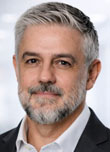 Fábio Franke, MD, is a medical oncologist, clinical researcher, and a leading figure in oncology clinical research in Brazil.
He serves as National Head of Clinical Research at Oncoclínicas & Co, Latin America’s largest integrated oncology, hematology, and radiotherapy network, where he leads scientific development strategies, the expansion of clinical trials, and the strengthening of national and international partnerships.
He is President of the Brazilian Society of Clinical Oncology (SBOC), contributing to the advancement of continuing medical education, scientific innovation, and quality cancer care in Brazil.
He is also the founder and CEO of Oncosite, a clinical research center based in Ijuí, Rio Grande do Sul, dedicated to conducting clinical trials and expanding Brazilian patients’ access to innovative therapies.
His work focuses on strengthening Brazil’s clinical research ecosystem, expanding access to clinical trials, and bringing scientific innovation into clinical oncology practice.