
Building The Execution Architecture For Real-World Data To Have Real-World Impact
By Steven C. Grambow, Drew Narayan, Steve Frank, Norm Goldberg, Gwyn Cready, and Hayden B. Bosworth

Life sciences organizations have invested heavily in real-world evidence (RWE), building sophisticated capabilities to generate rigorous insights from real-world data (RWD). These investments have accelerated in response to regulatory acceptance of RWD, payer demands for real-world value, and the growing recognition that clinical trial evidence alone is insufficient to guide decisions across the product life cycle.
Life sciences organizations now face two critical capabilities. The first, which we describe as evidence generation, is the ongoing transformation of RWD into scientifically defensible evidence. Although this capability has matured rapidly, supported by advances in data infrastructure, analytic methods, and regulatory guidance, significant opportunities for improvement remain. The second is translating evidence into decisions, workflows, and sustained implementation. This second capability, which we describe as execution architecture (i.e., the set of processes, structures, and strategies required to move evidence into practice), remains underdeveloped and represents the primary constraint on RWE value realization. Between these two capabilities lies a critical and frequently missing link: knowledge translation, which we define below.
RWE often fails to translate consistently into decisions, behavior change, and sustained impact. High-quality analyses may be produced, but their influence on organizational decision-making, and ultimately on prescribing, adherence, payer positioning, and care delivery, remains uneven.1 The business consequences are direct: delayed therapy uptake, weakened payer negotiations, and diminished return on evidence investment. This gap is not primarily methodological; it reflects an organizational capability deficit. We argue that life sciences organizations need a complementary capability beyond evidence generation and execution architecture, supported by knowledge translation and implementation science principles that move evidence into sustained action. Figure 1 presents this expanded evidence-to-impact pathway.
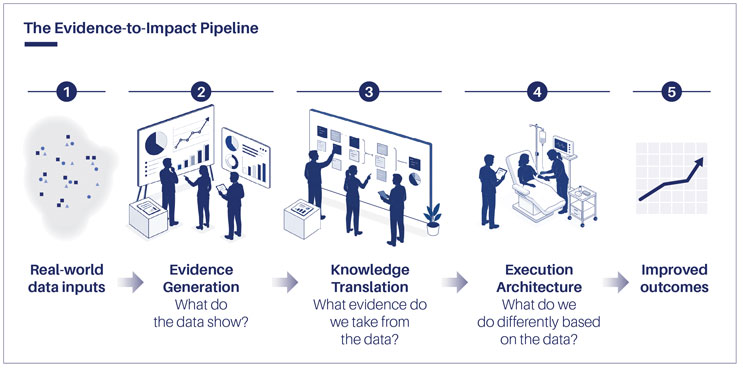
Figure 1: The Evidence-to-Impact Pipeline: Linking data to outcomes through execution architecture.
We further introduce a maturity model in which organizations must develop both analytical capability and execution capability. Organizations that invest in only one dimension will reach a ceiling. Those that build both will convert evidence into sustained strategic and clinical impact.
The RWE Inflection Point
In our first paper in this series, we refined the strategy for evidence capability; here, we provide the structural blueprint for execution architecture, the vehicle that moves evidence into practice and enables impact.2
Regulatory change has made this an inflection point. Over the past decade, RWE has evolved from a supplementary analytic approach to a central pillar of life sciences strategy. As regulators increasingly formalize RWE use in supporting new indications, label expansions, and post-market surveillance, the standard of evidence is shifting. Organizations that treat this shift as a regulatory checklist will struggle; those that treat it as a mandate to rethink their internal execution architecture will lead.
These innovative organizations have invested heavily in data platforms, observational research capabilities, and advanced analytics. Many now possess the technical infrastructure and expertise required to generate high-quality evidence at scale. Yet stronger capabilities have not led to proportionate impact. While those factors matter, the deeper issue is structural and cultural: Evidence generation has outpaced the organizational systems and incentives needed to act on it.3
Prior work has framed RWD-to-RWE as a life cycle capability. What remains underdeveloped is what occurs after evidence is generated: how it is interpreted, operationalized, and sustained. The next phase of RWE maturity is therefore organizational.
The Ceiling Of Analytical Capability
Life sciences organizations operate along a recognizable maturity trajectory in RWE. Early stages are characterized by reactive analyses conducted in response to regulatory or payer demands. More advanced stages incorporate structured evidence planning aligned with development milestones. At the highest levels, organizations integrate RWE across the product life cycle, informing trial design, comparator selection, and post-market evaluation.
These organizations generate strong evidence, align analyses with strategic priorities, and invest in governance and coordination. And still, evidence fails to consistently influence core outcomes, such as prescribing behavior, patient adherence, payer negotiations, and care delivery models.3 The issue is not the quality of the evidence but the absence of a system that ensures evidence is translated into action.
Evidence generation answers the question “What does the data show?,” but organizational performance depends on answering a second question: “What do we do differently because of it?” Without a structured pathway connecting these two questions, even the most rigorous evidence remains underutilized.
The Missing Layer: Knowledge Translation
To reliably convert high-quality RWE into decisions, behavior change, and sustained implementation in practice, organizations must distinguish between evidence generation and knowledge translation.
Knowledge translation is the process of interpreting, contextualizing, and operationalizing evidence across an organization. It involves translating statistical outputs into decision-relevant insights that stakeholders across clinical, regulatory, and commercial functions can understand and use.
Research demonstrates that effectiveness alone does not guarantee real-world impact. Adoption, fidelity, and sustainability are critical determinants of whether evidence translates into improved outcomes.4
However, achieving shared understanding is necessary but not sufficient. Even when organizations successfully align around evidence, understanding does not reliably lead to action.
From Understanding To Action: Execution Architecture
This second breakdown reflects a deeper gap: the absence of execution architecture.
Execution architecture is the organizational system that turns evidence-informed decisions into sustained action. Execution architecture encompasses governance structures that define decision rights, workflows that integrate evidence into routine practice, behavioral design elements that influence action, and incentive systems that reinforce desired behaviors.
Decision makers may agree with the evidence yet fail to act on it due to competing priorities, workflow constraints, or lack of accountability.
These dynamics are consistent with broader research on decision-making and behavior change. In complex systems, people often rely on heuristics and defaults rather than continually updating decisions based on new information.5 As a result, evidence alone is rarely sufficient to change practice.
Execution architecture addresses these constraints directly by reducing friction, clarifying decision rights, embedding actions into workflows, aligning incentives, and strengthening accountability. It creates the conditions for evidence-informed decisions to be acted on consistently and sustained over time. An emerging class of specialized implementation design organizations focuses specifically on this capability layer. Rather than generating evidence, they design the systems through which evidence is translated into action.
Strategic And Financial Implications
The consequences of weak execution architecture are substantial: delayed therapy or device adoption compresses revenue curves, fragmented evidence translation weakens payer negotiations,6 and opportunities for life cycle management are missed.
Conversely, organizations that build execution capability gain a strategic advantage.
The regulatory dimension of this gap is equally consequential. As global regulatory agencies increase their reliance on RWE to support label expansions, post-market study commitments, and ongoing safety evaluations, the quality of an organization’s evidence translation systems directly shapes the credibility of its regulatory submissions.7 Execution capability, in this context, is a component of regulatory strategy.

The Implementation Gap In Practice: GLP-1 Therapies
GLP-1 receptor agonists provide a clear illustration of the gap between evidence and execution.
Clinical trials have demonstrated substantial benefits for glycemic control, weight loss, and cardiometabolic risk reduction.8 Real-world studies have further identified key challenges, including early discontinuation and variability in adherence.9
Yet in many cases, these insights regarding barriers to adherence fail to translate into coordinated action. Support programs remain fragmented, provider education inconsistent, and payer strategies disconnected from adherence realities.
The result is a persistent disconnect between what is known and what is done. Organizations with mature execution architecture would systematically identify adherence barriers and coordinate interventions across providers, support programs, and payer partners to improve persistence over time.
A Secondary Pattern: Medical Device Evidence Without Execution
A similar pattern is visible in medical devices, particularly in cardiac rhythm management and other high-risk implanted technologies.
In these settings, post-approval real-world evidence increasingly identifies clinically important variation in remote monitoring uptake, connectivity, follow-up workflows, and the detection of device-related safety signals.
Consensus recommendations and regulatory initiatives now provide a clearer evidence base for how remote device clinics and post-market surveillance programs should function, yet implementation remains uneven across sites and systems.10
A mature device organization would integrate post-approval evidence into surveillance governance, embed remote monitoring protocols into routine clinical workflows, define accountability for connectivity and alert management, and continuously adapt field, clinical, and payer strategies as real-world performance data accumulate. Without that architecture, even strong evidence about device performance and workflow failure points remains fragmented, slow to influence operations, and limited in its impact on patient outcomes.
Measuring Execution Capability
If execution architecture is a capability, it must be measurable. A starting point is measuring how quickly evidence informs decisions, how consistently decisions are implemented, and how effectively outcomes inform future strategy.
Metrics such as decision latency, adoption rates, cross-functional alignment, and feedback loop cycle time provide practical indicators of execution capability. Together, they shift RWE from a descriptive function to an operational one.
Maturity Model: From Fragmented To Evidence-Enabled
RWE maturity can be understood as a progression through three stages, each representing a distinct organizational state (Figure 2).
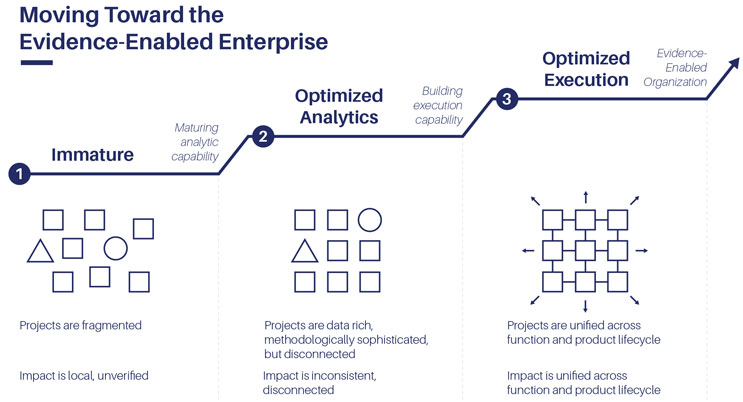
Figure 2: Evidence Maturity Progression: From fragmented projects to the evidence-enabled enterprise.
Most organizations begin in Stage 1, where evidence is produced in isolated projects, and the action it informs is local and unverified. As analytical capability matures, organizations advance to Stage 2. This stage corresponds to the analytically mature organizations described in our earlier work: those that have progressed through reactive, structured, and life cycle-integrated evidence capabilities and yet remain operationally constrained, because analytical maturity alone does not guarantee that evidence reaches decisions. Stage 2 organizations are data rich and methodologically sophisticated but stuck at the execution ceiling: analytical infrastructure is mature, yet execution remains inconsistent and disconnected from the functions that act. Breaking through the ceiling requires deliberate investment in execution capability. This shift creates Stage 3, the evidence-enabled enterprise, where evidence and action are integrated across functions and the product life cycle.
High-performing organizations take a different approach. They integrate implementation considerations into evidence planning, align governance structures early, and build feedback mechanisms that enable continuous learning.
The Architecture Of The Evidence-Enabled Organization
The first wave of RWE investment by life sciences organizations focused on data. The second focused on analytics. The third, and most consequential, will focus on execution.
The organizations that lead in this next phase will not necessarily be those with the largest data sets or most sophisticated analytic teams. They will be those that can move evidence across functions and into practice.
By building execution architecture, we bridge the gap between what we know and what we do, treating implementation not as a byproduct but as a primary objective.
But even the most carefully designed architecture requires builders. The pathway from evidence to impact ultimately depends on the people within these systems: their competencies, their coordination mechanisms, and the organizational learning infrastructure that enables them to act with consistency and shared purpose at scale.
For organizations seeking to break through the analytical ceiling, the first step is an RWE capability assessment. This assessment identifies where evidence stalls, which is either during knowledge translation or execution. By mapping these gaps, organizations can move from reactive, ad-hoc analysis to a systematic, enterprise-grade operating model.
The defining question, when it comes to RWE, is whether organizations can act on it consistently, systematically, and at scale.
Disclosures:
The views expressed are those of the authors and do not necessarily represent those of Duke University or affiliated partners.
Hayden Bosworth reports research funding through his institution from BeBetter Therapeutics, Boehringer Ingelheim, Esperion, Improved Patient Outcomes, Merck, NHLBI, Novo Nordisk, Otsuka, Sanofi, Veterans Administration, Elton John Foundation, Hilton Foundation, and Pfizer. He also provides consulting services for Boehringer Ingelheim, Esperion, Novartis, Sanofi, Vidya, Walmart, Webmed, Janssen, Rxrepius. He was also on the board of directors of Preventric Diagnostics.
Steven Grambow reports receiving consulting fees from Gilead Sciences and WCG Consulting for service on data monitoring committees, and from Symphony Learning Partners for educational content development.
References:
- Schell D. RWE is ready — decision making for pharmaceuticals isn’t. Clinical Leader. Published April 1, 2026. https://www.clinicalleader.com/doc/rwe-is-ready-decision-making-for-pharmaceuticals-isnt-0001
- Bosworth HB, Grambow SC, Narayan D. From real-world data to real-world impact: building the evidence capability pharma actually needs. Clinical Leader. Published March 25, 2026. https://www.clinicalleader.com/doc/from-real-world-data-to-real-world-impact-building-the-evidence-capability-pharma-actually-needs-0001
- Grol R, Grimshaw J. From best evidence to best practice: effective implementation of change in patients’ care. Lancet. 2003;362(9391):1225-1230. doi:10.1016/S0140-6736(03)14546-1
- Proctor E, Silmere H, Raghavan R, et al. Outcomes for implementation research: conceptual distinctions, measurement challenges, and research agenda. Adm Policy Ment Health. 2011;38(2):65-76. doi:10.1007/s10488-010-0319-7
- Kahneman D. Thinking, Fast and Slow. Farrar, Straus and Giroux; 2011.
- Lockhart CM, Powers E, Sweet B, Gleason PP, Brixner D. AMCP real-world evidence standards: overcoming barriers to using real-world evidence in US payer decision-making. J Manag Care Spec Pharm. 2025;31(12):1230-1236. doi:10.18553/jmcp.2025.25108
- Berger M, Daniel G, Frank K, et al. A Framework for Regulatory Use of Real-World Evidence. Duke-Margolis Center for Health Policy; September 13, 2017. https://healthpolicy.duke.edu/sites/default/files/2020-08/rwe_white_paper_2017.09.06.pdf
- Wilding JPH, Batterham RL, Calanna S, et al. Once-weekly semaglutide in adults with overweight or obesity. N Engl J Med. 2021;384(11):989-1002. doi:10.1056/NEJMoa2032183
- Rodriguez PJ, Zhang V, Gratzl S, et al. Discontinuation and reinitiation of dual-labeled GLP-1 receptor agonists among US adults with overweight or obesity. JAMA Netw Open. 2025;8(1):e2457349. doi:10.1001/jamanetworkopen.2024.57349
About the Authors:
 Steven C. Grambow, Ph.D., is an associate professor and associate chair of education in the Department of Biostatistics and Bioinformatics at Duke University School of Medicine. He serves as director of the Clinical Research Training Program (CRTP), Duke’s flagship degree-granting program for clinical and translational research education, and as co-director of the Workforce Development Pillar of the Duke Clinical and Translational Science Institute (CTSI). He is also a cofounder of Luminate Insights. Luminate Insights provides customized clinical research skills and educational programs and is part of i-Cubed™, the center for clinical research innovation, powered by the Duke Clinical Research Institute.
 Drew Narayan, MS, MBA is an entrepreneur-in-residence at i-Cubed™ and a leader within Luminate Insights, focusing on strategy, partnerships, and corporate education initiatives connecting academic expertise with pharmaceutical innovation. Luminate Insights provides customized clinical research skills and educational programs and is part of i-Cubed™, the center for clinical research innovation, powered by the Duke Clinical Research Institute.
 Steve Frank is a principal at Thoughtform and an expert in business strategy, organizational transformation, and experience design. He helps healthcare, life sciences organizations, manufacturing, nonprofits, and technology bridge the gap between strategy and execution by designing the capabilities, operating models, and experiences that accelerate adoption and improve business outcomes. For more than 25 years, he has partnered with executive leaders to solve complex business challenges through design.
 Norm Goldberg is a principal, strategist, and design leader at Thoughtform, where he helps organizations clarify complex ideas, align teams, and translate strategy into action. His work spans business strategy, brand development, customer experience, service design, and strategic communications. He has guided initiatives for clients in healthcare, pharmaceuticals, manufacturing, construction technology, financial services, higher education, and the nonprofit sector.
 Gwyn Cready, MBA, is a strategist at Thoughtform and an expert in brand building, customer insight, business strategy, and strategic communications. She has helped guide clients in many areas, including pharmaceuticals, drug safety, healthcare, obesity treatments, manufacturing, medical devices, post-secondary education, smoking control, home goods, and the arts. For 20 years, she launched and led brands at GSK Consumer Healthcare.
 Hayden B. Bosworth, Ph.D., is a professor of population health sciences, medicine, psychiatry, and nursing at Duke University and deputy director of the Durham VA ADAPT Center of Innovation. He specializes in implementation science, pragmatic trials, and real-world evidence and is a cofounder of Luminate Insights. Luminate Insights provides customized clinical research skills and educational programs and is part of i-Cubed™, the center for clinical research innovation, powered by the Duke Clinical Research Institute.