
Calidi's Study Aims To Have An Oncolytic Virus Outsmart The Immune System
A conversation between Calidi Therapeutics CEO and Director Eric Poma, Ph.D., and Clinical Leader Executive Editor Abby Proch
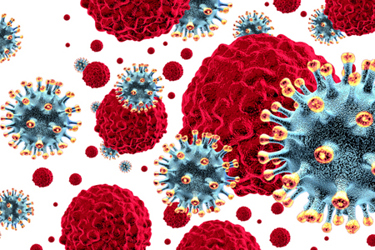
If you rob a bank and just before you leave, you put on a policeman's uniform, you have a much better chance of getting away with it.
That’s the analogy Eric Poma often uses to describe how Calidi Therapeutics’ oncolytic virus immunotherapy works. The policeman is the immune system, and the policeman’s uniform consists of a virus covered in a normal human membrane that’s engineered to express the protein CD55 that blocks the immune system from attacking the virus. In other words, the robber skirts right by with the bag of money.
The story is simple for scientists to tell and for laypeople to understand. It’s incredibly harder to make it actually happen.
And so, in this Q&A, Poma talks about those scientific challenges of advancing its lead candidate, CLD-401, as well as how they are planned and play out in clinical research, including the very real challenge of convincing regulators.
Clinical Leader: What’s the latest advancement in oncology modalities, and what about Calidi’s work made you excited to join in?
Eric Poma: Over the last several decades in oncology, you've seen the biggest advances when there's been new modalities — antibodies with HER2 and EGFR, targeted small molecules like Gleevec, CAR-T, and PD-1 and CTLA-4 inhibitors. We're always looking for something brand-new that works completely differently.
Calidi is working on oncolytic viruses, which are viruses that can replicate inside a tumor cell and by replication destroy the tumor cell. That's a field for which there's been substantial proof of concept. Amgen got T-VEC approved for melanoma, Replimune got approved for melanoma, and CG Oncology is likely to get approval for non-muscle invasive bladder cancer.
The problem has been that all those examples are directly injecting virus into tumors, and most patients who have metastatic disease are not amenable for direct injection. They have multiple metastatic sites in difficult to access locations, and it's not safe or viable to inject into them. Most patients need systemic therapy.
The problem with oncolytic viruses and systemic therapy is the minute you get them into the bloodstream, the immune system sees it as a foreign virus and clears it. But Calidi has made the virus express a really potent immune stimulator — IL-15 super agonist — that helps deliver a one-two punch.
CLD-401 avoids the challenges of intratumoral injection. When you have conversations with the FDA, what's the feedback on a systemic approach?
Their biggest concern is, if you give this systemically, and you're right that it can go everywhere, how do you ensure that it's only going to replicate in tumor cells? You don't want a virus that's going everywhere, replicating everywhere, and expressing high levels of IL-15 super agonist everywhere. We had a good back and forth with the agency.
What we've done is eliminated three genes from the virus that are necessary for it to replicate. They're genes that are focused on metabolic activity and growth factor. We were able to show the agency that if you put the virus in normal cells, it just does not replicate. But if you put it into a tumor cell — tumor cells are hypermetabolic, they have a preponderance of growth factor, and they've shut down a lot of immunity already — the virus replicates really nicely. That data package was sufficient to convince them the virus is not going to replicate anywhere other than tumor cells.
Did you anticipate that that would be their biggest concern because it was also yours, or did you see others in the space failing at this point?
It's a combination. This is usually outside of oncology, but with adenoviruses as genetic delivery mechanisms, for instance, we’ve seen a lot of hepatotoxicity because adenovirus replicates really well in liver tissue. This was one of our concerns, and we knew the agency was going to have a concern because we've seen this historically.

Are there any other communications that you'll have with the FDA before Phase 1?
We had some very good pre-IND meetings with the FDA where they've been extremely helpful in both the manufacturing, as well as the design and safety of the Phase 1 protocol. Our anticipation is that we will not have further discussions with the agency until we start to get clinical data back. Right now, our goal is to submit the IND. Hopefully, there'll be no real questions from the agency because we've hashed everything out.
What have you learned from previous roles that you helped plan for the CLD-401 trial?
On paper, a Phase 1 study is a dose-finding and safety study. In biotech, the reality is you have to understand if there's efficacy. Funding is difficult. These trials are really expensive. You have to design your Phase 1 with safety in mind, and ensure that you're testing it in the right patients and have markers that tell you whether the drug is efficacious.
Our virus is very potent, destroying most tumor types and activating the immune system. There are certain tumor types that have never worked via immune activation, such as pancreatic and colorectal cancer. We are not looking at those in the Phase 1. We are going to look at patients with non-small cell lung cancer, melanoma, and renal cancer, where there's a history of activating the immune system and getting good results.
We also have to understand whether the virus is avoiding immune clearance and getting to the tumor. After the first dose, we’re doing a tumor biopsy to see if there's viral DNA, if there's IL-15 super agonists, and if the virus is replicating.
We had to write the protocol and select the patient population precisely to demonstrate that it's avoiding immune clearance and having efficacy.
In doing something that's systemic, how has that influenced your choice of sites and investigators and even geographies? I would imagine the alternative requires a ton of technical expertise, surgical expertise.
It's made everything simpler. There are lots of sites that won't do intratumoral injections. They're like, "Look, we're not set up for this. This is expertise we don't have. It's not common." But when you go to a group and you say, "We're just going to do systemic administration," they're like, "Yes, that's what we do all day long."
There's an added layer of complexity with a live virus and whether a site has proper containment. Most places do because most oncology drugs require containment. By not having to go down this guided route of intratumoral injection, you have a lot more sites that are willing to participate.
Finally, does this approach to a Phase 1 feel more urgent given that you're a small biotech compared with large pharma?
Pharma has the luxury of thinking in five-, 10-, and 15-year increments. In biotech, you're usually thinking in one- to two-year increments. If you're a pharma, you may not have to pack all the endpoints into your Phase 1. For a biotech, we have to prove out as quickly as possible that the drug is not getting cleared by the immune system and that there's the potential for efficacy. So, the pressures are very, very different.
About The Expert:
 Eric Poma, Ph.D. has served as CEO and board director of Calidi Therapeutics since April 2025 and brings more than 30 years of experience in the biopharmaceutical industry, with a strong record of capital fundraising, big pharma collaboration agreements, and clinical program development.
Prior to joining Calidi, Dr. Poma served as CEO of Molecular Templates (NASDAQ: MTEM), a clinical-stage biotech focused on the development of a novel class of therapeutic agents with unique biology in oncology. At Molecular Templates he raised over $250 million in equity financing and secured over $150 million in strategic capital through agreements with Takeda, Vertex, and BMS. He previously served as vice president, business development, of Innovive Pharmaceuticals. Prior to that, he held various senior level positions at Imclone Systems, Inc., primarily in business development. Earlier, Dr. Poma served as a healthcare & biotechnology analyst with the healthcare fund Eagle Growth Investors, LLC.