
Caregivers: The Missing Line Item In Trial Budgets
By Denise N. Bronner, founder of Empactful Ventures, and Marsha Calloway-Campbell, principal, MCC Consulting Group LLC
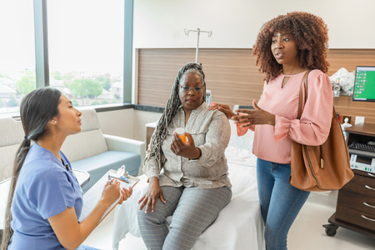
There is a person who does not appear in any protocol, is not listed on the IRB submission, or, many times, is not factored into site budgets. But they are often the reason your patient showed up to your trial at all.
That person is the caregiver.
Marsha and I know this role intimately, because we’ve been in hospital waiting rooms in the middle of the night. It happened when my father's shortness of breath turned into a multiple myeloma diagnosis, which cascaded into AL amyloidosis induced congestive heart failure and when Marsha’s husband began to have multiple myeloma symptoms, undiagnosed, and in the meantime, the myeloma protein was damaging both of his kidneys, eventually requiring him to need a kidney transplant. We became our loved ones’ navigators, medical translators, law advocates, and sometimes their memories when their brain couldn't hold the weight of it all. In partnership with our families, we serve as their caregivers. And in every clinical interaction we face together, the system was designed as if we weren't there.
That invisibility has a cost, and it's one that pharma sponsors and trial operators are only beginning to fully account for.
The Scale We Are Not Talking About
The data on caregiving in the U.S. has crossed a threshold that demands industry attention. According to Valuing the Invaluable 2026, just released by the AARP Public Policy Institute, 59 million Americans are providing care for adult family members, friends, or neighbors, contributing 49.5 billion hours of care annually, with a total economic value of $1.01 trillion.¹ That figure exceeds total Medicaid spending for the same year. If family caregiving were counted as a formal labor sector, it would rank among the largest and most valuable workforces in the domestic economy.
And yet, these same individuals are asked to transport patients to trial visits, manage adverse event diaries, monitor symptom changes overnight, coordinate with sites on appointment changes, and ensure medications are taken on schedule, all without a line item in the trial budget.
The 2025 Caregiving in the U.S. report from AARP and the National Alliance for Caregiving adds further texture. Roughly one in four American adults is currently a family caregiver (45% increase since 2015). Over 40% are providing high-intensity care, performing complex medical tasks like administering injections or managing equipment, yet only 22% receive any training for those responsibilities. Half report negative financial impacts and 20% cannot afford basic needs.²
What Caregivers Are Actually Doing In Trials
Here is what we did during our families treatment that no one formally asked us to do, but everyone informally counted on: tracked their symptoms between visits and communicated them to their care team before they became emergencies. We drove them to and from appointments when they were too fatigued, asked the questions they were too exhausted or unsure of how to ask, and translated clinical language into something they could process and then helped them decide whether to proceed. We were, in every functional sense, a co-investigator in their care.
The research backs this up. A 2025 study published in Cancer Medicine found that caregivers support cancer patients enrolled in clinical trials in ways that are "often unseen and underestimated." They contribute across at least seven distinct domains including emotional support, symptom monitoring, medication management, and attendance at clinical visits. The study concluded that cancer trials would benefit from adopting a family-centered approach to enhance patient retention and outcomes.³
The data on trial dropout sharpens the business case significantly. The current patient withdrawal rate across clinical trials sits at approximately 30%, with each lost patient costing sponsors an estimated $19,300 or more to replace in a Phase 2 study. These costs ripple into delayed timelines and, ultimately, delayed approvals.⁴ When caregivers accompany patients, they serve as retention anchors: interpreting protocol requirements, managing logistics that patients cannot handle alone, and providing the emotional continuity that keeps participation from feeling like an unbearable burden.
A meta-analysis examining transitional care interventions drove this point home clearly: trials that incorporated meaningful caregiver engagement reduced all-cause rehospitalizations significantly, while those without caregiver engagement showed no measurable effect. The conclusion was unambiguous: interventions should not be conducted without careful consideration of where and how caregivers are incorporated.⁵
What Happens When Caregivers Aren’t There To Translate
In disease communities with significant health literacy gaps, in conditions where cognitive impairment is part of the clinical picture, in households where English is not the primary language, the caregiver is often the only bridge between the clinical team and meaningful patient engagement.
We watched this play out firsthand. When the care team of Denise’s father spoke in terms of ejection fractions and amyloid burden, he nodded and tried to process this new wave of information. A similar situation occurred when doctors told Marsha’s husband about his kidney damage and he needed to undergo dialysis immediately. We processed it. We went home, read the literature, and came back with a list of questions that shaped the next treatment decision. Without that loop, their participation in their own care would have looked like compliance. With it, it looked like agency.
This matters for trial integrity. Patient-reported outcomes (PROs) are increasingly central to FDA submissions and commercial evidence strategies. But PRO quality depends on patients accurately understanding and responding to what they're being asked. In populations where that is not a safe assumption, caregiver-supported reporting is a data quality issue. Research from Medable found that caregiver-reported outcomes predicted hospitalizations, mortality, and hospice referrals in oncology patients — outcomes the patients themselves did not always accurately self-report.⁶
The translator role also extends to trust. In communities with deep historical mistrust of medical research, a caregiver's presence, enthusiasm, and willingness to engage can be the single factor that converts a hesitant patient into an enrolled one. The presence of the caregiver provides a safe space for that patient. Sponsors who design trials without budgeting for caregiver access are, in effect, designing trials that will disproportionately exclude patients who rely on caregivers to participate at all.
What Is Missing And What It Costs
Right now, most trial budgets treat caregiver involvement as incidental. Transportation reimbursement, when it exists, typically covers the patient. Meal stipends during visit days are structured around a party of one. Lost wages are not factored in for the caregiver who took a day off work to sit in a waiting room for five hours. Childcare costs incurred because a caregiver had to attend a trial visit can be nonexistent in trial budgets.
Research on cancer trial participation has found that indirect costs (e.g., including transportation, meals for both patient and caregiver, childcare, and economic productivity loss) are rarely even discussed during the enrollment conversation, despite being commonly prohibitive.⁷ Two patients on the same trial at the same site can face wildly different financial pressures based on their circumstances, and caregivers compound those pressures in ways that budget templates have not been built to catch.
The irony is that the return on investment for caregiver inclusion is measurable. If a caregiver stipend or travel reimbursement keeps one patient enrolled through protocol completion who would otherwise have withdrawn, the sponsor has recovered the cost of that investment many times over. The math is not complicated. The will to build it into standard practice is what has been missing.

Who Is Getting This Right
To be clear: There are sponsors doing meaningful work here, and they are worth naming.
Pfizer has published explicit policy guidance on caregiver reimbursement in sponsored studies, outlining that reasonable expenses incurred by parents, guardians, or caregivers (e.g., including parking, meals, hotel accommodations, travel, and childcare) are reimbursable at the level they are incurred.⁸ That Pfizer has codified caregiver costs into its standard operating framework is significant, and it sets a benchmark others should be examining.
Genentech has gone further in its inclusive research design. Across trials including CHIMES (multiple sclerosis) and ELEVATUM (diabetic macular edema), Genentech utilized stipends, on-demand transportation to and from sites, and culturally competent education materials designed with diverse caregiver communities in mind. The result is trials that enrolled ahead of schedule, with feedback from both patients and their caregivers that participation felt genuinely supported rather than merely permitted.⁹
AbbVie has said publicly that it partners with patients, patient organizations, and caregivers as stakeholders in its clinical development process, working to understand the lived experience of disease and not just the biomarker.¹⁰
These examples are promising, but they are not yet the standard in industry.
What Needs To Change
For sponsors and trial operators reading this, the ask is specific:
Expand the definition of "participant costs." Caregiver travel, meals, childcare, and lost wages should be explicitly included in every study budget from the protocol design stage. If caregivers are functionally required for a patient to participate, their costs are study costs.
Design informed consent to include caregivers. The enrollment conversation should explicitly surface caregiver involvement, explain what support is available to them, and document their presence as part of the care dyad.
Collect caregiver-reported outcomes as a data stream. In populations where PRO accuracy is a known concern, caregiver-reported data should not be supplementary but should serve as primary evidence. Build the instruments and the budget for it.
Build caregiver engagement into your diversity action plans. Regulatory guidance on diversity in clinical trials is increasingly prescriptive. Sponsors who think about representation at the patient level but not the caregiver infrastructure level are solving half the equation. In many underrepresented communities, addressing the caregiver barrier is the enrollment barrier.
Create caregiver liaisons at the site level. Patients need someone whose job it is to check in with caregivers, answer their questions, surface their concerns, and connect them to support resources. Not the principal investigator. Not the nurse coordinator who is already managing 12 other responsibilities. A dedicated point of contact.
The Return On Investment Is Real
My father and Marsha’s husband stayed engaged with their care teams through a complicated treatment journey. And this was in part because we were there to hold the thread. That consistency and their will to fight shaped their outcomes. Informal caregiver support is doing that work in clinical trials every single day without being credited, compensated, or counted.
Sixty-three million Americans are caregivers right now. They are holding up a system and clinical research enterprise that would move far more slowly without them. It is time for trial budgets to reflect that reality, not as a charitable gesture but as a fundamental recognition that patient-centered research cannot be designed around the patient alone.
The caregiver is in the room. Build for them.
References:
- Valuing the Invaluable 2026: Family Caregivers' Contribution Reaches $1 Trillion. AARP Public Policy Institute. https://doi.org/10.26419/ppi.00402.001
- AARP and National Alliance for Caregiving. Caregiving in the U.S. 2025 https://doi.org/10.26419/ppi.00373.001
- Patient and Caregiver Perceptions of Caregiving Contributions During Cancer Clinical Trials https://doi.org/10.1002/cam4.70488
- The Powerful Impact of Caregivers on Clinical Trials https://www.appliedclinicaltrialsonline.com/view/the-powerful-impact-of-caregivers-on-clinical-trials
- Caregiver Engagement Enhances Outcomes among Randomized Control Trials of Transitional Care Interventions https://pmc.ncbi.nlm.nih.gov/articles/PMC9202479/
- TOGETHERCare Study. Medable. Referenced in: "The Powerful Impact of Caregivers on Clinical Trials." Applied Clinical Trials Online. November 14, 2025.
- Could Financial Reimbursement Increase Clinical Trial Inclusivity? https://dailynews.ascopubs.org/do/could-financial-reimbursement-increase-clinical-trial-inclusivity
- Pfizer Inc. Payment and Reimbursement to Study Participants https://www.pfizer.com/science/clinical-trials/integrity-and-transparency/payment-reimbursement-participants
- How Genentech Designs Inclusive Clinical Trials to Reach More Patients https://theconferenceforum.org/editorial/from-the-archive-how-genentech-designs-inclusive-clinical-trials-to-reach-more-patients
- AbbVie. Patient-Focused Drug Development https://www.abbvie.com/science/areas-of-innovation/patient-focused-drug-development.html
About the Authors:
 Denise N. Bronner, Ph.D., is the founder and CEO of Empactful Ventures, a boutique advisory firm operating at the intersection of pharma commercial strategy, healthtech commercialization, and patient and caregiver advocacy. She serves as Entrepreneur-in-Residence at Duke University's I-Cubed Innovation Center, on the board of WAI (We Are ILL), a chronic illness advocacy organization, and is a member of the Clinical Leader editorial board. She is also a caregiver for her father, who has navigated a complex illness journey including multiple myeloma and AL amyloidosis. She holds a bachelor’s degree in biological sciences from Wayne State University, a Ph.D. in microbiology and immunology from the University of Michigan - Ann Arbor, and certification from the Venture Capital Executive Program from UC Berkeley Haas School of Business.
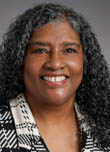 Marsha Calloway‑Campbell, J.D., is a practicing attorney and principal of MCC Consulting Group LLC, where she leads work at the intersection of law, qualitative research, and health equity. A caregiver to her husband, diagnosed with multiple myeloma in 2017, Marsha brings a deeply personal understanding of the challenges patients and families face, especially the often‑overlooked financial and emotional burden of caregiving during clinical trials. Her lived experience fuels her advocacy for more equitable, patient‑centered healthcare systems. Marsha holds a Juris Doctor and is licensed to practice before the Ohio Supreme Court Bar and the Federal District Court, 6th Circuit. She continues to champion policies and practices that honor the realities of caregivers while advancing meaningful access to care for all.