
Could Moving To This Swiss Life Sciences Hub Be In Your Company's Future?
A conversation with Christof Klöpper, CEO, Basel Area Business & Innovation, and Clinical Leader Executive Editor Abby Proch
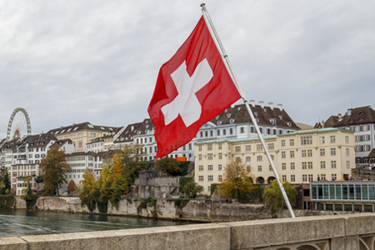
Anchored by the Basel Area Life Sciences Supercluster, the Basel region has emerged as one of Europe’s most concentrated end-to-end drug development hubs. In this interview, Basel Area Business & Innovation CEO Christof Klöpper discusses how the Supercluster supports discovery through commercialization, highlighting the area’s R&D funding, regulatory stability, and swift approvals and timelines.
Clinical Leader: Tell us about the Basel region, specifically the Basel Area Life Sciences Supercluster and its people. How does it support end-to-end drug development?
Christof Klöpper: The Basel Area Life Sciences Supercluster stands out as one of Europe’s most concentrated hubs for biotech, pharma, healthtech, and medtech innovation. Its cross-border position across Switzerland, France, and Germany gives companies quick access to a large talent base and multiple markets. The region unites 800+ life sciences companies, 1,000 research groups, and nearly 35,000 industry experts into a single end-to-end ecosystem accelerating innovation from lab to launch. It supports end-to-end drug development because the region spans the full value chain — from R&D to company headquarters to production sites — with a dense CDMO base to handle development and manufacturing.
Specifically, to what extent do Basel and Switzerland enable sound in-human clinical trials?
Basel and Switzerland provide a strong environment for in-human clinical trials due to a predictable regulatory framework, world-class hospitals, and a highly educated, multilingual patient population. Academic medical centers and regional hospitals are experienced in early- and late-phase trials and are open to collaboration with industry sponsors. The country’s compact geography and excellent transportation infrastructure ensure easy access to trial sites and testing centers, reducing logistical complexity and timelines. In parallel, a very active healthtech ecosystem, strongly supported by platforms like the Basel-based DayOne Accelerator, is developing digital tools that enhance patient recruitment, data quality, and trial efficiency.
In the U.S., where NIH funds have dropped precipitously, funding is especially dire. How do Swiss national and local agencies support pharma R&D with either direct funding or subsidies, tax rates, or tax incentives?
At the national level, pharma R&D can get support from agencies such as Innosuisse, Swiss National Science Foundation, and BRIDGE, which is a joint program of the Swiss National Science Foundation and Innosuisse. Furthermore, companies with R&D units or that own patents can make use of and benefit from the Swiss patent box. It offers companies subject to Swiss taxes an attractive option. Research and development costs, as well as income from Swiss or foreign patents, enjoy privileged tax treatment.

The Basel Area offers attractive tax rates for all companies. Pharma R&D can benefit from tax incentives, and a special incentive program provides targeted financial support for companies that invest in innovation. The incentive program provides contributions to personnel costs for R&D, depreciation of R&D facilities (including high-tech production), and expenses for clinical trials and the production of the necessary active ingredients.
Also in the U.S., we’ve seen leadership volatility in the FDA and other supporting government institutions. What is it about Swissmedic, the country’s regulatory body, that ensures stability?
Swissmedic is as stable as Switzerland itself. Swissmedic has systematically built up reserves in recent years and has gradually used these reserves to invest in a sustainable digital infrastructure. Its regulatory processes are transparent, predictable, and well aligned with international standards, which increases trust among global sponsors. This stability allows companies to plan development and approval strategies with greater confidence over the long term.
Additionally, how might an approval in Switzerland support marketing approval in the U.S.?
While Swissmedic approval does not automatically translate into FDA approval, it can meaningfully strengthen a company’s global regulatory strategy. Swissmedic applies rigorous science-driven evaluation standards that are well respected internationally, providing high-quality regulatory validation. Data generated through Swiss-approved clinical trials can support FDA submissions, particularly when aligned with ICH guidelines. For early-stage innovation companies, Swiss approval can serve as a strong credibility signal for U.S. regulators, partners, and investors.
Finally, time to market is top of mind for many companies. How does the Swiss drug approval process compare with the rest of the world and specifically, with the U.S.?
After approval in Switzerland, a drug usually qualifies for reimbursement in less than six months, which ranks among the fastest timelines worldwide. In the United States, reimbursement takes about 9.2 months on average. Switzerland has one of the shortest median times from approval to reimbursement (5.8 months). It also has one of the highest reimbursement rates one month after approval and ranks among the top countries globally in reimbursement rates with about 62.8% after one year, improving commercial viability soon after approval. For companies focused on rapid time to market, Switzerland offers a compelling balance of regulatory rigor, speed, and market access.
About The Author:
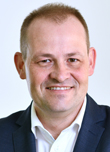 Christof Klöpper has been CEO of Basel Area Business & Innovation since 2016. Prior to this, he was managing director at i-net innovation networks. He was head of development for industry and technology at the office of industry and employment in the Basel-Stadt Economics Department, and managing director and a member of the Board of Directors of Technologiepark Basel. Before this, he was a scientific assistant at the University of Basel. Klöpper studied economic geography, economics, and business administration in Germany and in the United States. He obtained a doctorate at the University of Basel entitled: “The Structure and Geography of innovation processes in biotechnology.”