
Designing Trials Patients Can Actually Complete: Lessons From The SWIFT Deep TMS Study
By Colleen A. Hanlon, Ph.D., vice president of medical affairs, BrainsWay

Major depressive disorder remains one of the leading causes of disability worldwide, yet many of the treatments we rely on still carry a fundamental limitation: They are difficult for patients to access and sustain.
Even when effective therapies exist, the burden of treatment, including time, travel, and disruption to daily life, can prevent patients from starting or completing care. This is especially true in interventional psychiatry. Standard transcranial magnetic stimulation (TMS) protocols typically require patients to come into the clinic five days a week for 30 to 36 sessions. For many individuals, that level of commitment is simply not feasible.
SWIFT Deep TMS was developed in response to this reality. As an accelerated protocol, it condenses treatment into a shorter, more intensive schedule while maintaining the clinical effectiveness of standard Deep TMS. In clinical trials, SWIFT demonstrated response and remission rates comparable to once-daily protocols, with patients reaching remission more quickly.
But what makes SWIFT important is not just that it works. It’s how and why it was designed.
What 20 Years In Clinical Trials Teaches You
After more than 20 years in clinical research, I’ve come to believe something that doesn’t get said often enough: Most trials don’t fail because of science, they fail because of logistics. I’ve seen this from every angle. I’ve been the person calling patients to remind them of appointments. I’ve delivered Deep TMS treatments. I’ve designed protocols based on emerging neuroscience. And I’ve worked with regulators and payers to bring new therapies into practice.
Across all of those roles, one lesson stands out: The little things are rarely little. Questions often asked by patients include: “Is parking easy at the clinic?” “Can a treatment fit into my workday without sacrificing income or privacy?” “Is the protocol something that can be delivered in a local community clinic — not just a major academic center?”
Answers to these questions determine whether patients enroll, whether they stay, and whether a therapy ever becomes accessible outside of a trial.
Too many clinical trials are still designed from the top down. Protocols are built to satisfy scientific and regulatory requirements, which are essential, but often without meaningful input from the people who are intimately involved with them: clinicians, patients, and payers.
In mental health, this disconnect is particularly problematic. Depression itself reduces motivation and energy, making participation in complex or burdensome protocols more difficult. Add logistical barriers, — such as transportation, work schedules, and caregiving — and even highly motivated patients can fall out of care.
If we’re serious about expanding access, we have to design differently.
Time: Our Most Valuable Nonrenewable Resource
In my experience, time is the single most important and underestimated constraint in both clinical trials and treatment delivery. Traditional TMS protocols require daily visits over several weeks. For many patients, that’s not just inconvenient; it’s prohibitive. It can mean missed work, lost income, childcare challenges, and significant disruption to daily life.
So, we asked patients, providers, and payers what would make this feasible.
The patients’ answers were practical and revealing. Some said, “I’d take a week off.” Others suggested, “What about two long weekends?” or “I’d be willing to do a series of half days.” Those insights directly shaped the SWIFT protocol.
The final design condensed the acute treatment phase into six treatment days, with multiple brief sessions delivered within each visit, followed by a simplified maintenance phase. Compared to traditional approaches, this reduced the number of clinic visits by roughly 70% while maintaining comparable clinical outcomes. That change alone opens the door to a different group of patients — people eligible for the trial but who simply could not make the logistics work.
We also engaged clinical providers early in the process, and their feedback was just as important. Providers emphasized the need to keep treatment within standard clinic hours, to consider staff scheduling, and to ensure that any new protocol could be realistically implemented in a busy practice. Some noted they would consider extending hours or opening weekends, but only if demand and reimbursement supported it.

These conversations helped shape a protocol that is not only clinically effective but operationally viable. Because even the best-designed treatment will fail if clinics can’t deliver it.
A third, often overlooked perspective is that of the payer. From the outset, we recognized that for SWIFT to succeed, it needed to align not just with clinical goals but with reimbursement realities. That meant maintaining a total number of treatment sessions comparable to what payers already cover, an approach that has since been reinforced by expanded coverage decisions and the removal of prior authorization requirements by major payers.
This increases the likelihood of adoption because it does not require a fundamental shift in reimbursement. At the same time, the accelerated timeline, paired with earlier remission, has broader economic implications, including faster return to work and reduced overall burden on the healthcare system.
Treatment That Can Scale: Geographically, Culturally, And Socioeconomically
Clinical trials also tend to overrepresent patients who live near academic medical centers, leaving rural and suburban populations underrepresented. We wanted to change that. The SWIFT study included sites across the North, South, East, and West regions of the U.S., spanning urban, suburban, and rural populations. We also included an international site in India, which demonstrated outcomes comparable to U.S. sites.
That was an important validation point. It showed that the protocol is not only effective but also scalable across different care settings, patient populations, and even cultural contexts. There is a tendency to frame patient-centered design as a trade-off with scientific rigor. In reality, the opposite is often true.
The SWIFT program included a prospective, randomized, multisite trial, the gold standard for clinical evidence. Results demonstrated strong response and remission rates, along with faster time to remission. At the same time, we incorporated PROs to better understand how patients experienced recovery. These data showed meaningful improvements in quality of life and daily functioning, with many patients returning to normal-range functioning by the end of treatment. This combination of rigorous methodology and real-world relevance is what ultimately drives adoption.
If there’s one lesson from SWIFT, it’s this: Designing trials around patients doesn’t make them easier, it makes them better. Better recruitment. Better retention. More representative populations. And, ultimately, evidence that translates into real-world care.
We don’t need to choose between rigor and feasibility. But we do need to stop designing trials in isolation from the people they are meant to serve.
Because at the end of the day, a treatment only works if patients can actually receive it.
About The Author:
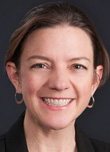 Colleen A. Hanlon, Ph.D., is vice president of medical affairs at BrainsWay, a role she has held since 2022. She leads global medical affairs strategy and ensures alignment across regulatory, innovation, R&D, operations, and customer-facing teams.
She brings more than 20 years of experience in clinical research, with a focus on non-invasive brain stimulation as well as functional and structural brain imaging. Prior to joining BrainsWay, Dr. Hanlon led multidisciplinary clinical research programs at the Medical University of South Carolina and Wake Forest School of Medicine.
Her work includes more than 100 peer-reviewed publications, over 100 invited lectures and CME presentations worldwide, and contributions to more than 10 book chapters. Recognized for her pioneering research in transcranial magnetic stimulation (TMS) for substance use disorders, she has secured more than $15 million in National Institutes of Health funding to advance noninvasive brain stimulation therapies for psychiatric and neurologic conditions.