
Endpoints, Procedures, And Deviations Are On The Rise — Why?
A conversation with Jimmy Bechtel, MBA, chief site success officer, Society for Clinical Research Sites (SCRS), Ken Getz, MBA, executive director, Tufts Center for the Study of Drug Development (CSDD), and Clinical Leader Executive Editor Abby Proch
Total endpoints, total procedures, and mean deviations per trial have all increased over the past decade, according to a report by the Society for Clinical Research Sites.
The 2025 SCRS Landscape Survey Report brings together findings from SCRS’s 2025 landscape survey and Tufts CSDD’s research to present a holistic picture of how site operations have evolved in the ever-changing trial environment.
Some results may surprise: Nearly one in four sites reported last year that they have declined a trial due to protocol complexity. Others may support observation with fact: Total endpoints are up 29% and total procedures are up 61% compared with 10 years ago.
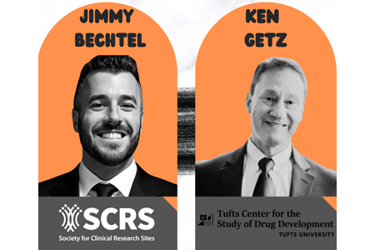
Ready to discuss some of these findings in an article and video series are SCRS Chief Site Success Officer Jimmy Bechtel, MBA, and Tufts CSDD Executive Director Ken Getz, MBA. Here, they discuss the rise in endpoints, procedures, and deviations, identifying reasons for their increase and exploring ways to address, and even accept, them.
Clinical Leader: Twenty-four percent of sites report declining a trial due to its complexity. And so, I was wondering if you can unpack what the complexity looks like for the site staff and then what features might trigger a “no” from sites or at least a hesitation.
Jimmy Bechtel, MBA: Sure. What that looks like at the site level is simply additional work that is going to be required of them to execute that protocol. That's how they see it.
And that then translates into burden for both the site and the patient. So, sites should be spending time assessing that burden and determining whether it's worth it or not for them based on the available resources. A really important aspect is the financial alignment.
The bottom line around complexity is that for sites, if they don't feel it's beneficial for them or their patients or it becomes something that they can't resource to execute effectively, then they're just not going to do it.
Where we also see issues in this space is a site not being able to make those determinations successfully and agreeing to protocols that they might not be able to find success with. When you look at that aspect of what triggers the “no” from the sites or what that burden shift looks like, it's when they don't do that well. Because, in large part, they're either not effectively doing their assessment, they're just simply not analyzing that protocol effectively enough, or they don't have complete information.
You mentioned the number of procedures. You found that while the endpoints and eligibility criteria may have grown a little bit modestly, the mean procedures in a Phase 3 protocol have risen quite substantially — from 187 to 301 over the past decade. Do you know what kinds of procedures are driving this increase and how they're changing the site workflow and the patient experience?
Ken Getz, MBA: We do. We have data on procedure types and how they've evolved. They have all increased to some extent, but one of the places where we see disproportionately high increases is in the questionnaires and patient-reported outcomes. And often, these now take the form of a digital or virtual relationship. And as you can imagine, the site ends up being the help desk for when these approaches don't work well, even though there may be a designated IT support department. The site has the direct relationship with the patient and ends up having to troubleshoot why the patient can't do the application or whether they need help with their password or just logging in. It's usually the site that bears that burden.
Bechtel: It's not just some additional work for the site; it's not just that we're asking the patients to do something. There is an intense involvement from both parties when you look at questionnaires and patient-reported outcomes or the electronic version ePRO of that as well.
And when we look at what that translates into from an operational discipline versus the scientific aspect of things and ambition around protocol design, it's not necessarily a “versus” when you look at operational execution. We know that complexity continues to increase and there's very little that we probably can do about that. It's simply aligned with the science, the nature of the conditions that we're creating molecules for and treatments for, and the complexity then of those treatments.

Vaccines are a really great example of that when you look at what made up a vaccine back before color photographs. And now, when we are looking at the technology behind the vaccines that we're developing for some of these very complex conditions, it is adding that complexity of a scientific need as an actual need versus a nice to have. And neither Ken or I are experts in that space, and we leave that to the scientists who are developing these things. But when it translates into protocol design, that's something that we really need to make sure we're looking at succinctly.
And to be honest, some of that is all probably okay, it's fine. Again, that's the direction that we're heading. It's when that translates into a heightened need for operational discipline on every level: protocol, design, execution, and delivery. As long as we can understand the purpose and the need at the site level and then have the information around that complexity to effectively manage it and financially account for it, we can be in a much better place.
Proch: If we can accept that, to some degree, trials are just becoming more complex because there's a scientific need for it, how do we understand complexity and its impact potentially on deviations? Tufts had found that mean deviations per pivotal trial have more than doubled. What are the most common areas of deviation for these more complex, newer trials? And how should sponsors interpret that or respond?
Getz: The whole area of protocol deviations is relatively new research for us at CSDD because, historically, companies have not captured that data well. I can't tell you that there's a single category where we know the highest volume of deviations is occurring. We do know that deviations are an important way to understand where the site is facing challenges. Patients are not adhering to the protocol requirements, there are issues managing the schedule of assessments, or there are unique and special ways we have to handle an investigational therapy or a specific assessment. But the deviations have been like a bellwether letting us know that complexity is putting more burden on the sites and patients, and as a result, their adherence to the protocol is being challenged.
Bechtel: Hearkening back to the point that I just made, protocols are getting more complex — that is not going to change. It's accepting that fact and managing the outputs of that. Deviations are going to continue to happen. They're likely going to continue to increase. So, we need to get ahead of the deviations that we can understand and can predict, but also, again, come to the realization that there are going to be deviations that are unpredictable.
Therefore, we need to prepare our sites and patients from a resourcing and financial compensation perspective to be able to manage those effectively and open the door for an active channel of communication and transparency. We need to get ahead of the deviations and see them when they're in their infancy, before they become a major issue for that clinical trial. Adapting and acting quickly is something we need to lean into a little bit more as an industry, simply accepting the fact and not trying to micromanage our way out of all deviations but instead taking a different perspective.
About The Experts:
 Jimmy Bechtel is the chief site success officer for the Society for Clinical Research Sites (SCRS). He is in charge of developing and executing the company's site-facing initiatives and works closely with key industry partners to build out various SCRS partnership programs. Bechtel brings experience from both the site and sponsor sides of the clinical research industry. In his site experience, he served as a data specialist, patient recruiter, and operations manager. In his pharma experience, he worked in innovation project management, encouraging a site-centric environment and creating ease for sites working with a major sponsor company.
 Ken Getz is the executive director of the Tufts CSDD and a research professor at the Tufts University School of Medicine. He is an internationally recognized expert on pharmaceutical R&D management and execution, protocol design, contract service provider and investigative site management, eClinical technology and data usage, and patient engagement. A well-known speaker at conferences, symposia, universities, investor meetings, and corporations, Ken has published extensively in peer-reviewed journals, books, and in the trade press. He holds board appointments in the private and public sectors. He received his MBA from Northwestern University and his bachelor’s degree from Brandeis University. Ken is also the chairman of CISCRP — a nonprofit organization that he founded to educate and raise public and patient awareness of the clinical research enterprise — and the founder of CenterWatch, a leading publisher in the clinical trials industry and one of several businesses that he has sold.