
Expanding Access To Cell Therapy Trials Beyond AMCs And Into The Community
A conversation between Nkarta CEO Paul J. Hastings and Clinical Leader Executive Editor Abby Proch
NKX019 is an allogeneic, off-the-shelf CD19 chimeric antigen receptor natural killer (NK) cell therapy for B-cell affected autoimmune diseases. Traditionally, a therapy such as this would be limited to inpatient administration and confined to academic medical centers (AMCs). These parameters are limiting by design to prioritize patient safety, but they also inhibit patient access.
To broaden patient access, Nkarta has submitted protocol amendments for its Ntrust-1 and Ntrust-2 trials of NKX019 to the FDA and applicable IRBs to permit outpatient dosing in the community settings, as well as a shorter, two-hour observation period with appropriate safety monitoring. The central IRB has cleared the amendments, allowing many sites to begin implementing the updated protocol.
In this Q&A, Hastings reflects on the decision to request outpatient dosing in community settings, how it communicated with the FDA on safety, and how the changes will expand patient access.
Clinical Leader: Nkarta reached agreement with FDA to amend its protocol and allow outpatient administration of its CAR-NK cell therapy candidate, NKX-019. What prompted you to pursue that amendment?
Paul Hastings: It's a very personal issue for me. I’ve had severe Crohn's since the age of 13. I'm now 66. Having gone through all this, I tend to focus on how things impact the patient. What's really important is whether a patient has access to a trial, how easy that access is, and what kind of services we can offer to make patients’ lives easier. For example, we offer fertility services, concierge services such as flight arrangements and meals, subsidized childcare and fair-market compensation for their time to help offset the burdens of time away from home and reward their commendable decision to help advance medical science to the benefit of all patients. The easier you can make participation, the more attractive a trial is going to be.
How did that perspective inform your decision to move from inpatient administration to outpatient?
We’re CAR-NK, not CAR-T. And we’re allogeneic, not autologous. Because our cells are off-the-shelf and donor-derived, we don’t have the in vivo cell expansion associated with an increased risk of cytokine release syndrome. The risk of CRS after a patient is dosed with autologous CAR-T has historically limited the availability of cell therapy to a handful of academic medical centers as regulators have put in place fulsome patient protections and safety monitoring requirements that have confined the uptake of first-generation cell therapies to specialized centers who can respond to a life-threatening adverse event like CRS.
Our differentiated safety profile gives us the opportunity to move to outpatient dosing in local communities to reach large swaths of patients excluded from participation in clinical studies due to their location, job, finances or family obligations. These barriers, combined with legacies of medical mistrust felt by minority populations and underserved communities, makes the prospect of traveling long distances to receive care from a doctor they’ve never met at a faraway hospital unappealing, impractical, or both.
We think offering a person living with a serious autoimmune disease a chance to be part of a clinical trial conducted by their rheumatologist could be significant. It could help reduce inequities that have made it much harder for certain groups of Americans to benefit from medical advances. If you were to say to me, "Paul, after all the years of service you've had from your physician, we'd like you to join this clinical trial with a stranger," it's just not something that most patients are going to want to do. That's why we call our studies “Ntrust,” because we want to develop trust with the patient.
Think, too, about the patients and where they are likely to live. Patients with autoimmune disease tend to be women, generally, and often live in more rural or suburban areas — away from most academic medical centers. We have an ethical duty to make trials more convenient for them. If they have to miss a couple of days of work, drop their kids off at daycare, take their dog to doggy daycare, or disrupt their lives, bringing more clinical studies into the community setting can offer them the comfort and convenience of home with a clinician who knows their background and their preference when it comes to medical care.
The other important part to our protocol change is giving more clinicians in local communities the opportunity to be part of a clinical research infrastructure previously seen as the province of their colleagues with university gigs. But here’s the thing: Academia is more than lecture halls, libraries, and final exams. Many community rheumatologists already bring a decidedly academic mindset to their work in the form of intellectual curiosity, rigor, mentorship, a commitment to vigorous discussion, fidelity to the scientific method, and careful attention to detail when it comes to data collection and analysis. Clinical trial participation should not be mutually exclusive with maintaining continuity of care while taking an experimental agent.

Now that we understand why you're doing this, let's talk about how. What safety data or evidence gave you the confidence to move from one setting to another?
NK cells are differentiated from other types of cell therapies. Look at a CAR-T therapy. When you inject a patient, those cells expand over a long period of time. And when they expand, they release cytokines, causing cytokine-release syndrome and neurotoxicity that can lead to fever, confusion, and infection.
In our NK cell therapy trials for autoimmune disease, we've seen zero cases of CRS and zero cases of neurotoxicity. That lack of toxicity is what we think led the FDA, after reviewing the many patients we've treated, to allow us to move from inpatient to outpatient administration. This opened up the trial to a patient driving to their nearby local doctor, receiving treatment, and driving home a few hours later. The FDA is primarily interested in safety, especially in a Phase 1 trial. So, we provided them with enough data to make them feel comfortable with a two-hour observation period instead of an overnight monitoring as the paradigm for this study.
How did this realization come to be?
Believe it or not, when we were in oncology, this was the standard. When we switched to immunology and autoimmune disease, the FDA wanted us to establish safety again because it's a different disease. Their request was fair, but cumbersome, lengthy, time-consuming, and less convenient for patients and harder to get patients to enroll.
Autoimmune and oncology patients both have very complex clinical profiles. Having known in oncology, where patients are severely immunocompromised, that we were able to administer the cells in an outpatient setting, we were eager to do it here. We had to develop a database of safety in autoimmune disease, and we're now at the highest dose — 12 billion cells total, and we're seeing none of those toxicities that the T-cell therapies have seen. What this will do now is open enrollment to people who otherwise would have passed on the opportunity.
How else might this switch to outpatient administration affect the trial?
When you're in someone's practice and there's a receptionist, a lab person, a nurse coordinator, and a physician, they're all people you know. The kind of care and attention they're paying to that patient is something that I want to see happening in our trials. In an academic institution, through no fault of the academic folks, a patient walks in the front door of a hospital and says, "I'm here for my clinical trial." And the person at the reception desk goes, "What trial?”
You might hear from an academic that community doctors can’t do the same assessment. But as I mentioned earlier, rheumatology and autoimmune disease are heavily prevalent in women, and the number of women rheumatologists coming out medical school is increasing, and the age of the rheumatology physician community is getting younger and more contemporary. So, you're finding some doctors in community practice who are as up to speed as their colleagues in a big academic center.
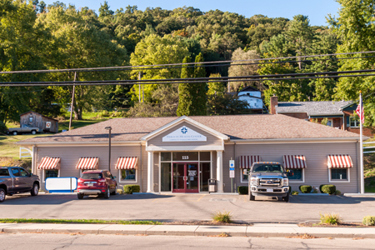
Initially, we did take a more traditional approach by working with academic institutions, thinking that those key opinion leaders would be important. Then we ran across a community center in Fort Lauderdale called IRIS, run by an academically-trained rheumatologist in a spacious, state-of-the-art facility. He's got MRI machines. He has an infusion room the size of infusion rooms I've seen at major universities. But his infusion rooms are full of teddy bears and videos for the patients to watch. It's a homelike atmosphere, and this local center has out-enrolled all our academic centers.
You classically look at academic centers because that's the way the U.S. clinical trial infrastructure has been built, but it’s not working all that well anymore. To be able to branch out into these community centers, there'll initially be some internal resistance, but it's centers like IRIS that know how to get the other community docs to trust them.
You mentioned expanding the scope of the study to include rheumatoid arthritis. How did you decide to include that indication?
It came from the demand from our clinicians. They said, "Hey, you want to be looking at rheumatoid arthritis. The disease endpoints are clear cut. It's a B-cell mediated disease. We know how to measure it. We know how to treat these patients. We see lots of patients, and we think there's a need for a drug like this in these patients."
In the beginning, you're looking at refractory patients; the FDA wants you to look at patients who have failed other things. A small company like us, we’re looking for some of these small, more orphan-like indications in which you know you can get patients into a trial and get a result. When you think of RA, you think of Big Pharma studies and thousands of patients treated in a randomized Phase 3 clinical trial.
What you learn over the course of time is that there are probably certain populations of patients with RA that apply to the same metrics as a patient with myositis or vasculitis or scleroderma. So, we designed Ntrust-2 with an open-ended indication. We just had to add an amendment, and so we did.
Editor’s note: This transcript has been edited for clarity.
About The Expert:
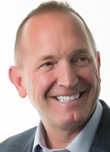 Paul J. Hastings is a five-time biotech CEO who currently leads Nkarta as its CEO and as a member of the company's board of directors. Diagnosed with Crohn’s disease at 13, Hastings is one of the biotechnology sector’s most outspoken patient advocates, pursuing his vision to expand access to cell therapy by helping more patients with autoimmune diseases participate in clinical trials without requiring them to sacrifice the convenience, affordability, or trust built over years with their local medical providers.