
FDA's Draft Guidance On Bayesian Methods: Strategic Implications For Small Biotechs
By Jessica Cordes, senior consultant for clinical operations, Clinical Excellence GmbH
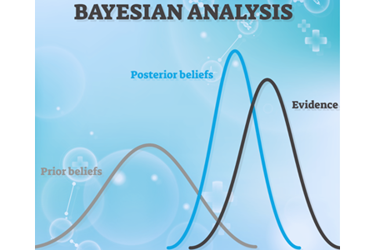
The FDA recently issued its long-awaited “Draft Guidance on the Use of Bayesian Methodology in Clinical Trials of Drug and Biological Products” (January 2026), opening new opportunities for innovative and efficient clinical trial designs. This marks a clear signal to sponsors, especially to smaller companies with limited internal resources, that Bayesian approaches are not only scientifically valid but can also play a role in regulatory decision-making if applied with sufficient rigor.
For small biotechs preparing for first-in-human clinical trials or navigating complex development programs with constrained timelines and budgets, this draft guidance provides both a challenge and an opportunity. It underscores the importance of strategic planning, statistical robustness, and clear documentation — areas where external expert support can be decisive.
What Is Bayesian Methodology, And Why Is It Gaining Regulatory Ground?
Bayesian statistics is not new, but its formal recognition in regulatory settings is a relatively recent development. Unlike traditional frequentist approaches that rely on fixed hypotheses and p-values, Bayesian methods allow sponsors to incorporate existing knowledge, such as data from earlier clinical trials, external controls, or adult clinical trials (to inform pediatric trials), to estimate the probability of treatment effect in a continuous and adaptive way.
This flexibility has significant advantages in scenarios such as:
- rare or pediatric diseases with limited sample sizes
- advanced therapy medicinal products (ATMPs)
- clinical trials with external or historical control arms
- dose-finding and early-phase oncology clinical trials
- platform, umbrella, or basket clinical trials evaluating multiple subgroups.
The FDA’s draft guidance acknowledges this by highlighting practical applications, such as the use of prior adult data to support pediatric extrapolation in diabetes clinical trials or the use of Bayesian hierarchical models in the estimation of subgroup effects in global cardiovascular clinical trials.
Key Takeaways From The FDA Draft Guidance
While the FDA has acknowledged Bayesian designs in previous communications, this draft guidance is the most detailed blueprint to date.
1. Primary Inference Allowed in Specific Settings
The guidance formally recognizes that Bayesian methodology can be used not only for dose selection or interim analyses but also as the basis for primary efficacy inference — provided the design is robust, prespecified, and well justified.
2. Strong Emphasis on Prior Distributions
The heart of any Bayesian approach lies in the prior distribution. The FDA outlines expectations for:
- transparency in how priors are constructed
- justification of their relevance and influence
- discounting strategies to avoid overreliance on external data
- simulation-based operating characteristics to assess sensitivity and robustness.
3. Guidance on Discounting and Borrowing
The FDA differentiates between static discounting (fixed influence of prior data) and dynamic discounting (adaptive based on data similarity). The latter is encouraged for its ability to mitigate prior-data conflict, an area of potential concern in regulatory review.
4. Software and Computation Reliability
Bayesian designs often require advanced computational methods (e.g., MCMC simulations). Sponsors must ensure the accuracy of the algorithms used and demonstrate robustness through simulation studies, particularly for complex adaptive clinical trials.
5. Expectations for Documentation
Detailed documentation is critical. During the planning phase, sponsors must prespecify:
- the planned estimand and estimator
- all assumptions underlying the prior
- decision thresholds and stopping rules
- sensitivity analyses using alternative priors.
This level of rigor is nonnegotiable when Bayesian analysis is used to support a regulatory decision.

Opportunities For Small Biotechs: Smarter, Not Bigger
For emerging biopharmaceutical companies, the ability to integrate prior knowledge into the clinical trial design can be transformative. However, successful implementation depends not only on technical feasibility but also on organizational readiness.
Here are a few practical applications for smaller sponsors:
Pediatric and Rare Disease Development
Bayesian methods enable justified borrowing of adult data to support pediatric efficacy claims, reducing the need for large pediatric cohorts. This can accelerate timelines and reduce recruitment burden. However, sponsors must carefully model the expected similarities and differences between populations and justify their extrapolation assumptions.
Oncology and Cell and Gene Therapies
Many early-phase oncology clinical trials now use Bayesian dose-escalation models (e.g., BLRM or BOIN) to more precisely define recommended Phase 2 doses. In cell and gene therapies (CGTs), where every patient matters, the ability to incorporate prior patient-level data into decision-making can improve both safety and efficiency.
Platform and Basket Clinical Trials
Bayesian hierarchical models (BHMs) are increasingly used to analyze multiple subgroups or indications under a shared protocol. These models allow for shrinkage estimation across groups, enabling sponsors to learn more with fewer patients, especially useful when disease subtypes share common molecular features.
What Sponsors Should Prepare For
Despite the opportunity, Bayesian approaches demand detailed and extensive preparation and planning. Based on the FDA’s expectations and past experience, here are key areas to address early:
1. Expert Statistical Input from Day One
Bayesian clinical trial design is not a plug-and-play activity. Sponsors need statisticians who can construct credible priors, run comprehensive simulations, and evaluate sensitivity and robustness. For many small companies, this expertise is not available in-house and must be accessed through consultants or specialized CROs.
2. Simulations to Support FDA Discussions
The guidance makes clear that decision rules must be justified through simulation. This includes assessments of Bayesian power, operating characteristics, and sensitivity to prior assumptions. Simulations must be well documented and submitted as part of the protocol or IND package.
3. Early Engagement with the FDA
The FDA encourages sponsors to discuss Bayesian proposals early, especially through mechanisms like the Complex Innovative Clinical Trial Design (CID) Pilot Program. These interactions are vital to avoid surprises later in development.
4. Internal Alignment and Training
A successful Bayesian design requires alignment between clinical, statistical, and regulatory functions. Teams need to understand the implications of dynamic borrowing, prior-data conflict, and the interpretation of posterior probabilities.
As someone who supports early-stage companies in setting up their clinical operations, I’ve seen the value of dedicated training and clear internal decision-making frameworks when adopting novel designs.
Consultant’s Perspective: Building Bayesian Thinking Into Development Strategy
While Bayesian methodology adds technical complexity, it also opens the door to more strategic, efficient development, particularly for companies operating with lean teams and limited patient populations.
In my work with small sponsors, I often recommend considering the following:
- Start with clinical relevance: Statistical elegance means little if the design doesn’t align with your clinical development goals or provide meaningful regulatory evidence.
- Balance innovation with conservatism: Dynamic borrowing, skeptical priors, and robust sensitivity analysis are tools to balance risk and credibility.
- Invest early in process: Bayesian design is not a shortcut. It requires discipline, documentation, and cross-functional clarity.
As Bayesian methods become more widely accepted, companies that master their use now will be at a distinct advantage, not just in regulatory success but in attracting partnerships and investor confidence.
A Turning Point For Innovative, Data-Efficient Clinical Trials
The FDA’s draft guidance on Bayesian methodology represents a major validation of statistical innovation in clinical development. For small biotech and pharmaceutical companies, it creates an opening to run more efficient, data-leveraging, and context-sensitive clinical trials, if approached responsibly.
Implementing Bayesian methodology successfully demands more than technical competence. It requires a strategic mindset, cross-functional planning, and clarity on both scientific and regulatory expectations. With the right support and early planning, even small sponsors can design clinical trials that are both scientifically sound and operationally feasible.
Now is the time for companies to assess their readiness, build internal understanding, and seek experienced guidance as they consider adopting Bayesian approaches in their clinical programs.
About The Author:
 Jessica Cordes started her clinical operations career in 2009, working at various companies including Big Pharma and several small to midsize biotech companies. She gained extensive experience on different levels from country study management to global study management and, since 2018, leadership in clinical operations. During her time at Medigene and Immatics, she structured the clinical operations department, built cohesive global teams, and implemented GCP and ATMP-compliant processes. For more than 12 years, she has been working in oncology clinical trials (including hemato-oncology as well as solid tumors) and with ATMPs since 2018. Since 2023, she has been working as an independent consultant and trainer, supporting small companies in building their clinical operations group and setting up their clinical trials for success. She provides a GCP refresher course via her Clinical Excellence Training Academy.