
How Did You End Up In Clinical Research?

By Abby Proch, Executive Editor

In my work, in which I’m often connecting with clinical research professionals over Zoom calls or chatting them up at conferences, there’s usually a point at which I ask about their origin story:
How did you end up in clinical research?
For many, the answer is something like “I didn’t mean to” or “It was a total accident.”
Very rarely (see Bryce Nichol’s story below) do people intend to be here from the get-go. So, I thought I’d round up some of those stories to celebrate the roles all of them play in bringing life-altering and life-saving therapies to people who need them most.
Lisa Bollinger, MD, CMO, Polaryx Therapeutics
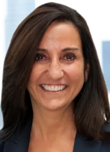 Years in the industry: 20+ years
First research job: Medical Officer, FDA
I never set out to work in clinical research. I trained as a pediatrician because I loved caring for children one‑on‑one. When I later joined the FDA, my perspective shifted. I eventually served as head of the pediatric and maternal health staff, where I focused on ensuring that drugs were properly studied in children by securing a permanent legislative mandate to require and incentivize pediatric research, and operationalizing this mandate across CDER and CBER.
I saw firsthand how public health could reach exponentially more patients than I ever could as an individual clinician. At the same time, I encountered families facing devastating pediatric diseases with no available treatments. The contrast was impossible to ignore: extraordinary need on one side, and a regulatory and scientific ecosystem capable of driving solutions on the other. That realization pulled me into clinical research. It felt like the most direct way to help children I would never meet — by shaping the development of therapies they desperately needed. I chose to stay because the work matters. Every study designed well, every therapy advanced, and increasing access to care, represents a chance to change the trajectory of a child’s life.
At the FDA, what was your “aha” moment that solidified your decision to move into research?
It came when I realized that, while I could influence how products were evaluated by the FDA, I wanted to understand and contribute to the scientific and operational work that brings therapies into existence in the first place. That shift led me to move into industry, where I work directly across R&D functions and stay deeply involved in how new therapies are discovered, developed, and ultimately, brought forward for children who need them.
Bryce Nichols, principal consultant, Ayine Consulting
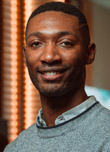 Years in the industry: 9
First research job: Patient Advocate Coordinator (volunteer)
I might be one of the few people who knew they might head into clinical research since childhood. My mom started as a pharmaceutical sales rep and worked her way up to a director-level role in clinical operations. I still remember her coming home with sweatshirts and t-shirts from universities across the country. One of those was a Harvard sweatshirt. Years later, Harvard became my own alma mater.
The industry was always present in our house. Helping her practice interview questions, hearing stories from the road, conversations about how this work touches public safety — research always felt like somewhere I was headed.
In school, I didn't fall in love with conducting research directly, but I enjoyed watching the monitors come into the sites where I worked. They dressed sharp, talked about frequent travel, and carried themselves with a quiet confidence. After months of observing them, I asked my mentor, a director of research at one of those sites, to teach me more about what they did. She ran a tight, caring shop: strong mentorship relationships, a healthy office culture, and high standards. It was a good place to learn. I paid attention and asked a lot of questions.
Fast forward through a CRA training cycle, and I was heading out on my first monitoring visit. My first one did not go smoothly. The site coordinator had 10 to 15 years on me and made sure I knew it. She was tough. But that experience made me want to be genuinely good at this work.
After some time, my mom and I quickly got to bond over mutual understanding of everything the CRA life brings.
Life as a CRA can be demanding, from managing interpersonal relationships to deadlines to travel. What has been a bright spot in your experience that’s kept you going?
You really have a pulse on the country. I've always chosen sites far and wide. Even being bilingual has put me in interesting conversations in a lot of cool parts of the country, including Puerto Rico. Given all of this, I have a first-hand understanding of how economies are doing and how people are reacting to world and national news. It's a really interesting position to have as most people read about what's going on, and you're on the ground experiencing it.
Eyal Shoshani, VP of clinical affairs, PolyPid
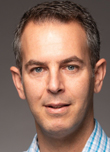 Years in the industry: 22 years
First research job: Clinical and Regulatory Research Associate
After studying biotechnology engineering, I inadvertently found my way into the world of clinical trials after a classmate suggested that I join him on a GCP course. During the first lesson, I noticed a clinical research associate role advertised on the door outside. Starting in medical devices and even attending surgeries where devices were implanted, I quickly grew to love the process of testing innovative products and drugs that have the potential to save lives.
Working on cutting-edge research in cell therapy clinical trials introduced me to how sponsors work closely with regulators when the drugs and therapies are in their earliest stages of discovery. The challenge, alongside the significant opportunity this presents, cemented my love for the work I do.
After our successful Phase 3 study, I know our work will lead to real improvements in patients’ lives and that motivates me and brings a deep sense of purpose to me as a clinical department manager.
What is one of your strongest memories from being a clinical research associate, and why does it carry significance for you?
Beyond monitoring clinical trial data, I also guided and supervised surgeons during bypass surgeries, ensuring that the investigational implant used in the clinical trial was properly implanted in the patient’s heart.
This was my first real experience understanding the immense responsibility of a surgeon during an operation. I was responsible for ensuring that just one procedure, among many performed during the surgery, was carried out correctly. Yet the realization of the overall and exclusive responsibility resting on the surgeon’s shoulders has stayed with me ever since and guides how I now oversee clinical trials with the practical endpoint of surgical and patient improvement always front of mind.
Colleen Hamilton, vice president, clinical operations, Trevi Therapeutics
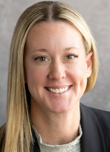 Years in the industry: 19
First research job: Quality Assurance Associate
My path into biopharma began while I was still completing my education and planning a career in psychology. An opportunity at a startup pharmaceutical company introduced me to an industry I knew little about but quickly came to respect. With mentorship from senior leadership, I explored multiple disciplines within drug development. Each experience was formative, but clinical research stood out because of its direct and tangible impact on patients.
I was drawn to the scientific rigor of drug development and the complexity of development operations — how precision, coordination, and accountability are required to translate science into treatments. My commitment was solidified by understanding that strong operational foundations are essential to delivering therapies safely and efficiently.
What continues to motivate me through the challenges of clinical trials is the collaborative nature of the work. Clinical research is inherently human, built on partnerships united by a shared purpose.
You’ve worked in so many disciplines within clinical research. If you could go back to one of them, which would you like to revisit?
If I could reimagine it, I would choose exactly where I am today: within a small organization that allows me to stay connected across disciplines. That environment enables me to bridge strategy and execution, collaborate closely with teams, and maintain a direct line of sight to both operations and patient impact. It’s that integration and agility that I find most rewarding.

Ross Jackson, consultant, Ross Jackson Consulting
 Years in the industry: Began in 1998, completely transitioning into patient recruitment during the 2010s
First research job: Unofficially, patient recruitment marketer
Story: I started out in marketing in the mid-90s and came across the internet early on, thinking, “This could have a major impact on the world…”. So, I set on my own as a digital marketing specialist in 1998. (The same year Google was founded.)
My second client was a local doctor looking to attract patients for a new IBS treatment he was developing — a project that sparked my interest in healthcare, which gradually became my focus. Then, after working on a formal clinical trial through an agency, I began specializing in patient recruitment.
Over time, I’ve moved beyond purely digital tactics, such that my work now is more strategic — advising sponsors, CROs, sites, solutions providers, and investors on how to approach recruitment and retention in a way that delivers results.
A personal turning point came about 10 years ago when my father was diagnosed with Alzheimer’s — an area I’ve worked in extensively. It reinforced how important clinical research is but also how much remains unsolved.
Which is what’s kept me in the field: the opportunity to help improve how trials connect with patients and ultimately deliver better outcomes for everyone.
The late 90s certainly didn’t have the capabilities we have today. What channels did you use?
At that time, I was trying to convince people that the internet would stick around and would be worthwhile as a promotional tool, would you believe!
With the local doctor, it wasn't for a formal trial, and the approach was to build him a website and focus on getting it listed in the results of the major search engines that were around. (No Google then, so I was focusing on AltaVista, Yahoo and others, plus various UK-based search engines and web directories). Then a rudimentary email follow-up campaign to keep people interested.
Over the next few years, banner ads and paid search ads came more into play — which I started using for other clients.
Jennifer Coppola, Associate vice president, regional head of North America, global clinical trial operations, Merck
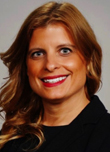 Years in the industry: 24 years
First research job: Clinical Trials Information Specialist
My work in clinical research is grounded in a simple belief: To care for patients, you must see the whole person. I first felt this as an undergraduate athlete, watching teammates struggle with eating disorders. My pre-med curriculum offered only limited nutrition coursework, and I wanted to better understand the disease and what drove it — and how we could do better to address it.
I soon began my career as a dietitian, studied endocrinology, and became a diabetes educator. I then earned an MPH and a Ph.D. focused on cognition and human behavior, strengthening my holistic view of health.
Nearly 25 years ago, I entered clinical trial operations. More than a decade in medical affairs has since sharpened my understanding of the physician perspective and how to incorporate it into the work. Now, at Merck, I’m accountable for decisions that drive trial quality, execution and participation, and I’m committed to ensuring the patient perspective shapes our decisions. This role is a full-circle moment: I’m back in clinical operations, where I started 25 years ago, now leading teams and helping ensure patients have a voice in research.
What is something clinical research professionals must know about principal investigators or providers that’s critical to running a successful trial?
The importance of listening to patients — and to the perspectives of practicing investigators — is essential to designing meaningful clinical trials. By actively incorporating this feedback, we can shape protocols that are both scientifically rigorous and patient-centered, and therefore practical to execute.
Rajani Dinavahi, MD, CMO, Ardelyx
 Years in the industry: Healthcare for 25+ years, biotech for 14 years
First research job: lab assistant
When I was a child, my dad, a dedicated primary care physician, instilled in me a deep empathy for patients and an appreciation for the art of medicine. My passion for research took root in medical school and sharpened through my training in nephrology and transplantation translational research, ultimately leading to my role as principal investigator at the Mount Sinai School of Medicine. Caring for kidney disease patients on dialysis and those with transplants revealed the urgent, unmet need for new therapies. I moved into industry to help close that gap and reach patients at scale.
Advancing a program from preclinical through translational and clinical studies to approval requires rigor, resilience, and an unwavering dedication to improving patients’ lives. My background in clinical medicine and my love for the intersection of early-stage scientific discovery and interventional clinical trials fuels my mission to advance therapies for patients. That journey has brought me to where I am today.
At Ardelyx, I’ve returned to my roots in nephrology while expanding into gastrointestinal disease, helping shape the future of R&D with a patient-centered vision. It’s an unprecedented moment to be in research, one where we can more meaningfully impact the challenges our patients face.
What is one specific lesson you learned from him that sticks with you today?
My dad absolutely loved taking care of patients; he worked exceptionally hard but always seemed joyous about going to the office. His advice to me was to study hard and work hard so that I, too, could be engaged so deeply in a career that work wouldn’t feel like work.
Jennifer Craddock, M.A., clinical research manager, Skin Cancer & Dermatology Institute
Years in the industry: 19
First job: Bettencourt Skin Center
My healthcare journey began in practice management before I transitioned to a lead clinical research coordinator role, where I managed Phase 3 trials for patients with limited treatment options.
The transition from practice management to clinical trials was deliberate. I wanted a return to the heart of healthcare: the patient. I found I missed the direct connection with patients and the opportunity to hear their stories and understand their lives. My role in clinical research allows me to reconnect with my passion in a way that is both professionally fulfilling and deeply personal.
My experience expanded into nephrology, where I oversaw complex indications including anemia, chronic kidney disease, and diabetes. When I moved to Nevada, I joined the Skin Cancer & Dermatology Institute in Reno to establish and lead their clinical trials division. Today, I manage a diverse portfolio ranging from Phase 1 to Phase 4 studies.
Clinical research fosters a unique partnership between the coordinator and the participant. As coordinators, we get to see the tangible transformation clinical trials bring to a patient’s health and quality of life. Being part of each patient’s journey continues to drive my dedication to the next generation of medicine.
Can you share an experience seeing a patient benefit from a clinical trial that might not have experienced with standard of care treatment?
In a alopecia universalis study, I treated a young patient who had not responded to other therapies. After our treatment, she experienced complete regrowth of her hair across her entire body. This transformation radically improved her school experience and overall quality of life, allowing her the confidence to return.
Editor’s note: Responses have been edited for length and clarity.