
How One Researcher's Personal Study Experience Is Helping Him Better Serve Patients
A conversation between Regeneron Executive Director in Clinical Sciences Kaniel Cassady, Ph.D., and Clinical Leader Executive Editor Abby Proch
When you’re seated at a restaurant, waiting for your meal to arrive, you assume that it will be made to order and according to a trusted recipe. You also assume that it’s well seasoned, tasted by the chef along the way. It will be corrected with salt, pepper, or spice by the chef, so that it arrives at your table prepared perfectly.
What, then, should the expectation be of a clinical trial from a patient perspective?
That they be planned and conducted with scientific rigor and according to regulatory and compliance standards — but that they never be “tasted” by those preparing them?
The analogy has holes, I’m sure, but it gets at a core concern in clinical research: When designing clinical trials, do we truly design them with the patient experience in mind?
The call, increasingly, is to do just that. And by circumstance, Kaniel Cassady, Ph.D., has answered.
After receiving a photo of a local billboard advertising a clinical trial, Cassady — who works with a team of scientists and physicians performing clinical trials at Regeneron — joined another company’s clinical trial as a participant for a condition affecting his daily life.
In this Q&A, he reflects on how his industry experience shaped his expectations, questions, and interactions as a patient and how his patient experience is reshaping his clinical work going forward.
Clinical Leader: Having worked in clinical research, at what point did you first consider a trial for yourself, and what reasons did you have for seeking it out?
Kaniel Cassady, Ph.D.: While I’m a strong believer in the scientific process underpinning clinical trials, I’ve actually never participated in a study before. In this age of digital innovation & AI, my clinical trial journey began in a pretty low-tech way — when a friend texted me a photo of a billboard. It wasn’t the trial itself advertised on the billboard but the indication that stood out to me. It’s not a life-threatening condition, but it’s something that I live with regularly that impacts my daily routine, my hobbies, and my lifestyle. My stakes were very real; it was the first time in my career where the science being studied was directly pointed at a condition affecting me personally.
How did your professional background affect your experience in the trial?
Interestingly, my familiarity with clinical trials probably made me a slower participant to enroll. I read the informed consent form line-by-line, I asked endless questions about the science behind the molecule, the data collection, and the endpoints, and I ended up asking more questions as the trial progressed. There’s a common industry assumption that participant communication is front-loaded, that patients ask all their questions during screening, sign the papers, and then coast through. But my experience proved otherwise. For instance, when I was called back to the site to re-consent following a protocol amendment, it triggered a completely new wave of questions from me.
This experience solidified for me that the site relationship is, perhaps, the single biggest factor in participant compliance and visit attendance. It’s not the sponsor, the clinical scientist, or the physician who operationalizes the study for the participant; it’s the site staff, the clinical research coordinator, and the nurses. Their flexibility and accessibility are what kept me showing up. The site experience can truly make or break a trial in ways that a protocol’s Schedule of Events simply cannot completely capture.
How were your visits?
Each visit could be anywhere from an hour to four hours depending on the type. I’m in a large suburb of New York City, and it took at least an hour each way, if not more, to get to the trial site. This highlighted the reality of the travel burden. Even from a clinically dense metropolitan area, a single visit meant a six-hour journey on a workday. Data show that a large portion of the U.S. population may live twice as far — about 2 hours — from a site a study center, and so my experience is probably in line with, if not a little bit easier than, the average potential clinical trial participant in the U.S.
You mentioned your relationship with the site staff. Tell me about your expectations and how they evolved.
When I initially joined, I assumed it would be a transactional relationship. With the clinical trial site, coordinating visits on a regular basis, the frequency at which they’re scheduled is complex and complicated, especially on workdays when people need to travel in. I found that building a relationship with the site is one of the biggest factors in compliance, visit attendance, and what ultimately kept me in the study.
They were able to work with my schedule. They knew that on Fridays I have a more open schedule, so they prioritized finding me time on those days. I felt seen as an individual.
It really emphasized the importance of the relationship between the patient and the site. Compliance is reinforced by the people at the clinic, not by the protocol itself.
You said communication increased over the life of the study. What did that look like?
The sponsor spends a lot of time thinking about the initial design and start of the study — identifying the appropriate patients, screening patients to make sure they fit the criteria. From a sponsor perspective, once the patient is enrolled, the focus tends to pivot to the data.
From a patient perspective, it was a different experience. Once the study started — when I began taking the drug and capturing my data — that’s when I had more questions. By the time we had to re-consent on a protocol amendment, I was asking more questions than I did at baseline.
The study I participated in was a Phase 2 interventional study for an oral medication, and the primary endpoint was a PRO captured in an electronic diary. When I had questions about the timing of administration, use of concomitant medications, the potential side effects, or whether I was capturing my data in the system correctly, those questions went back to the site. That interaction again highlights the importance of the participant’s relationship with the site staff, and it really changed my perspective on clinical trials.

What was your experience recording your PROs?
As I mentioned, there was an electronic diary, similar to those that we use here at Regeneron, and the lived perspective was also eye-opening. Sponsors sometimes assume that diaries, whether they're paper or electronic, are a low burden activity, but considerations around diary design are critical as this burden may be underestimated.
For example, if the diary is electronic, should it be hosted by an app on a phone or in a browser? There are pros and cons to each of those, and we may need to take into consideration the technological challenges faced by certain patient populations. If a browser is chosen, the time that it takes a page to load may impact how proximally data is recorded from the actual event. The overall quality and design of these instruments matter just as much as the quality and design of the molecule and the protocol.
One other thing that I had never thought about before was capturing how you feel on a day when you don’t feel great in general. If you didn’t sleep well or you’re sick, and now you’re being asked to capture how you feel after taking a study medication, teasing those baseline feelings apart is incredibly complicated for a participant. I think patient-reported outcomes are exceedingly powerful because they capture lived experience, but that power depends entirely on optimizing both the instrument and the process of data collection.
How will you use your learnings at Regeneron?
Clinical trials are at the heart of our mission to translate science into medicine. With more than 200 ongoing clinical trials across more than 50 countries, we’re working to enable a clinical research pipeline that aligns with the realities of modern healthcare.
The lens with which I read a clinical trial protocols has fundamentally changed. I read them differently now: I ask about participant geography, community-setting feasibility, overall patient burden related to visits, blood draws, and data collection. Walking a protocol from the participant’s chair completely changes how you read it from the sponsor’s side.
At Regeneron, we have three major proof points where this proactive, patient-centric thinking is already at work.
In our multiple myeloma program, we designed the clinical trials for a medicine to utilize response-adapted dosing. The treatment was administered weekly and as patients responded over time, they could transition to biweekly, and eventually monthly, administration. This directly addressed the travel and visit-burden problem — as the patient’s disease improved, the clinic visit burden decreased. We were the first in this class to design a study proactively in this way.
In that same program, we’re opening a trial to administer the medicine in the community setting. It’s estimated that about 85% of oncology care occurs in the community setting rather than academic centers; this approach brings the trial directly to where patients receive care. This not only provides accessible clinical trial options but also generates data that gives community physicians the confidence to use the treatment.
Finally, we used patient reported outcomes in our clinical trial in generalized myasthenia gravis, which is a neuromuscular disease that results in variable weakness in the voluntary muscles of patients, drastically impacting their daily routine and quality of life. One of the primary endpoints is the Myasthenia Gravis Activities of Daily Living (MG-ADL) PRO, an eight-item patient-reported scale that serves as our standard of evidence. This questionnaire captures the patient’s own measurement of their daily activities, such as talking, chewing, and brushing their hair.
Would you recommend that other clinical research professionals enroll in a clinical trial for personal or professional value?
Yes, with a little bit of nuance. I don’t think every clinical professional should enroll simply as an empathy exercise. Participation carries real physical costs and time commitments, so I wouldn’t recommend it as a tourist exercise, either. But if you personally have a condition under study and you’re a real candidate, you should do it.
To zoom out, the participation gap in the U.S. is a critical challenge to advancing research. Only about 5% of American adults have ever participated in a clinical trial, and it’s estimated that fewer than 10% of Americans claim to have ever been made aware of this as an option. Yet, of those asked to participate, almost half choose to say yes. We also know, from our own data, that about 90% of past participants would choose to participate again.
So, my recommendation is if you’re a candidate, consider enrolling. But if you don’t enroll personally, you can still gain this perspective. You can walk the protocol in the participant’s shoes before approving it — personally test the e-diary, evaluate the travel distance, and ask yourself what compliance and re-consenting really feel like as a patient. We can all do that exercise without ever signing an informed consent form.
About The Expert:
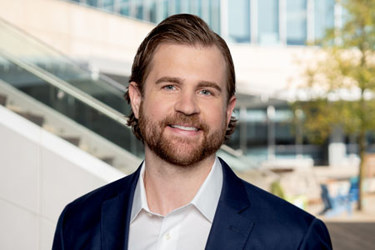
Kaniel Cassady, Ph.D., is an executive director in clinical sciences at Regeneron Pharmaceuticals. He earned his Ph.D. in immunology and hematology from City of Hope National Cancer Center and a master’s in bioscience management from the Keck Graduate Institute. He joined Regeneron’s Hematology Clinical Development Unit as chief of staff, helping build the team, process, and pipeline from six ongoing trials to over 50 active studies in under five years — spanning pre-IND assets through pivotal programs and three global approvals. From that foundation, he has taken on increased enterprise responsibilities, including leading Regeneron’s Regional Medical Directors, a team of ex-U.S. physicians supporting the company’s global clinical trials and serving as scientific lead for the Development Organization’s Digital Transformation initiative. Driven by urgency for patients, his work centers on addressing bottlenecks that matter most — freeing scientists to focus on the intellectual while accelerating execution.