
Immune Priming, Oncolytic Viruses, And The Next Phase Of Solid Tumor Immunotherapy
A conversation between Oncolytics Biotech Scientific Advisor Richard Vile, Ph.D., and Clinical Leader Executive Editor Abby Proch
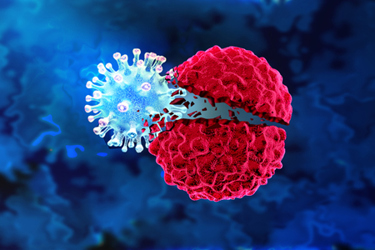
Immune priming has many iterations — from implicit priming as a tumor’s response to chemotherapy to the intentional one-two punch of priming paired with checkpoint inhibitors. It also includes oncolytic priming, which is an in-situ vaccine-style approach in early-phase trials. This is the wheelhouse of Oncolytics, which is progressing pelareorep, its first-in-class double-stranded RNA immunotherapeutic agent, an oncolytic virus, for gastrointestinal cancers.
In this Q&A with Clinical Leader, Oncolytics Biotech Scientific Advisor Richard Vile, Ph.D., explains how priming with oncolytic viruses can help reeducate the immune system to recognize cancer as foreign and mount an antitumor response. The discussion also explores the above-mentioned pelareorep as it relates to the importance of timing in early-phase trials, the challenge of interpreting pseudo progression, and the operational and scientific lessons that can inform future immunotherapy development.
Clinical Leader: For those of us who don't specialize in immunology, can you give us a primer, so to speak, on what immune priming is?
Richard Vile, Ph.D.: In most cases, solid tumors derive from our own cells. And in the few cases where that's caused by a virus, there are clear foreign antigens that the cancer expresses, which the immune system could potentially see. But most of the time, there aren't these clearly foreign proteins expressed by the cancer. And so most cancers tend to be essentially diseases of our own cells. To get the immune system to see those cells, react against them, and reject them is very difficult. Immune priming is our attempt to reeducate the immune system to see a cancer as foreign and generate a rejection response in exactly the same way as our bodies do when we get infected by a virus or bacteria.
What are the main immune priming approaches today, and what are their strengths and weaknesses?
There are specific immune priming approaches and wider, less specific approaches. In the specific approaches, such as with vaccines, we identify proteins in a tumor that are potentially attackable by the immune system. These tend to be either viral proteins if the cancer is caused by a virus or, more likely, proteins that have mutated as part of the transformation of a normal cell to a cancer cell. If we can identify those, then we can try to vaccinate against those mutated forms in the hope that we'll generate an immune response against the mutated proteins but leave the unmutated cells intact.
Non-specific approaches include oncolytic viruses, where the hope is that the virus will infect the cancer, and the immune system will see the viral infection as foreign and something that needs to be reacted against immunologically.
At the same time the immune system sees the virus and reacts against the virus. We hope it will see some of these mutated proteins, and by generating that antiviral response, the immune system will also respond against a variety of these other antigens or proteins expressed by cancer.
What has been the approach with pelareorep?
Up to about 80% of the population probably have seen this virus and have generated antibody or T cell immune responses against the virus. Pelareorep is an oncolytic virus, which means that if we put it into cancer cells, it replicates preferentially over its replication in normal cells. And the reason for that is that the cancer cells have activated pathways that help them grow very rapidly and favor viral replication. What we and other people have seen is that if we put that virus into tumor cells, it replicates very well. And in replicating, it exposes lots of danger signals that the cell sees and responds to that infection in the same way as we respond to SARS-CoV-2 or influenza infections. The immune system sees that danger signal and launches an immune reaction against the virus and the cancer cells.
What does efficacy look like, either biologically, radiologically, or clinically?
There are two phases of pelareorep action. When you put the virus into a local cancer, we see inflammation and an influx of immune cells. And in days, we sometimes see that injected tumor decrease in size and regress completely. What we are particularly excited about and interested in is that we also see shrinkage of tumors that are not injected with the virus and are at other places in the patient. Those regressions tend to occur after months, even years. That indicates that we are indeed generating this immune response against the virus, and that then spreads against the tumor as well as to metastatic disease elsewhere in the body.

Is that a happy accident, or is this something that you anticipated?
Initially, in the field of oncolytic viruses, the hope was that the virus would replicate freely in the cancer cells and not replicate in normal cells, and we'd get a very local effect. That's true. It does stop the spread of the virus.
But over the last 10 to 15 years, the field has seen the immune system kicking in as a result of the viral infection as a very important component of the therapy. When we see shrinkage of tumors that have not been physically infected by the virus, that's a major positive for us because it means that the patient is developing an immune response against his or her cancer. That also gives us the opportunity to build on that with other types of immune therapies like immune checkpoint blockade to accentuate that immune response against the cancer.
When you're looking for intended effects, especially within early-phase clinical trials, what are you looking for? And how has that affected the timing of biopsies, imaging, and other diagnostics?
Timing has become a critical factor in these therapies. When we use the virus as an anti-cancer agent, the body sees that virus as an invading pathogen and attacker. As is typical with any viral infection, the immune system mounts a very acute response to that. But immune priming effects tend to develop over a longer period of time compared with the acute antiviral response.
In our pre-clinical models and clinical studies, we have shown that once the antiviral response subsides, the anti-tumor response tends to build. And so, if we're going to combine this therapy with these other immune adjuvants like immune checkpoint blockade, which have a slower antitumor response, we really want to time it so that the antiviral response is allowed to subside.
How do you land on the right window of time to see if pelareorep is having an effect?
It's very difficult to know. In that early phase of the antiviral response, when we image the tumor, sometimes it looks like the tumor's growing quite aggressively. And it may be that the tumor is growing aggressively, which is a bad thing. But in successful cases, that image looks bigger because there's an immune response to the tumor. And what we're seeing is not the tumor growing bigger but the immune system attacking the tumor. That's called pseudo progression. We have to be careful now when we see pseudo progression. If you can sample the tumor with a biopsy, you can distinguish it by looking at the tumor cell types.
Likewise, in sampling for biomarkers, we typically see that the antitumor immune effects manifest after weeks and months. Looking at it early, we may see markers of viral infection. Looking later, we may see those markers of tumor cell-killing antitumor immune cells. Again, timing is very important to know what you're looking at and what you're looking for.
How does pseudo progression affect the way you train readers and principal investigators?
Some scans can be very alarming and off-putting because you think there's inflammation, there's progression, and so on. Once you've seen several patients, in fact, the opposite is true in many cases. In those patients where we see inflammation — this pseudo progression — it tends to be those patients who do well clinically.
Having that experience is important for the investigators and the people reading the assays to know that what looks bad could potentially be good and what looks good could potentially be clinically bad.
What have you learned with this early-phase trial that can improve upon what you do in later phases?
The biggest thing is appreciating what the virus does to the immune system, understanding those mechanisms that trigger immune cells, and then appreciating that the virus is lighting the fire. Then we need to figure out how we can combine that with other therapies to really accentuate those effects.
Pelareorep triggers something called TLR3, which is an immune danger signal. Working to combine that therapy with other therapies along that pathway is very important. And another thing is understanding why certain patients respond very well and why other patients don't respond at all. That could be anything as trivial as a technical factor, such as the virus being injected into the wrong part of the tumor and that patient doesn't respond.
Or it could be a more fundamental biological question of why one patient doesn't respond through TLR3, but another patient does. And we see that with SARS-CoV-2. You might react very poorly, but maybe one of your loved ones gets infected and just shrugs it off. There are all these genetic and environmental factors that affect the response, especially to a virus like pelareorep, and we need to identify those patients who are likely to respond well or not likely to respond well.
What about some of the operational lessons learned or challenges that you've overcome?
Overall, getting into clinical trials with these novel agents is a challenge. Rightly so, there are big regulatory hurdles to overcome, including convincing regulatory bodies that you are not doing something cavalier or unethical. It can be frustrating that it takes a long time to get from these preclinical results, which look very good, to treating patients. And sometimes you feel that it's called the valley of death for a reason — starting the clinical trial can be two, three, or maybe even four years down the road. When you actually start the trial, you're trialing something that a couple of years ago you thought was really good, and now you’ve combined it with other factors and have an even better shot at it.
About The Expert:
 Richard Vile, Ph.D., is a scientific advisor to Oncolytics Biotech and professor of immunology at the Mayo Clinic, where he serves as co-director of the Gene and Virus Therapy Program and director of the Immuno-oncology Program. An internationally recognized leader in cancer immunotherapy, Dr. Vile's research focuses on harnessing viruses and the immune system to develop novel treatments for cancer. His work has advanced the understanding of oncolytic virotherapy, immune cell engineering, and combination immunotherapy approaches, helping to bridge laboratory discoveries with clinical applications. Through his leadership at Mayo Clinic and advisory role with Oncolytics, Dr. Vile continues to drive innovation in the development of next-generation immunotherapies aimed at improving outcomes for patients with cancer.