
In Case You Missed Them: Recapping The FDA's Recent Guidances For Cell And Gene Therapies
By Peter H. Calcott, Ph.D., FRSC, president and CEO, Calcott Consulting LLC
In the first nine months of 2026, FDA’s CBER issued six guidances and draft guidances on cell and gene therapy.1 Add to that the seven guidances and draft guidances in 2024 and 2025, and we can conclude that the FDA has this area as a main thrust in drug and biologic development. At present (per the FDA website as of August 2026)2 there are 53 listed approved products, including cord blood defined therapies. If over the last decade we have seen approval of 50+ products, we can only assume that the number in development has to be in the hundreds. So, it is not surprising to see the FDA’s effort to help industry in the development of these products. Meanwhile, in Europe, the MHRA in the U.K. and EMA in EU have also released guidances.3-5
In this article, I review 10 of the FDA’s guidances spanning the last 12 months, all of which have a common theme of aiding companies scale the high regulatory mountain to assure safety and efficacy of these innovative medicines. These 10 fall into four groups: clinical development and safety; chemistry, manufacturing, and controls (CMC); general; and communication and review. This is illustrated in Figure 1. Several of the guidances do span wide topics and this is shown by arrows.
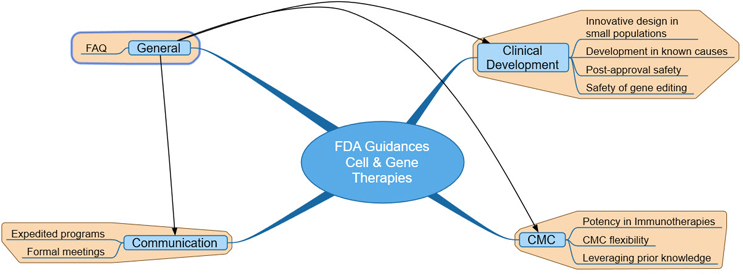
Figure 1: Relationship of the Guidances. Arrows indicate areas of cross reference.
Clinical Development And Safety
Innovative Designs for Clinical Trials of Cellular and Gene Therapy Products in Small Populations; Draft Guidance for Industry6
Small patient populations have always been a challenge and this draft guidance advises on this topic for ATMPs. Small numbers challenge clinical development because of the difficulty of identifying patients and gaining sufficient power in studies to demonstrate efficacy, to name just two. This guidance goes through the approaches that are recommended to tackle these issues, including single arm studies where a patient serves as his own control, disease progression modeling, externally controlled studies using real world data, adaptive trial design where changes are made to the protocol prospectively as the trial progresses, Bayesian design where external data is incorporated, and master protocol design where multiple endpoints are incorporated with a common control group. These sections indicate that the agency recognizes that these trials are difficult and we must be creative to manage the outcomes. The careful choice of patients need not follow traditional methods, and this is discussed as well.
Considerations for the use of the Plausible Mechanism Framework to Develop Individualized Therapies that Target Specific Genetic Conditions with Known Biological Cause; Draft Guidance for Industry7
If the disease state is well characterized (the genetic mutation is known for a specific protein, for example) and the disease progression including symptoms is well documented, this draft guidance gives the road map to approach this treatment by ATMPs. The underlying approach is to develop the therapy to rectify the mutation, demonstrate that the genetic change has occurred, and show the disease progression is lessened or eliminated. This guidance describes the expectations of CBER for the clinical and nonclinical aspects of the development.
Special emphasis is placed on studies needed for anti-sense oligonucleotides (RNA-based), gene editing (GE) products, and others needed to demonstrate safety and efficacy as well as early proof of concept. Detailed discussion is included on trial design, patient assessment, dosing, trial outcomes (clinical and biomarker assessments), safety outcomes, and risk-benefit analysis. A section on CMC considerations is included. Looking at the big picture, they describe the need to share data in the patient and research community.
Post-approval Methods to Capture Safety and Efficacy Data for Cell and Gene Therapy Products; Draft Guidance for Industry8
Approval of a product is not the end of analysis of safety of your drug. Safety monitoring continues for the full life of the drug. This draft guidance describes what post-approval safety monitoring should include. In fact, this guidance describes how real-world data can be accessed and real-world evidence extracted. This can be done early in development and may be included in the IND or BLA. If you do want to include it, you should propose it to the agency to gain consensus. This same data can also be useful post-approval. However, some of these data repositories may not be designed exactly to capture the data needed, so caution is needed. These types of repositories of data include electronic health records, medical claims (via insurance), vital statistics, and registries. Even during clinical trials, some data may reside outside the traditional data repositories in a decentralized area. The FDA’s position is that there may be a wealth of data at your disposal in many unusual places. Use it, but cautiously.
Safety Assessment of Genome Editing in Human Gene Therapy Products Using Next-Generation Sequencing Draft Guidance9
This draft guidance is focused on safety aspects of products using next-generation sequencing (NGS) techniques. For gene editing-type products, safety must be assessed for the intrinsic editing of the actual gene as well as the indirect safety due to the impact of unintended editing (off-target or unintended). These NGS approaches use a variety of techniques, such as CRISPR, meganuclease, zinc finger nuclease, and TALENs, but it is recognized that newer methods will be introduced in the future. Basically, a variety of techniques is used to identify fidelity of the editing in the intended location and generalized approaches for broader potential of changes introduced. The analysis of on-target GE is perhaps much easier than that for off-target and, as such, much of the guidance focuses on the latter.
The guidance recommends the level of detail needed to document the analysis. It also details the considerations necessary for both on-target and off-target assessments. In the case of the former, the agency describes sequencing strategy and sample selection criteria. For the latter, it goes into detail on approaches to address sample selection for off-target editing for ex vivo as well as in vivo products as well as the methodology to analyze. This includes in silico, newer NGS methods, and confirmatory methods. Sections on analysis parameters, reporting strategies, and other factors that do not fit into these categories are included. Human genetic variability is discussed comprehensively in the context of this technology and the abnormalities that might be detected, as is chromosomal integrity analysis.
Perhaps one of the most useful sections is on submission of reports detailing the level of analysis and depth of information needed to be submitted.
CMC
Potency Assessment of Active Immunotherapy Products Draft Guidance10
Products described as active immunotherapy products are the focus of this draft guidance. It is intended to supplement other guidances dealing with potency for cell and gene therapy products and other protein and peptide products. 11, 12 Potency assays are critical measures of effectiveness or efficacy of these products and, as such, confidence in the results is paramount. These assays are used in lot release, stability, and comparability in both clinical investigations and marketed products. The guidance describes attributes to consider in the development of these assays.
Potency assays play a pivotal role as a critical quality attribute (CQA) ensuring that the product under consideration is capable of eliciting the appropriate immune response to achieve the intended therapeutic effect. The assay should be quantitative and be precise enough to differentiate sub-potent lots and allow for rejection. If the product is a defined analyte, the potency assay may be sufficient to measure activity but if the active ingredient is a mixture of analytes there should be other assays to measure each individual analyte to assure consistency of composition. These findings should be established as early as feasible in the development cycle. The strategy should be discussed with CBER, especially in complex products. The guidance gives good advice for several scenarios.
The establishment of a relevant CQA is critical and should be approached orthogonally to assure an effective, meaningful one is established. Basic research is necessary to establish the cascade of activities linking molecular interaction with final therapeutic activity. Measurement of bioactivity falls into several types of methods, including bioassays, physicochemical assays, and mixed types of assays. The guidance lists considerations for these potency assays for non-personalized peptide- and protein-based products, vectored products, and for personalized products of these same types. In addition, considerations are described for cell-based, irradiated tumor cell-based, tumor lysate-based, and antigen pulsed antigen presenting cell-based products.
Chemistry, Manufacturing, and Controls Flexibilities for Developing Human Cellular and Gene Therapy Products for a Biologics License Application Guidance13
In this guidance, CBER advocates flexibility that it believes will allow for a more rapid and robust CMC development program. While CBER describes many instances of flexibility, it recommends close coordination with the review staff to assure alignment. This guidance document should be used in coordination with other guidance documents on CMC development.
There are many challenges to developing many of these products, including product complexity, patient-specific manufacturing, sophisticated processes and advanced technologies, limited patient population size, fewer manufacturing runs, product characterization and analytical testing, and short product shelf life necessitating a narrow window of time from production to administration. The FDA recognizes the unique nature of these types of products that makes traditional methods of development challenging. It has detailed discussion on areas of flexibility during clinical development, including phase-appropriate GMPs, release testing commensurate with phase of development, use of risk-based approaches in comparability studies, leveraging prior knowledge with other products (including platform technology), and use of voluntary consensus standards.
It recommends flexibility in approaches to process validation. A scientifically driven number of process performance qualification batches to demonstrate control should be defined, and these batches should be used commercially if they pass specification. From my perspective this is exactly what industry has been doing for a considerable time for biologics. Similarly, the discussion addresses flexibility in establishment of specifications and method validation when manufacturing experience is limited at time of submission. Adjustments to specifications then are possible post-approval, which, again, is something that is commonplace for biological products. The final flexibility is in the area of stability. Leveraging clinical data to establish commercial expiry and shelf life is encouraged; again, this is not unheard of in the biological development world. There may be limited product supply, so saving the classic two times the testing needs as reserve or retain product may not be feasible.
Overall, much of what FDA describes is quite common practice in the biological product development world.
Leveraging Prior Knowledge in the Development of Human Gene Therapy Products Incorporating Genome Editing; Draft Guidance for Industry14
This draft guidance describes leveraging prior knowledge in the development of these types of products. The main body of this guidance is the description of leverage possible in CMC but there are sections covering nonclinical and clinical areas. There is a final section dealing with how to submit to the agency proposed areas for acceptance.
In general, prior knowledge falls into two classes: public knowledge and platform knowledge. Public knowledge may include that which is within the scientific literature and community. It is generally longstanding knowledge. Platform knowledge is that which is learned using similar products and subsequently applied to the new product. Some is owned by the developer, while other knowledge may be owned by a CDMO that uses it to develop your product. Sometimes it is part of a submission to the FDA via an IND, BLA, or DMF. Some platform knowledge may be in the public domain.
When applying platform approaches to a new molecule or product, it is necessary to assess the impact of small differences in the product being considered on the applicability of this approach. Each application of the platform approach must be assessed as to appropriateness and any application of prior knowledge should be viewed on a case-by-case basis. In a similar fashion, nonclinical and clinical data used to leverage a new product should be assessed and the conclusions documented supporting its use.
In the CMC arena, analytical method leverage is very applicable across products. Product specifications can be easily leveraged, taking into consideration the similarity of the products. Similarly, stability data leverage may be appropriate, taking into consideration the nature of the product, its manufacture, and the product’s intrinsic stability. In a similar fashion, there may be opportunities for application across product families for comparability protocols and results, process characterization, and process validation and manufacturing facilities.
A stepwise approach to leveraging data to support investigational products in nonclinical areas is recommended. Consideration must be given for the nature of the products and knowledge gained across families of products. The guidance goes into detail on ex vivo GE products and in vivo GE products.
In clinical areas, safety data is the area where leverage is often easy to justify. But caution should be practiced to assure appropriateness of the comparison. Leverage is also possible in the bioinformatics area as well. Detailed discussion in this area is well documented in the guidance. Clinical trial design and even prior clinical data can be easily leveraged with adequate analysis and documentation. Real-world experience and natural history studies can be leveraged with good analysis and justification.
Prior to embarking on leveraging, it is wise to approach the FDA to obtain concurrence on the approach. Section IV describes the FDA’s recommended approach. The proposed leveraging should be described in the IND either directly or by cross-referencing other submissions (IND, DMF, etc.); the same is true with the BLA. In all cases, the rationale and justification must be clearly stated. Table 1 in the guidance goes point by point, with advice on each of the areas covered in the guidance.
General (Multiple Areas)
Frequently Asked Questions — Developing Potential Cellular and Gene Therapy Products Guidance15
As the name implies, this is a summary of questions the FDA has fielded on cell and gene therapy products over the years. It covers multiple disciplines, including regulatory review CMC, pharmacology/toxicology (PT), clinical, and clinical pharmacology. This was driven by a commitment in PDUFA VII.
It covers IND submission and review, the pathway to BLA preparation and submission and meetings to aid in streamlining the pathway. The product development sections include several CMC ones as well as donor eligibility considerations. The nonclinical section includes discussions on animal models, tumorigenicity, product selection, and other evaluations necessary. The human trials sections discuss trial design, endpoint selection, and safety data.
Importance Of Communication And Review
These two guidances provide underpinnings to the submissions describing how you can speed up development and approval and reinforcing the need to communicate with the FDA to assure the most successful path is taken.
Expedited Programs for Regenerative Medicine Therapies for Serious Conditions16
This draft guidance points industry to the various pathways for submission and review for regenerative medicines, which ATMPs often are. When finalized, it will replace a 2019 document as directed by a 2022 PDUFA Act (VII).
It described all five programs, including Fast Track, Breakthrough Therapy, Regenerative Medicine Advanced Therapy, and Priority Review designations and Accelerated Approval. There are also sections on clinical trial design considerations and interactions between sponsors and FDA. This will give the reader the complete set of possibilities for overall increasing the speed of review and approval.
Formal Meetings Between the FDA and Sponsors or Applicants of PDUFA Products17
This procedural guidance describes the mechanisms for interaction with FDA including meeting types, formats and requests. It also describes in detail the contents of meeting packages and the logistics of meeting requests, meeting minutes, conduct and meaning of the response. The details here are an excellent summation of the best approaches to FDA to address questions and to seek general advice. This guidance replaces the previous versions of 2017 and 2018.
Conclusions
These guidances contain valuable information and advice specific to ATMPs. However, a significant part of these guidances describe practices that are well established in drug and traditional biological products. Based on my experience with ATMP products in U.S. and Europe, many developers are hesitant to take some of these areas of flexibility and use them. While nothing jumped out to me as revolutionary, it did document approaches that are rational and useful for industry. It consolidated an approach that should help smaller companies and even larger companies that have been hesitant in using these approaches.
References:
- Cellular & Gene Therapy Guidances. (September 2026) https://www.fda.gov/vaccines-blood-biologics/biologics-guidances/cellular-gene-therapy-guidances
- Approved Cellular and Gene Therapy Products. (August 2026) https://www.fda.gov/vaccines-blood-biologics/cellular-gene-therapy-products/approved-cellular-and-gene-therapy-products
- Calcott, P.H. (June 2024). Strategies To Tackle CAR-T Product Challenges. https://www.cellandgene.com/doc/strategies-to-tackle-car-t-product-challenges-0001
- Calcott, P.H. (March 2025). MHRA Issues New Regulation On Modular And Point Of Care Manufacture Of ATMPs https://www.advancingrna.com/doc/mhra-issues-new-regulation-on-modular-and-point-of-care-manufacture-of-atmps-0001
- Calcott, P.H. (July 2025). 7 New MHRA Guidances To Help You With Decentralized Manufacturing For Cell And Gene Therapies https://www.cellandgene.com/doc/new-mhra-guidances-to-help-you-with-decentralized-manufacturing-for-cell-and-gene-therapies-0001
- Cell and Gene Therapies Guidances Innovative Designs for Clinical Trials of Cellular and Gene Therapy Products in Small Populations; Draft Guidance for Industry (September 2025) https://www.fda.gov/vaccines-blood-biologics/biologics-guidances/cellular-gene-therapy-guidances
- Considerations for the use of the Plausible Mechanism Framework to Develop Individualized Therapies that Target Specific Genetic Conditions with Known Biological Cause; Draft Guidance for Industry (February 2026) https://www.fda.gov/regulatory-information/search-fda-guidance-documents/considerations-use-plausible-mechanism-framework-develop-individualized-therapies-target-specific
- Postapproval Methods to Capture Safety and Efficacy Data for Cell and Gene Therapy Products; Draft Guidance for Industry (September 2025) https://www.fda.gov/regulatory-information/search-fda-guidance-documents/postapproval-methods-capture-safety-and-efficacy-data-cell-and-gene-therapy-products
- Safety Assessment of Genome Editing in Human Gene Therapy Products Using Next-Generation Sequencing Draft Guidance (April 2026) https://www.fda.gov/regulatory-information/search-fda-guidance-documents/safety-assessment-genome-editing-human-gene-therapy-products-using-next-generation-sequencing
- Potency Assessment of Active Immunotherapy Products Draft Guidance (August 2026) https://www.fda.gov/regulatory-information/search-fda-guidance-documents/potency-assessment-active-immunotherapy-products
- Potency Assurance for Cellular and Gene Therapy Products Draft Guidance (December 2023) https://www.fda.gov/regulatory-information/search-fda-guidance-documents/potency-assurance-cellular-and-gene-therapy-products
- Application of Current Statutory Authorities to Human Somatic Cell Therapy Products and Gene Therapy Products. (October, 1993) 58 FR 53248. http://www.fda.gov/downloads/BiologicsBloodVaccines/SafetyAvailability/UCM1481490 13.pdf
- Chemistry, Manufacturing, and Controls Flexibilities for Developing Human Cellular and Gene Therapy Products for a Biologics License Application Guidance (May 2026) https://www.fda.gov/regulatory-information/search-fda-guidance-documents/chemistry-manufacturing-and-controls-flexibilities-developing-human-cellular-and-gene-therapy
- Leveraging Prior Knowledge in the Development of Human Gene Therapy Products Incorporating Genome Editing; Draft Guidance for Industry (June 2026) https://www.fda.gov/regulatory-information/search-fda-guidance-documents/leveraging-prior-knowledge-development-human-gene-therapy-products-incorporating-genome-editing
- Frequently Asked Questions — Developing Potential Cellular and Gene Therapy Products Guidance (August 2026) https://www.fda.gov/regulatory-information/search-fda-guidance-documents/frequently-asked-questions-developing-potential-cellular-and-gene-therapy-products
- Expedited Programs for Regenerative Medicine Therapies for Serious Conditions (September 2025) https://www.fda.gov/regulatory-information/search-fda-guidance-documents/expedited-programs-regenerative-medicine-therapies-serious-conditions-0
- Formal Meetings Between the FDA and Sponsors or Applicants of PDUFA Products (August 2026) https://www.fda.gov/regulatory-information/search-fda-guidance-documents/formal-meetings-between-fda-and-sponsors-or-applicants-pdufa-products
About The Author:
 Peter H. Calcott, D.Phil., is president and CEO of Calcott Consulting LLC, which delivers solutions to pharmaceutical and biotechnology companies in the areas of corporate strategy, supply chain, quality, clinical development, regulatory affairs, corporate compliance, and enterprise e-solutions. He has also served as an expert witness. He also teaches at the University of California, Berkeley in the biotechnology and pharmaceutics postgraduate programs. Previously, he was executive VP at PDL BioPharma, chief quality officer at Chiron and Immunex Corporations, and director of quality assurance for SmithKline Beecham and for Bayer. He has also held positions in R&D, regulatory affairs, process development, and manufacturing at other major pharmaceutical companies. He has successfully licensed products in the biologics, drugs, and device sectors on all six continents. Calcott holds a doctorate in microbial physiology and biochemistry from the University of Sussex in England. He has been a consultant for more than 20 years to government, industry, and academia.