
Lessons Learned While Taking Glioblastoma Drug From Bench To Clinic
A conversation between MimiVax CEO Mike Ciesielski, Ph.D., and Clinical Leader Executive Editor Abby Proch
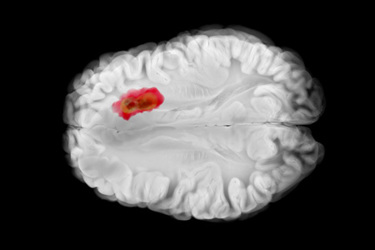
About 15 years ago, Mike Ciesielski, Ph.D., and colleagues at Roswell Park Cancer Institute in Buffalo spun off their research targeting survivin, a cell-survival protein found in most glioblastomas and many other cancers. Today, they are running a randomized Phase 2b trial studying their peptide mimic immunotherapeutic vaccine, SurVaxM, for glioblastoma.
Between those two milestones is a lot of time, yes, but also plenty of decision-making, planning, partnering, and faith. In this interview, Ciesielski recounts that period and shares lessons learned when transitioning from academia to industry, hitting on topics like vendor partnerships, FDA conversations, and manufacturer selection.
Clinical Leader: Tell us a little bit about SurVaxM, your lead product.
Mike Ciesielski, Ph.D.: SurVaxM is a cancer vaccine that targets a protein called survivin, which is expressed by tumor cells to help them live longer. Tumor cells take advantage of that protein, allowing them to resist chemotherapy by plugging up the autodestruct program and allowing themselves to live longer. It's an oncofetal protein, meaning that it's normally expressed during fetal development but then turned off shortly thereafter and not expressed in adult tissue. It makes a nice target to immunize patients against.
Let’s go back to that transition from academia. How did you know the time was right?
I don't know if there was a point when I decided I'm done with basic research and now I'm going to do clinical research. It's just a process that develops. But eventually, treating tissue culture plates and curing mice loses its luster. It’s easier to cure diseases in vitro and in the lab, but the reason for doing all of this is to bring it to patients. I wanted to take SurVaxM into the primetime, to bring it into a patient’s life and help them.
For some people like yourself, it's a natural career progression to follow a molecule into trials. What were some other options?
This was something that we created, so we naturally wanted to see it through. Coming from an academic institution, through tech transfer, you could let another company take it on. There’s also incubators that will take early projects and nudge them into the clinic.
We were coming out of Roswell Park Comprehensive Cancer Center, which has labs and clinical infrastructure already in place to promote bench to bedside translation.. So, we were able to combine our assets, between the institute and the company, which really gave us a leg up in moving into the clinic.
But you have to be willing. What you're trying to do is de-risk your program as much as you can. And in our case, who better to de-risk it than those of us who are already working on it? We've taken it a little farther than we initially thought, but so be it. We'll keep chugging along, bringing it closer to approval.
Why was that unexpected for you?
We thought one of the bigger pharmas might swoop in and run with it. It was also the early stages of the pandemic, and a lot of things went sideways. But we survived that. I keep coming back to saying it was a natural progression, but it pretty much was. A big deal here is that in glioblastoma, there are very few drugs available, which represents a huge unmet medical need. Patients and clinicians are desperate to find something that holds promise. In that sense translation was a bit easier and more collaborative.
When designing your first clinical study, what was your main objective — safety, proof of mechanism, or proof of concept?
By definition, your first study is always going to be about safety. But at the same time, because these studies are so big, costly, and take time, you really want to work in as many exploratory endpoints as you can to inform what your next study will be. If you can get hold of blood tests or imaging data at the same time that you're establishing safety, that benefits the development of your next study.
When you're designing a protocol, you don't want to ask too much of sites or patients, but you want to collect the right data. How do you balance that?
Some of that is pretty well established as most sites have Phase 1 units or Phase 1 committees. They're used to the safety data they want to collect. But at the same time, there's a lot of things you can bake into an early Phase 1 to get more data that you will need later. Some of it's risky because you do need to be very cautious in what you're inferring from smaller studies.
At that time, you were new to developing your own program. Who did you rely on for guidance?
We brought in several manufacturing and clinical research consultants to give guidance along the way. We built off that, and then that transitions into engaging with the FDA, which is your most important resource. We always try to keep it lean, so we relied on those consultants and a couple of CROs along the way.
Were you looking for partners that had experience in your therapeutic area or were your eyes wide open looking to anything?
We're a small company, and we were trying to do a small study. So, we were looking for a CRO that would have biostatistics capabilities, safety databases, and FDA/regulatory expertise. Many of the big CROs do that. Some of the smaller ones are a mix. But generally, we looked for ones that had done previous brain tumor studies and that had a flair for immunotherapy.
Back to the FDA, when you first engaged them, what kind of insights were you looking for?
We came in looking for guidance and development, but I think we may have engaged a little bit later than we should have. When I look back, if we got involved with FDA a little bit earlier, they would've taught us some early lessons, which would have sped us up.
For example, we did early preclinical testing that we thought would satisfy requirements for our very first IND. We thought we did a great job on the assays. And then as we first talked to the FDA, they had a whole different idea, different expectations of what that preclinical work would look like. Not a disaster, moreso in testing parameters or designs than data, but we had to redo some things to meet their expectations.
But the lesson being if we had engaged FDA earlier, we could have saved a whole lot of time. Conversations are a little bit of, I like to call it, reverse jeopardy. You give them a list of answers that you're expecting questions to. They're not there to necessarily tell you what to do, but they will offer an awful lot of help, particularly early on, in framing what you should be doing and how to get there. I'd recommend talking to them as soon as possible, even in your early preclinical phases.
If you were to give your younger self or somebody who's still in academia looking to develop and commercialize their asset advice, what would you say?
Every academic spinout is going to be different. There are a million different flavors to it. The biggest things are, again, engaging the FDA early, but the other piece is learning how difficult some of the translation into the clinical arena is. Even an early-phase trial requires a much higher level of safety assurance than you might anticipate, and the FDA is mostly looking at safety at this stage.
Another thing I wish somebody told me earlier is that your drug manufacturing process itself can and often is even much more complicated than the clinical trials you're about to undertake. That’s because while the FDA wants to know your trial's going to be safe, a very large part of this relies on knowing that your drug itself is safe to use.
That goes down to things like what sites are making it, what that site's track record is, and what your manufacturing validations are, which took an awful lot more scrutiny than I ever would've believed coming into it. Looking back at it and talking to larger pharmas, I see now that, of course, that's the way it is. But it would've been helpful if somebody on the academic side told me that going in; it'd be a little less of a culture shock.
What criteria did you use to find a manufacturer?
You start with the trade meetings and word of mouth about who's good, who could do this, who could do that. You need to be aware of, number one, their track record and what interactions they've had with the FDA as well. We've heard horror stories where the FDA has given warning letters to manufacturing sites, but as a client, you don't necessarily hear about that until it comes time for an approval and everybody has to explain it. In fact, you need to personally inspect your sites, and this was one of the things that we didn't know about going in. The FDA expects you to physically check out these manufacturing sites. So, we had to fly all over the country, even to other countries, to check out various labs and tour them.
Another aspect that creeps up is scaling. There are a lot of companies that can make components for a pilot study or an early Phase 1 study, and that's about it. But the FDA expects you to have that company still making your drug for your commercial launch. You’ve got to have somebody that's capable of going from early to final stage. And that's an interesting concept because a lot of the CDMOs and manufacturers out there really don't provide that.
Given all of this planning, travel, decision-making, and finding experts to support you, what should those transitioning out of academia and into industry understand about the change?
In the lab, you're always tinkering with different molecules, trying to make them better, trying to make this assay work better than that assay. When you shift to the clinical side, you have one drug, and you can't tinker with it anymore. Now it's about building around it, your assurances, the manufacturing process, and sticking with it. It's still science, it's still clinical, but it's less hands-on than working on the bench with dishes and plates. You’re now in a monitoring, managerial role of putting the package together, following up on the sites, and keeping the manufacturing runway going all while working within the guidelines of a highly regulated industry. You're always looking six months ahead of where your trial is now.
So, it's a very different process, a very different lifestyle from just working on the bench. We’ve learned a lot of things on the fly the hard way and figured them out, and hopefully we’ve surrounded ourselves with enough intelligent and experienced people to help us along. I know we're helping patients, our goal is to continue to give them hope and get this drug approved.
Editor’s note: This transcript has been edited for clarity.
About The Expert:
 Mike Ciesielski, Ph.D., is a co-inventor of the survivin vaccine technology on which MimiVax was founded. He joined the academic faculty of Roswell Park Comprehensive Cancer Center in 2004 after obtaining his Ph.D. in molecular immunology from the State University of New York at Buffalo. Prior to this, he obtained a B.S. in biology/biotechnology from Niagara University and a master’s degree from the State University of New York at Buffalo. After which, he first established the Neuro-Oncology laboratory at Roswell Park together with Dr. Fenstermaker.
He is an assistant professor of neurosurgery and oncology at Roswell Park and a member of the graduate faculty of the University at Buffalo Jacobs School of Medicine and Biomedical Sciences. He has co-authored more than 55 journal articles and numerous abstracts. He is an active member of the Society for Neuro-Oncology (SNO), American Association for Cancer Research (AACR), American Society of Clinical Oncology (ASCO) and the Biotechnology Innovation Organization (BIO).