
LinkedIn Message Leads To Advocate-Pharma Pursuit Of Expanded Access
A conversation with Raza Bokhari, MD, executive chairman and CEO, Medicus Pharma, and Meredith Weiss, executive director, Gorlin Syndrome Alliance

When the little red notification adorns your LinkedIn inbox, there’s no telling what kind of message awaits you. Many of us are familiar with dubious connection requests, overly flattering pitches to become part of some “who’s who” list, or college recruiters telling us we’re the perfect candidate for an MBA.
But for Raza Bokhari, MD, of Medicus Pharma, one simple message from a diligent and well-researched patient advocate launched a partnership that could lead to previously unattainable treatment for ultra-rare disease patients.
In this Q&A, Raza and Gorlin Syndrome Alliance Executive Director Meredith Weiss describe how the two have begun a fledgling partnership to match Medicus’ SKINJECT noninvasive treatment for basal cell carcinoma with GSA’s patient community, hopefully by way of the FDA’s expanded access, or compassionate use, designation and Commissioner’s National Priority Voucher program.
Who approached whom and with what goal in mind?
Raza: We have an ongoing clinical study for our novel noninvasive treatment alternative for non-melanoma skin diseases, particularly basal cell carcinoma of the skin. And we have a Phase 2 study that commenced recruiting patients in nine sites across the United States in the summer of last year.
As a public issuer, we provide regular updates on our development program. We recently announced not only that we had completed more than 75% of our patient recruitment, but we had also provided an update on a Type C meeting with the FDA. That resulted in a message through LinkedIn from Gorlin Syndrome Alliance Director of Clinical Trial Engagement Julie Breneiser to see if we could explore access for Gorlin syndrome patients.
Julie is a patient herself, and what I did not know and what caught my attention in her message was that Gorlin syndrome, an autosomal rare disease, puts a lifetime burden of recurring basal cell carcinoma (BCC) incidence on patients. In their lifetime, they could have hundreds of lesions, which was attention-grabbing for us because we didn't realize there was such a high level of recurring incidence. As caregivers at heart, we just jumped into a conversation, and the rest is now history in the making.
Meredith Weiss: We fly below the radar as a rare disease, but we have this symptom that's incredibly common in the general population. And so, one of our strategies for trying to meet the patient need is to monitor what's happening in the landscape and look for opportunities to collaborate with companies that have a shared interest.
Because of the very high burden of basal cell carcinomas, there is a strong interest in having non-surgical treatments for our community. One in 31,000 people are born with basal cell carcinoma nevus syndrome, also known as Gorlin syndrome. Approximately 11,000 people in the United States have this disease, but the burden is really unsurpassed in terms of the BCC load they carry.
Patients can have thousands of lesions and they can start in childhood, and there are no FDA approved treatments for treating the basal cell carcinomas that come with Gorlin syndrome. Over a lifetime, they can be incredibly disfiguring and have a significant impact on quality of life. Patients get frustrated with returning to the physician because they're constantly having tumors removed from their skin, and their appearance is permanently changed by this.
So, this was a really intriguing opportunity to look at something that might provide some relief to patients and that would be tolerable for a longer period of time. That's how we encountered Medicus, and we found a very open audience with them. They were really interested in hearing about our disease and learning how the product they're developing could fill that need for us.
Raza, tell us about the drug that you're studying and how that aligns with people with Gorlin syndrome. The trial wasn't designed for people with Gorlin syndrome, is that correct?
No, the trial is actually not designed for patients with Gorlin syndrome. In fact, Julie highlighted in her LinkedIn message that she was curious as to why Gorlin syndrome patients were excluded, which triggered the inquiry.
When I got that message, I was in the Middle East at a family office summit in early October. And I communicated with our chief scientific officer, Dr. Ed Brennan, and asked what he knew about Gorlin. It so happened that our chief medical officer, Dr. Faisal Mehmud, who recently came out of Big Pharma, overheard our conversation and jumped in, saying there is a compassionate use pathway within the FDA that he has worked on with orphan and rare diseases. That gave us the pointer to ask our regulatory consultants, and then we responded to GSA.
To further humanize it, we have a board member, Cathy McMorrris Rogers, who, until recently, oversaw the House Energy and Commerce Committee in Congress, where the FDA was under her purview for the last 20-plus years. She is also the mother of a child with a genetic disease. So, she has some personal interest, knowledge, and understanding in pursuing compassionate use, or expanded use IND. And then one of our independent analysts on Wall Street, Dr. Jason McCarthy, pointed out that the skin patch on its own may qualify for the newly announced FDA Commissioner’s National Priority Voucher.
So, we very transparently shared with the Alliance that we should announce a collaboration and give it a good-faith effort. It is a collaboration in the making, and we want to take advantage of this window of opportunity and apply and go through the process in a rapid but deliberate fashion.
Drug development is a complex business which can sometimes be treacherous; we recognize that in drug development the rule is that you fail, and success is an exception. Our attitude is that if we have to fail, we should fail early so we can be a good custodian of our shareholders’ and our stakeholders’ investments. So, we are working towards sending a package to the FDA and hope to get a favorable response. I think it is extremely beneficial to have a patient advocacy group working hand in hand with us.

Meredith, I want to go back to the first outreach by Julie or maybe even the first call. What were your hopes for reaching out to Medicus?
Meredith: Well, in rare disease advocacy, you have to be wily and persistent, and you have to have an infinite well of optimism. So, we reach out with the hope that we'll find an alignment of priorities and interests and a window of opportunity to explore that together.
We've worked with pharmaceutical companies in the past, and when they bring the patient voice in early and we can participate in shaping that endeavor, that really helps to refine some of the criteria and gives this sense of partnership throughout.
But our hope is always that we will find an opportunity to bring a better therapy to our patients. And I always speak from a very personal position, too. It's incredibly frustrating to go to the dermatologist and discover there isn't really a great plan for your kid or your partner or yourself when you present with hundreds of basal cell carcinomas. And that isn't going to stop in your lifetime. To have any opportunity to improve the therapies that are available when the default is going to be surgery is a big deal for us, and it always fills our hearts with hope.
Raza, have you secured the compassionate use yet, or is that something that you're working on?
Raza: Not yet. We are in the very early stages of not only this collaboration with GSA but also how to go about petitioning the FDA. We also have an advantage with the Alliance that they have a board member who is a regulatory expert and has particular expertise in rare diseases, such as Gorlin syndrome. So, we are coordinating an interaction between her and our regulatory experts for our existing study of basal cell carcinoma patients. The existing IND has Gorlin syndrome as an excluded criteria, which might be complicated to extend into compassionate use; very likely, we’ll file a new IND, which we will submit, hopefully, in Q1 of next year.
As far as trying the compassionate use IND, what information or support might Meredith and her team provide you?
Raza: One is just a general awareness in Washington through the halls of Congress. There is a skin cancer caucus. I think the Alliance would be very helpful to get those engagements and interactions, if needed.
The second piece, of which we are very optimistic, is that if we get the compassionate use, then we can rely heavily on the Alliance to identify the patients. The Alliance maintains a patient registry, and I think that's where we can really utilize the Alliance's work.
Meredith: We've been through this process previously with a different type of drug that was specifically just for Gorlin syndrome. We have done extensive surveys within the community and our natural history study to characterize the disease and the needs of the patients, as well as the disease experience and what kinds of therapeutics they've tried in the past, but we also have done a global survey in which we polled people to find out their experience, their needs, and their frustrations. And because we've done this before, we have experience with inclusion and exclusion criteria for our disease community and clinical site identification. We can provide support to pharmaceutical companies at this planning stage.
Meredith, how often does an opportunity like this come along to work with a pharmaceutical company that's developing an investigational drug or therapy?
Meredith: It's not often. There are other therapeutics that come through for basal cell carcinomas, but not everybody is interested in exploring this opportunity with our rare disease group. So, we always try and look for opportunities of overlap.
There have been three that have been submitted specifically for Gorlin syndrome ever. And there's nothing that has been FDA-approved for basal cell carcinoma in Gorlin syndrome. So, an IND that looks specifically at the applicability of a drug for our disease is very rare.
So far, what have each of you learned from working with one another?
Meredith: Be ready for opportunity, be prepared, and don't give up your optimism. Keep looking for alignment with organizations that might want to pursue a therapeutic for your rare disease. And so, what we've tried to do is have our community ready and do our homework in advance so that when these opportunities come up, we're ready to go.
Raza: We have an attitude and an approach to address everything through the lens of compassionate capitalism. We are very mindful that we are here to create value for our shareholders, but value is defined in a broad basis. And in this particular instance, just speaking to the Gorlin Syndrome Alliance, the leadership has inspired us to really double down and work with them.
The unmet medical need is really remarkable. And there is a possibility for us to make a solution available. One of the challenges with the rare diseases is that there is the will and a desire to help, but it is very limited as to what is possible. Whenever we see there's a chance to do good work, we engage, and we firmly believe that shareholder returns will eventually come. We just have to make a concerted effort to succeed once, and everything else will fall into place.
About The Experts:
 A recipient of Philadelphia Business Journal’s "40 under 40" award, Raza Bokhari, MD, is the executive chairman and CEO of Medicus Pharmaceuticals. A physician turned serial entrepreneur, he has demonstrated a successful track record in aggregating and accelerating life sciences, healthcare services, and pharmaceutical R&D companies. He previously served as executive chairman and CEO of FSD Pharma (Nasdaq: HUGE), where his strategies successfully pivoted the company out of medicinal cannabis and into a clinical-stage pharmaceutical R&D. Dr. Bokhari has a Doctor of Medicine degree from the University of Punjab, Rawalpindi Medical College, and an Executive MBA from Temple University, Fox School of Business & Management.
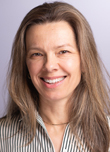 Meredith Weiss is the executive director of the Gorlin Syndrome Alliance (GSA), where she leads national initiatives to elevate patient perspectives, accelerate research, and foster collaboration among clinical, scientific, and industry partners. Her dedication to rare disease advocacy began after one of her children was diagnosed with Gorlin syndrome, prompting her decade-long service on the GSA Board of Directors, including five years as president, before stepping into her current leadership role. An attorney with experience in litigation and estate planning, Meredith brings a strong foundation in advocacy to her work in the rare-disease community. She serves on the board of directors for the Pediatric Dermatology Research Alliance (PeDRA) and chairs the patient advocacy committee, contributing to eKorts to advance patient-centered research in pediatric skin disease. As a EUPATI Fellow, she is formally trained in patient engagement across medical research and the arc of therapeutic development.