
More Patient Insight — And Funding— Needed To Advance Preeclampsia Research
A conversation with Laney Poye, director of communications and engagement, Preeclampsia Foundation
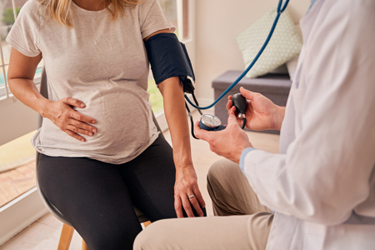
Preeclampsia remains one of the most complex and devastating hypertensive disorders of pregnancy. It’s as harrowing for pregnant women as it is confounding to researchers, despite decades of study.
While its precise pathophysiology remains largely unknown, measurable progress in understanding the placental pathways and molecular mechanisms that drive disease onset has opened the door to advances in diagnostics and potential treatments.
The role of patients and patient advocacy groups in ushering progress along cannot be understated. In this Q&A, Preeclampsia Foundation’s Laney Poye discusses the urgent need for sustained funding, patient-informed trial design, and stronger partnerships between advocacy groups and biopharma.
Clinical Leader: What are the biggest scientific unknowns about preeclampsia, and how are they being addressed by research today?
Laney Poye: While we know more about how developmental issues of the placenta may contribute to the development of preeclampsia, we still don’t fully understand what causes it. That makes it extremely challenging to identify which women are at risk of developing it and to create therapeutics that mitigate its impact.
Tragically, the only option for women who are diagnosed with preeclampsia and related hypertensive disorders of pregnancy is to be watchfully managed until delivery is absolutely necessary to save the life of the mother and her baby. For women whose onset of the disease is preterm (prior to 37 weeks), this can come with many risks for their baby. Women who are undiagnosed or experience a delay in diagnosis run the risk of organ failure, seizures, stroke, stillbirth, and even death.
Over the last five to seven years, advances in our understanding of why and how preeclampsia occurs have opened up the research field to better risk prediction and diagnostic tools. However, our understanding remains incomplete.
The Preeclampsia Foundation and the Society for Maternal-Fetal Medicine issued a 2022 report that identifies some of these research gaps for the prediction, prevention, management, and postpartum follow-up of preeclampsia that must continue to be funded to improve outcomes.
Regarding preeclampsia, how well is pharma listening to patients and incorporating them in their drug development or other research plans?
One of the most tremendous aspects of the Preeclampsia Foundation’s work is the trust and partnership we have with biopharma companies working in the field of preeclampsia research. (Unfortunately, there are not many of them because we have such a limited understanding of and funding for preeclampsia — but we’re working together to expand that field!) These corporate partners see the value of patient voices and perspectives incorporated at all levels of the research project — not just commenting on how materials are designed but involving them at the highest level of research design, implementation, analysis, and sharing. For example, we partnered on a provider and patient educational webinar earlier this year with one of the companies who launched an in-hospital diagnostic tool for preeclampsia with severe features. In the webinar, we talked through what we understand about preeclampsia biomarkers, how they are utilized in tools like those coming to market, educated providers on how they may be used in their own facilities, and answered patient questions. By bringing together researchers, clinicians, and patients in one space, we improved everyone’s understanding of both the technical and aspiration aspects of preeclampsia diagnostics.
Right now, the only “cure” for preeclampsia starts with delivery of the baby and the placenta and management of mom’s signs and symptoms with antihypertensive and antiseizure medications. Researchers need to develop better treatments for this condition to help prolong pregnancy and improve outcomes for moms and babies. Companies hear patient voices when they say that watchful management and early delivery are simply not enough.
What are some important considerations for researchers studying preeclampsia and potential treatments for it?
For many years, preeclampsia was seen as a transitory condition — something that affected a few pregnancies and then resolved shortly thereafter. Research now shows that this is not true in a variety of ways. Not only do patients experience significant physical and mental impacts in the prenatal and immediate postpartum phase, but they are at lifelong risk for hypertension, cardiovascular disease, stroke, and even death. In addition, women who have experienced preeclampsia are at higher risk for postpartum depression, anxiety, and posttraumatic stress disorder related to their experience.
So, for researchers in the preeclampsia space, it’s important to understand that pregnancy is acting as a window to future health. It is the first stress test that a woman’s body undergoes, and it is telling us a great deal about her future risk. If we can create better interventions that prolong pregnancy, minimize cardiovascular damage, and improve immediate health outcomes, we may in fact change the future trajectory of a woman’s lifelong health.

How has the Preeclampsia Foundation historically worked with pharma companies in supporting clinical trials?
The Preeclampsia Foundation works with patient communities that have extensive and diverse lived experiences, healthcare providers focused on quality improvement, and companies working to find solutions for women’s health issues, including BioRad, Comanche Biopharma, DiaMedica Therapeutics, Labcorp, Mirvie, Revvity, Roche, Siemens, and ThermoFisher Scientific. Our team brings patients with lived experiences together with these corporate partners to help biopharma companies better understand the multifaceted ways that preeclampsia affects the family, while moving forward with research solutions.
Patients often have unique perspectives as to why they would choose to participate in a study. Pregnancy is a uniquely vulnerable time for a woman; the way in which researchers communicate and share data is just as important as what they are sharing about a study. During the design phase of a recent study to look at aspirin dosage for the prevention of preeclampsia, one of the patient focus group members highlighted the importance of not conflating racial and ethnic background with socioeconomic status when looking at what patients would be at-risk. The feedback helped the researchers design the recruitment materials through a truly patient-centric lens, specifically making sure that patients did not reject the possibility of study participation. Patients from the Preeclampsia Foundation community have helped advise these companies on how to frame their findings, how to reach diverse and underserved populations, and how to build recruitment materials that are trauma-informed and patient-centric. Vocabulary choice matters; we acknowledge that patients they walk in with their own experiences, opinions, and values. We also know that pregnancy is a particularly vulnerable time for many families, especially those at risk of complications like preeclampsia. When it comes it participating in research, we know that caring for the next woman down the line is a big motivating factor for . Patients want to hear from researchers why the study matters to their own pregnancy and to others.
What types of interactions or partnerships have been the most productive, and why?
Open and honest communications between various stakeholders is crucial. The aims of the research study should be clear, and there must be a shared perspective on why the study is being conducted. It’s also easy for researchers to focus exclusively on conducting the study itself and forget that patients are keenly interested in what studies find out — even if those results turn out to be negative. So, it’s important to help patients understand what researchers know, how the tools or medications they are studying can be used, and why a specific therapeutic or test is needed.
At the Preeclampsia Foundation, we share updates and findings from our research partners. For example, we recently partnered with the team at DiaMedica to secure local press coverage in the Twin Cities area related to our Minneapolis Promise Walk for Preeclampsia event. At this in-person awareness event, we drew attention to medical advancements and research happening in the preeclampsia space.
How else would you like to support clinical research as a foundation but haven’t yet had the opportunity?
Simply speaking, there are just not enough funding opportunities for understanding preeclampsia and seeking better treatments. I recently spoke with an international researcher who had received one of our grants a few years back. With that financial support, she and her team helped to confirm a leading theory that early-onset and later-onset preeclampsia look like two different diseases at a cellular level. But our foundation was the only place their team could secure funding for their research. While the space is growing, one day, we hope that there will be dozens of funding streams to help advance our understanding and find better testing and treatments for those at risk.
When partnering with pharma to support interventional or observational research, what are best practices for each party to follow? What are some common hurdles or misunderstandings that occur? How can they be overcome?
First of all, both parties need to be very clear up front about any red flags or areas that are not available for partnership. For example, our organization makes it very clear that we work with a variety of biopharma companies, and that benefits the entire space because the advocacy and awareness we build support all preeclampsia research. Research can be a competitive space, so some companies may be cautious about how a patient advocacy organization can balance privacy with advocacy. Maintaining two-way non-disclosure agreements with corporate partners allows for free brainstorming and understanding the complete landscape to optimize our partnerships. For example, when the patient advocacy organization knows the timing and plan for embargoed product launches or the publication of major research findings, we can align patient stories and media coverage alongside our partners to humanize the impact that research has.
It’s also important for us as a patient advocacy organization to be clear that we are not medical providers and are in no way making any kind of recommendations regarding care. Care decisions absolutely should be handled between a woman and her healthcare provider team — though we’re also happy to work together to put out evidence-based, patient-centric knowledge.
About The Expert:
 Laney Poye serves as the director of communications and engagement for the Preeclampsia Foundation, supporting its mission of community, healthcare improvements, and research funding for hypertensive disorders of pregnancy. She is an experienced public communicator, specializing in training, education, website content development, and social media. Much of her work involves taking highly technical information and translating it into accessible and engaging content for a variety of audiences in English and in Spanish. Laney earned her bachelor's and master's degrees in international affairs from Florida State University, where she specialized in women's health issues in low-resource settings.