
Navigating The Challenges Of Cell Therapy Clinical Trials
A conversation between IN8bio Cofounder and CEO William Ho and Clinical Leader Executive Editor Abby Proch
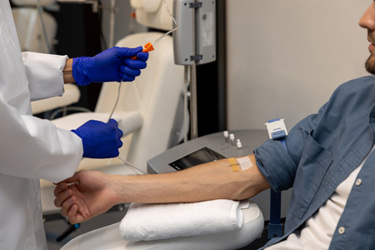
Cell and gene therapy clinical trials require extraordinary coordination among clinical, manufacturing, regulatory, and operational teams — every step from cell collection to final administration must be precisely synchronized to ensure patient safety and product integrity.
In this interview, William Ho, CEO of IN8bio, shares insights on overcoming the operational challenges unique to cell therapy research, the careful considerations behind site expansion, and what it takes to successfully onboard new clinical sites without disrupting complex study timelines.
Clinical Leader: Given the complexity of running cell therapy clinical trials, what were the most challenging aspects for INB-100?
William Ho: Designing and executing a cell therapy trial like INB-100 requires extensive coordination across clinical operations, manufacturing, regulatory, and logistics. Unlike traditional therapeutics, each element of a cell therapy trial is closely linked – collection, processing, release testing, shipment, and administration all need to be precisely synchronized. The most challenging aspects typically involve ensuring consistent and reliable cell manufacturing, aligning patient treatment schedules with production timelines, and maintaining strict chain-of-custody and chain-of-identity requirements. For example, even a small delay in manufacturing or transport can require rescheduling a patient’s conditioning regimen or infusion window, which impacts every downstream step. Safety monitoring is also more intensive and requires rapid communication and data review across all parties. These components make early-phase cell therapy trials complex but also incredibly rewarding as patients begin to benefit.
What else must a sponsor company consider before expanding to more sites?
Before adding new sites, a sponsor must ensure that each location has the infrastructure, experience, and staff needed to manage the complexity of the therapy. This includes confirming that the institution has a qualified transplant or cell therapy program, the ability to receive and handle cell products, and clinicians familiar with managing potential complications. The sponsor must also ensure the site can rapidly and accurately capture data, adhere to protocol requirements, and maintain smooth operational alignment with the sponsor. Because of the logistical demands of cell therapy, expansion decisions must be made carefully to avoid introducing variability that could affect safety, manufacturing, or study timelines. For example, we have evaluated sites that ultimately weren’t selected because their apheresis unit did not meet our turnaround-time requirements for cell collection, which would have introduced unacceptable variability. In contrast, a key factor in selecting one of our highest-performing sites was their proven track record of coordinating complex transplant workflows and their ability to align tightly with our manufacturing schedule from day one.
For this trial, you expanded your sites to include The Ohio State University (OSU). How did you make that decision?
For INB-100, we expanded to OSU once the study had established a clear safety profile, demonstrated encouraging early clinical activity, and reached a stage where increasing enrollment capacity would meaningfully accelerate data generation. OSU was chosen because of its nationally recognized expertise in hematologic malignancies and transplantation, its strong track record in early-phase cell therapy studies, and its operational excellence. These strengths made OSU an ideal partner as the program matured.
When is the right time to expand to a new site, and how does that impact a trial’s timeline?
The right moment to expand typically comes after early safety has been validated, manufacturing and logistics have proven reliable, and the sponsor is confident that additional sites can be added without compromising quality. Opening a new site can accelerate timelines by increasing enrollment, but it also introduces onboarding steps such as IRB review, contracting, and training. When managed carefully and timed appropriately, adding a high-quality site improves speed without compromising data integrity.

What qualities drove you to choose OSU, and did you already consider them a prequalified site?
OSU was selected because it is one of the nation’s leading transplant and cellular therapy centers, with a strong multidisciplinary team and significant experience treating complex AML patients. Their operational rigor, history of successful Phase 1 activations, and reputation for high-quality data collection made them a strong partner for an expansion site. OSU was a well-evaluated potential partner from the beginning, and as the program progressed, their strengths aligned perfectly with our needs.
What are the challenges of onboarding new sites when you’re in the midst of a Phase 1 trial?
Onboarding a new site mid-trial requires careful alignment to ensure consistency across all active locations. Challenges include training investigators and staff on the nuances of the therapy, ensuring the site has appropriate infrastructure for cell receipt and handling, integrating the site into data capture and safety reporting workflows, and aligning manufacturing and scheduling logistics to avoid disruptions. The goal is always to maintain uniformity in patient management and study execution.
What are some recommendations for keeping this process as streamlined and unobtrusive to the study timeline as possible?
The key is preparation and proactive communication. This includes selecting sites with proven capabilities in cell therapy, beginning feasibility discussions early, providing clear training on product logistics and patient management, and ensuring manufacturing schedules align with expected patient flow. Maintaining real-time communication between the sponsor, clinical teams, and site staff allows potential issues to be addressed quickly, helping site activation become a seamless extension rather than a disruption to the trial. This level of coordination is enabled through a mix of channels — regular standing calls, rapid-response messaging through secure platforms, and, in many cases, dedicated personnel assigned to that site or trial who serve as the single point of contact. Having designated liaisons ensures that questions are resolved quickly and that all parties stay aligned as patients move through each stage of the protocol.
About The Author:
 William Ho, cofounder and CEO of IN8bio, has over 24 years of experience in the biotechnology industry. He has deep experience in corporate development, finance, and biotechnology investing, having spent 17 years in various roles on Wall Street. Prior to IN8bio, Ho ran a healthcare-focused investment fund called AlephPoint Capital and held senior roles at Bank of America as its lead biotechnology research analyst and at New Leaf Venture Partners, where he founded and led the public investments portfolio and was one of the earliest to lead crossover financing rounds.