
New Primary Endpoint For Tetraplegia Drug Gets Support From Patients And The FDA
A conversation between NervGen CEO Adam Rogers and Clinical Leader Executive Editor Abby Proch
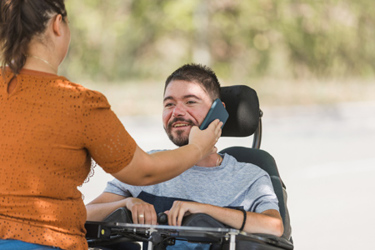
Spinal cord injury (SCI) has no therapeutic options to reverse paralysis or regenerate spinal cord tissue.
Given the 300,000 people in the U.S. and 15 million people worldwide living with SCI, there exists a great unmet need. And while one medical device (ARC-EX) has been approved, researchers are still chasing a therapeutic drug that can improve patient outcomes.
NervGen is one of them, pioneering a 35 amino acid-peptide dubbed NVG-291 to enable the nervous system to repair itself. The company is approaching the start of its Phase 3 RESTORE study, a 16-week trial with the drug administered subcutaneously daily for 12 weeks.
Importantly, the primary endpoint is Graded Redefined Assessment of Strength Sensibility and Prehension (GRASSP) quantitative prehension, which has four very specific, individually validated tests that look at very fine hand motion: putting a key in a lock and turning it, putting a nut on a bolt and turning it, picking up a bottle of water and pouring it into a glass, and putting pegs in a hole.
And therein lies the crux of the conversation with NervGen CEO Adam Rogers.
In our chat, Rogers discussed why NervGen chose a hand function endpoint in a drug for tetraplegia and how it incorporated patient and regulatory feedback to make its decision.
Clinical Leader: SCI is fraught with patient heterogeneity. How do you design a trial understanding that your patients have such differences?
Adam Rogers: It's very difficult in spinal cord injury because it's much different than a genetic disease, where you have a very good idea of what the progression of the disease is going to be. And in spinal cord injury, after six to 12 months, these individuals have very limited, if any, spontaneous improvement. On top of that, the injury itself is completely variable from individual to individual.
If you talk to people with a spinal cord injury or you talk to the advocacy groups, they will oftentimes describe a spinal cord injury as a snowflake, each unique in its own design. Each person has a different mechanism of injury with a different force, different location and effect on the spinal cord varying, meaning no two injuries are identical.
In our attempt to write a protocol that creates as much homogeneity as possible in a heterogeneous injury, we are enrolling individuals who have chronic tetraplegia, or what we used to call quadriplegia, with an ASIA Impairment Scale (AIS) of C or D. These individuals have chronic motor incomplete cervical spinal cord injury from C7 or higher with diminished motor and sensory abilities from the neck down. Motor incomplete means the spinal cord still maintains the ability to send and receive signals from the brain to the end organ. Individuals must be one year out from their injury, so we know there's not going to be any spontaneous improvement in their condition, which can occur in the first 6 to 9 months after injury.
The one thing with cervical spinal cord injury is that they all have hand dysfunction. If you dilute the population with different injuries at different levels and different AIS impairment scales, it's just too difficult to identify a primary endpoint and whether you're having a biological effect of the drug. And that's why we're using GRASSP quantitative prehension as our primary endpoint and choosing cervical spinal cord injury at this time. All individuals with motor incomplete cervical spinal cord injury have some form of hand dysfunction.
Did your discussions with the FDA play a role in the inclusion-exclusion criteria? Or if not, what other conversations did you have that affected your strategy?
The inclusion-exclusion criteria from the Phase 3 RESTORE study are almost identical to those of the CONNECT SCI Phase 1b/2a study.
We had a very collaborative discussion with the FDA. We focused on our primary endpoint, which was the hand function tests measured by GRASSP Quantitative Prehension. We both felt that was the most sensitive test that would enable us to identify a functional effect of the drug. From a functional standpoint: How does it impact their bladder function, their spasticity, their ability to use leg function, button their shirt, comb their hair, brush their teeth, and other day-to-day living activities that improve the independence of a person?

How is data collected regarding patient function in those day-to-day activities?
From a quantitative standpoint, we'll look at both patient and clinician-reported outcomes — and that's patient global impression of change, or PGIC, and clinician global impression of change, CGIC.
We're also going to do a blinded, 75-minute exit interview, which is what we did in the Phase 1b/2a study as well. We gained a tremendous amount of information from the blinded exit interviews that we did in the initial study. Those interviews demonstrated that individuals who received the drug after the initial 12 weeks maintained the benefit they received and continued to show improvement even after discontinuing the drug up to an average of 259 days after discontinuing the 12 weeks of NVG-291.
What were some of the things you learned from those interviews that you couldn't have learned otherwise?
When you're looking at hand function, you're looking at a number on a chart. Say a participant gained 3.7 points at 12 weeks, but what does that translate into? When we did the blinded exit interviews, that translated into functions like brushing your teeth, combing your hair, being able to twist off the plastic cap of a water bottle, buttoning your shirt, and being able to zip up pants so that you don't have to wear sweatpants. Just from a dignity standpoint, nobody wants to wear sweatpants all the time. And so those are the little things that we learned about individuals. Also, gaining independence so they could continue going to college and living on their own was important. There were vital pieces of information that you just can't pick up when you're looking at quantitative data. You understand how the drug has an impact on an individual’s daily living and how it impacts their life.
Were there other endpoint evaluations that you weighed besides GRASSP?
Hand function is really where we landed. You and I, and the population in general, when we see individuals who have a spinal cord injury, especially cervical spinal cord injury, and these are individuals who are in wheelchairs, we think the most important aspect or function they would want to get back is walking.
But when you talk to a person who has a cervical spinal cord injury, and they've had it for years, the most important function they can regain is hand function — 77% of them will say that. They said, “If I could just get my hand function back, I could use a mouse on the computer. I could potentially type on the keyboard. I can use my phone to communicate.”
In a field with no established therapeutic drug precedents for spinal cord injury, how did you work with the FDA to align on safety considerations and clinically meaningful endpoints?
Safety is always an issue with FDA. It is the job of FDA to ensure a therapeutic agent is both safe and effective, and we provided our phase 1 healthy subject data as well as safety data from the phase 1b/2a CONNECT SCI Study.
Looking at spinal cord injury treatments, in general, there are no available therapeutic spinal cord treatments on the market. One treatment that is FDA-approved is called the ARC-EX device by Onward, and it provides external transcutaneous electrical stimulation behind the neck to drive hand function.
When you have a lack of treatments available to individuals like in spinal cordinjury, it's just a matter of being on the same page with the FDA so they understand what's important in this subset of individuals with this injury. When we left our first meeting with the FDA in the fall of 2025, they wanted us perform a focus group with individuals with cervical spinal cord injury, caregivers, family members, and physical therapists. We obtained information on what's important to these individuals, what they want to do with their lives. For them, for example, being able to cook a meal safely was a goal and that's why hand function really rose to the top.
You mentioned the input provided by caregivers. Did they reinforce what patients were telling you or provide any additional context?
Both. Because number one, they work with individuals on a day-to-day basis, and they understand what's needed. This is a neuroreparative drug, the first to reconnect neurons, regrow neurons, and remyelinate neurons. From a physical therapist's standpoint, if you can recruit more neurons and you can gain functional outcomes, physical therapy is going to have a more beneficial effect on the lives of these individuals.
For leaders in biotech trying to align with the FDA in indications with a high unmet need, what should they be discussing or asking?
You have to start these discussions early and often. The FDA understands spinal cord injury is not a rare disorder. There are over 300,000 individuals in the United States who have spinal cord injury, and roughly half of those or about 145,000 fall into the category of chronic cervical, motor, incomplete spinal cord injury that we would initially treat. The FDA doesn't look at this as a rare disorder. However, the fact that there are no treatments, they see this as an enormous unmet need.
Also, you have to work with FDA, being open about what you want to achieve and bringing them on as a partner in this process. Their goal is to bring safe and efficacious drugs to the market, and that's our goal as well. They have excellent advice that as a partner in the process we will use to bring NVG-291 to market.
Editor’s note: This transcript has been edited for clarity.
About The Expert:
 Adam H. Rogers, MD, is the president and CEO of NervGen Pharma and has served as chairman of its board since July 2025. He brings more than 15 years of experience advancing innovative therapies for diseases with significant unmet needs. Dr. Rogers is also principal of PFP Biosciences Holdings and co-founded Hemera Biosciences in 2010, a clinical-stage biotech focused on gene therapies for ophthalmic diseases. He served as Hemera’s CEO from 2017 to 2020, leading the development of a one-time investigational treatment for geographic atrophy before its lead program was acquired by Janssen Pharmaceuticals, a Johnson & Johnson company. Earlier, he was an Assistant professor of ophthalmology at Tufts Medical Center and has authored numerous peer-reviewed publications. A board-certified ophthalmologist specializing in retinal diseases and surgery, Dr. Rogers earned his MD from Emory University School of Medicine.