
Ossium's Unconventional Site Strategy For Studying A Novel Bone Marrow Donor Source
A conversation between Ossium Health CEO Kevin Caldwell and Clinical Leader Executive Editor Abby Proch
When a sponsor starts a Phase 1 trial, it typically picks a handful of sites, maybe just one, to conduct it.
When a patient needs a bone marrow transplant, providers typically secure a transplant from a living donor.
For Ossium Health, neither is true.
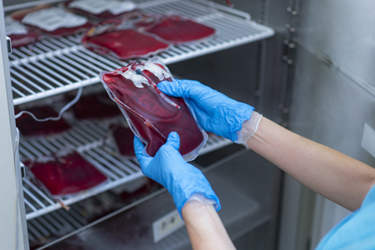
Ossium has built the world's first bank of bone marrow recovered from deceased organ donors: a cryopreserved whole bone marrow product intended to make allogeneic bone marrow transplantation more accessible, timely, and predictable.
At the same time, the company is embracing an equally unconventional approach to studying it.
Ossium designed its PRESERVE I Phase 1 trial with the intention of learning and adapting as evidence accumulated and by letting investigators across several sites have greater freedom in their execution.
As Ossium CEO Kevin Caldwell explains below, it is a strategy grounded in flexibility and confidence—one that aims to reflect real-world practice while allowing the consistency of the product to speak for itself.
Clinical Leader: What questions were you aiming to answer with PRESERVE I?
Kevin Caldwell: The idea behind the PRESERVE program is to show that we can move bone marrow transplants from an ad hoc procedure into something that feels more like the delivery and use of a product — where it's controlled, where it's planned, where it's structured.
With PRESERVE I, a 12-patient first-in-human clinical trial, the basic idea was to get a preliminary signal on the overall safety and efficacy of the product in the blood cancer population. We quickly found that there was more demand than there were slots available in our study. And so, we created an expanded access program called HOPE I for patients that broadly qualify for PRESERVE, but for one reason or another couldn't be in the study.
Even that proved not to be enough. We later created HOPE II, which was for patients who would benefit from a bone marrow transplant but didn't have access to another donor and didn't meet the criteria for the PRESERVE I study. Patients are put into one of these buckets before they're ever treated. The product is the same; the difference is the patients themselves.
Hematologic malignancies are quite variable across the patient population. How did you choose your criteria for Phase 1?
Our approach was to start with criteria that were very restrictive, very conservative. But it turned out that the number of patients that qualified for the study was very small. It was so small that it was hard to get the first patient in PRESERVE. It was actually a bit frustrating, so we created the HOPE program in 2024 for patients who truly had no other options, without compromising the data in the PRESERVE study.
Our very first patient was a 68-year-old female patient with Acute Myeloid Leukemia who didn't have any other donors available. She was too old for PRESERVE I as it was designed at the time, but she did qualify for the HOPE program. Her transplant was successful, and she engrafted beautifully, well within the protocol’s neutrophil engraftment window. That outcome energized a number of the clinicians. Then in August of 2024, we treated the first patient in the formal PRESERVE I study. And that, of course, was also successful.
This is a patient population that is sicker than the standard blood cancer patient. They all had numerous comorbidities, had been searching for a donor, and were often of lower socioeconomic status. Despite that, the outcomes were excellent. And so, we then expanded the inclusion criteria to encompass patients who required reduced-intensity conditioning (RIC), and we increased the maximum age of the study. Then we added myelodysplastic syndromes to the set of indications. Those changes greatly expanded the universe of patients that we could treat. We saw enrollment accelerate, and the strength of the outcomes persisted. We enrolled the final patient in the PRESERVE program in the spring of this year.

What learnings from that experience will you take into Phase 2?
PRESERVE II is a 300-patient, three-arm clinical trial. There'll be 100 patients who receive Ossium's product, 100 patients who receive a mismatched unrelated donor transplant from a living donor using PBSC, and then 100 patients who receive a haploidentical transplant from a related donor. We're designing it as a non-inferiority study.
In terms of the criteria, all of the wider criteria that we used in the second cohort of the PRESERVE I study will be intact. In addition, we're also going to add patients with chronic leukemia and, importantly, remove the requirement that the patient not have other donors available. The safety signal from PRESERVE I and HOPE is so clear that there's no reason for that, and we want the patient populations to be comparable across the three arms. So, this will be open to anyone, in principle, who needs a bone marrow transplant. That study will begin enrollment in 2027.
You started with myeloablative conditioning (MAC) and then you expanded to RIC. How did you think about the change as it relates to data collection and analysis?
Full MAC is more taxing on the patient, but it does a more complete job of removing their native malignant bone marrow. RIC is easier on the patient, but because the conditioning is less intensive, there's a higher likelihood that some of the residual malignant cells survive.
We started by limiting the study to full MAC in patients under 55 because we were trying to get the healthiest patients who have the underlying condition that you're trying to treat to minimize the risk that other variables confound the outcome.
The challenge with that, of course, is that it reduces your enrollment, especially when most patients are on RIC. When we saw that Ossium’s bone marrow was consistently effective at getting really robust engraftment in these patients, it became clear RIC patients would help us complete the study more rapidly, serve more patients, and move forward with the larger PRESERVE II.
We're understating how novel our approach to this study was. Across PRESERVE I and HOPE, 29 patients were treated at about half as many centers. Typically, with a Phase 1, you pick a single center and do all the patients there.
Sponsors do that because it allows them to exert an enormous amount of control over the specific circumstances through which the patients are treated. And if you're trying to minimize variance, then that's the right approach.
We're very confident in the quality of this product, so we wanted to generate a signal that's relevant to the real world. There are many different protocols for patient conditioning, post-transplant follow-up, and immunosuppression. We wanted to show that it doesn't matter who's doing the transplant. It doesn't matter what transplant center it's at. The product works consistently, and that’s what we’ve seen so far. That has enabled us to cast an even broader net with PRESERVE II. That's going to have about 25 different transplant centers.
When you select so many sites, how do you standardize training?
Educating the sites is incredibly important. We do an extensive onboarding with every site, and there's a short list of conditioning regimens they can choose from, so in general they're using one they already know well. We're confident that an institution using a protocol it's familiar with will execute it competently. Beyond that, we really do want to get a signal that's as close to the real world as possible, so we intentionally allow some variability in the course of treatment that transplant centers use. We are coming as close as we can to just saying, "Look, take your normal graft source, and just replace it with our bone marrow." Of course, it's not quite that simple. We do have some restrictions, but the goal is to approach that, and that's worked extremely well.
There are many things about this product that are different. Because it's cryopreserved and available off the shelf, it can be delivered within days. In an emergency, we delivered it within 30 hours. That's unimaginable with a living donor. You typically need months of preparation for that.
We make sure that sites understand how this product can be worked into their own workflows, and we change the way they think about transplants.
About The Expert:
 Kevin Caldwell co-founded Ossium Health in 2016 with a mission to improve the health, vitality, and longevity of human beings through bioengineering. Under Kevin’s leadership, Ossium grew from a startup to a commercial stage bioengineering company that develops, manufactures, banks, and distributes hematopoietic stem cell products to treat patients with hematological diseases. Ossium’s current work in acute, life-threatening conditions is paving the way for this powerful cell therapy to be used in broader applications, including proactive intervention in a way that is safe and that dramatically extends healthspan.
Before founding Ossium, Kevin was an engagement manager at McKinsey, advising biotechnology and healthcare clients on acquisitions, restructuring, and go-to-market strategy, and a senior investment associate at Bridgewater Associates. He studied physics and economics at MIT and holds a JD from Harvard Law School. He is a member of the Young Presidents’ Organization.