
Philanthropy Empowers And Accelerates Testing Of Drug Combinations In T1D
A conversation between City of Hope Samuel Rahbar Chair in Diabetes & Drug Discovery, chair, Department of Diabetes Immunology, and director of The Wanek Family Project for Type 1 Diabetes, Alberto Pugliese, MD, and Clinical Leader Executive Editor Abby Proch

When traditional funding falls short or dries up, philanthropy quietly steps in and supports the continuation of important medical research. Donations from philanthropists (large or small) also enable institutions to pursue promising ideas to move from concept to the clinic — helping investigators sustain momentum when grants end or when proposals are still too early for consideration by government agencies.
In this interview, City of Hope’s Alberto Pugliese, MD, discusses how transformational philanthropic gifts from The Wanek Family Project for Type 1 Diabetes and additional City of Hope donors have empowered them to launch a landmark multi-center trial, for which 11 leading academic institutions have come together to test a novel combination therapy using repurposed drugs — anti-thymocyte globulin (ATG), verapamil, and adalimumab — to advance better treatments for type 1 diabetes and modify the progression of the disease.
Dr. Pugliese illustrates how donor-funded projects help power clinical trials for investigational therapies in new indications that pharmaceutical companies may not be able to invest in testing. Moreover, pharmaceutical companies traditionally have difficulties in testing combination therapies when drugs are produced by different companies. He also highlights the value of flexible funding that allows for much faster trial initiation (up to four years can be saved) and more creative trial designs — such as extended follow-up to better assess treatment durability. This conversation underscores how philanthropy can fill funding gaps to accelerate transformative research that improves long-term outcomes for patients, such as those living with T1D.
Clinical Leader: What does the funding landscape look like for T1D, and how does philanthropy help progress research?
Alberto Pugliese, MD: Traditionally, NIH has been very actively funding grants for T1D research through the National Institute of Diabetes and Digestive and Kidney Diseases (NIDDK) and the National Institute of Allergy and Infectious Diseases (NIAID), and foundations such as Breakthrough T1D (formerly JDRF), Helmsley Charitable Trust, American Diabetes Association, and Diabetes UK have offered critical support as well. But philanthropy is very important because it can support advancing projects when they're at the very early stage and it’s more difficult to secure a grant.
Even if funding agencies do have pilot funding mechanisms and innovative grants, you still have to get through the early stage. Some funding to get the ball rolling and generate support for your idea can be critical. That’s a critical area where philanthropy fills a critical gap.
We write grants all the time. Sometimes you get them, sometimes you don't. And sometimes, when the grant ends and you try to renew it, philanthropy gives you a bit of stability so you're not grinding to a halt or have to let your people go. It is a phenomenal resource and asset. If you can keep going and then get another grant, you have a little bit of a cushion.
The other thing — and this will make me unpopular — is that if you're getting a transformational gift, you really need to think about how you will use it. Is it only going to support local investigators on local research? Or, you can think a bit bigger about what it can empower. This is the way that I think about it: If I have transformational philanthropy, how can I use it to have the greatest impact?
To me, what's important is that we support a good idea that can really be impactful for the patients. There is no single institution that has the solution for T1D. Human diseases are so complex and there are so many people doing good things. The trick is whether you can put them together and synergize them. That's what I try to do, and this trial is an example of that.
How did philanthropy affect this specific trial?
I already knew many of the colleagues that are participating, so the connection already existed. We had a bunch of discussions, emails, and calls, and then we organized a retreat at City of Hope. Having access to philanthropy empowered us to think more creatively about how we could organize and design this trial.
There are a lot of different tested and untested drugs that have potential to be impactful in T1D, and some are already FDA-approved and on the market for other indications. We chose three that had already been in clinical trials as single drugs and had shown evidence of efficacy and safety. The field has recognized for quite some time that a single-agent therapy is not going to be sufficient to significantly modify the course of type 1 diabetes.
Also, some drugs are used as short-term therapies. They can give you an impact for some time, but eventually the disease process, which eliminates the insulin-producing beta cells in the pancreas, will come back. You want to control the immune system but not use chronic immunosuppression as with transplantation, because that has too many side effects for this patient population, many of whom are kids. Immunomodulation aims to be less aggressive and hopefully effective. You also need to include therapies that target both the beta cells and the immune system in a regimen that can be given chronically and, hopefully, stabilize insulin secretion to modify the disease course.
We recognized that anti-thymocyte globulin (ATG), given as a short course, does deplete immune cells temporarily and likely stops the disease process for a time. And, it creates a more favorable balance in the immune system because regulatory cells are spared by this treatment. While the disease process is inhibited and slowed, insulin secretion continues to decline, yet a lot less than in those who were not treated with ATG.
Thus, we thought to add therapies that could help prolong that effect and lead to a better outcome that could be sustained by chronic treatment. In other words, test combined therapies. We also said, “If we have the resources, why don't we test two combination therapies in the same trial?” Because both of the second agents we chose — verapamil and adalimumab — are worthy of attention, we decided to study both in the trial. Instead of having two separate trials, we’ll save a lot of time, reduce the number of patients we need to enroll, and reduce cost. That is a win-win-win that we should do more often.
In this trial, named WAVE T1D, all participants will be treated with ATG. One-third will then be treated with a placebo, one-third with verapamil, and one-third with adalimumab. These two therapies are given chronically and are expected to synergize with the ATG and afford sustained benefit. And while most trials in T1D are designed to look at the primary outcome at one year, we decided to look at the primary outcome at two years. Moreover, patients will be treated with the second drugs for three years. This allows us to investigate efficacy and safety for a longer time than most other trials and achieve better outcomes to support a future indication. Moreover, the decline in insulin secretion in the ATG-placebo treated group will be greater at two years than at one year. Thus, a primary endpoint at two years allows us to run a smaller trial and still maintain statistical power to detect a difference. Our question is whether those treated with any of the two combined regimens will have better preservation of insulin secretion than those treated with ATG only.

How much of a role did funding play in opting for a longer trial?
We had enough funds that we could afford to do this. And this trial is expensive. It's about $20 million.
Let's say that you want to do a similar trial and you want to get an NIH grant to support it. For a multi-center trial, the type of grant requires the NIH to invite you to submit the grant. You have to talk to them and make your case formally.
That requires having written the clinical protocol, the statistical analysis plan, and several other related documents. You need to document where you're going to get the drug, the research sites you’re working with, and information about FDA approval and IRB approval.
I've done this a couple of times. Both times, we were invited to submit the grant. Very often with NIH reviews, the first time around, you don't pass. The reviewers have questions and suggestions, so you need to submit a revised grant proposal. To go through that process, you're talking about three or four years just to get to the point where you can maybe start. And sometimes you don't get the grant.
With philanthropy, you have more research freedom, but how do donors know what you do is scientifically valid? My answer to that is bringing together leaders in the field, as we did, and have a discussion. When people like me get in the same room, we peer review each other. I say, "Oh, why don't we do this?" and if it's a stupid idea, they will tell me right then and there. In my humble opinion, it’s the most efficient review method you can use because it's there in real time.
Going back to repurposing ATG, verapamil, and adalimumab, how did you decide on these as the drugs to move forward?
We’re trying to modify the course of the disease process in patients who have been recently diagnosed. That’s driven by the fact that the immune system is actively killing pancreatic beta cells, and we want to stop that as soon as possible. You also want to make sure that the patients have a certain amount of residual insulin secretion because that is a primary outcome of the trial. While most trials in this population enroll within three months from diagnosis, we're using a six-month timeframe because recent data shows that the decline of insulin secretion over time allows for a wider enrollment window. A wider window allows more patients to be eligible for the study and supports treatment later in the disease course.
ATG, as I mentioned, has shown a pretty significant benefit. Of all the drugs tested, this was one of the most impactful on the disease course. We had some good efficacy data, but you couldn't keep it up because it's a short course treatment. With verapamil, the primary logic behind using it is that it would support the beta cells, as shown by experimental studies. And then there were two clinical trials that showed positive impact on insulin secretion, both in children and in adults. On top of it, verapamil not only impacts the beta cells but also impacts the immune system because it is a calcium blocker and T cells use calcium for signaling. And there is data that show that verapamil inhibits the immune response.
The other one is adalimumab, a TNF-alpha inhibitor that has been FDA approved for chronic treatment of immune-mediated diseases. It controls the symptoms, controls the inflammation, and delivers real benefit to the patient for chronic use. Basically, one drug is used for a very short course to stop the disease, and we add another to help keep the disease under control or to slow it down.
Are there other drugs you could consider in a similar design? Absolutely. Are there other drugs that perhaps you could even add to what we're doing? Yes. It comes down to a balance. It's not just money, but it's also consideration of the risk for regulatory approvals. The more you complicate things, the more difficult it becomes to move forward. And remember, we can conceive a trial, but then in the end, we're not going to be able to do it unless the FDA says we may proceed.
Editor’s note: This transcript has been edited for clarity.
About The Expert:
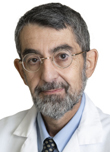 Alberto Pugliese, MD, joined City of Hope as the Samuel Rahbar Chair in Diabetes & Drug Discovery, chair of the Department of Diabetes Immunology, and director of The Wanek Family Project for Type 1 Diabetes within the Arthur Riggs Diabetes & Metabolism Research Institute. He previously held leadership roles at the Diabetes Research Institute at the University of Miami, where he was a tenured professor and a leading figure in diabetes research.
Over a 35-year career, Pugliese has contributed to the understanding of type 1 diabetes, including its genetics, immunology, pathology, and clinical progression. His work has helped advance knowledge of the genetic and cellular mechanisms that regulate immune self-tolerance and has supported progress toward prevention and treatment.
Pugliese has also served on numerous research review panels and leadership committees, including NIH, JDRF, and Type 1 Diabetes TrialNet. He is also executive co-director of JDRF’s nPOD program.