
Planning A Global Clinical Trial With The Right Sites, Not The Most Sites
A conversation between Expedition Therapeutics CEO & Founder Yi Larson and Clinical Leader Executive Editor Abby Proch
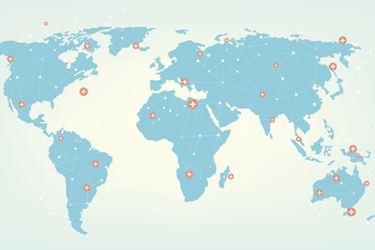
For emerging biopharma companies, expanding clinical trials from one country to multiple is a logistical next step for Phase 2 development. That’s particularly true for those looking to diversify their patient population, find more patients within a specific disease area, or seek market access in more than one country.
But going global doesn’t mean simply opening more sites in new countries. In this Q&A, Yi Larson, founder and CEO of Expedition Therapeutics, whose team is building a global Phase 2 COPD study, discusses how it instead prompts a reevaluation of many things, from site capabilities and patient populations to CRO and vendor partners that have the right mix of reach and expertise. She also offers a practical reminder for smaller teams preparing to scale: The goal is not the biggest trial network, but the right one.
Clinical Leader: When you think about moving from a single-country study to a global Phase 2 trial, what operational assumptions from Phase 1 had to be revisited and reconsidered?
Yi Larson: Expedition did not conduct the Phase 1 study, so for us the transition has really been about building the operational infrastructure required to execute a global Phase 2 program. A global trial introduces complexity across regulatory requirements, standard of care, patient populations, site capabilities, and healthcare systems. As we expand beyond the U.S. and begin opening international sites, we're thinking carefully about how to maintain consistency in patient selection, investigator training, study execution, and data collection across geographies while also accounting for important local differences. Furthermore, generalizable insights gained from the experience in individual countries or regions can be incorporated into the sites globally as needed. These focused efforts to establish our global clinical trial footprint will also support our future late-stage global respiratory clinical trials.
How did your approach to CRO and vendor selection or management evolve?
For a global Phase 2 trial, CRO and vendor selection is about finding partners that can provide both global reach and meaningful local expertise. We looked for experience in respiratory trials, relationships with strong COPD sites, and the infrastructure to execute consistently across multiple countries. At the same time, as a smaller company, we believe it's important not to outsource ownership of the program. Our team stays closely involved in study oversight, decision-making, and performance monitoring.
How did you approach site selection in regions where you had little to no previous experience or connections?
That's one of the areas where strong local partners become particularly valuable. We look at historical enrollment performance, access to the appropriate COPD patient population, investigator experience, infrastructure, and the site's ability to execute the protocol. We're currently in the process of opening sites outside the U.S., so we're applying those criteria as we build out the international footprint rather than simply trying to maximize the number of sites.
How did the specifics of COPD influence your site selection strategy?
COPD is a large but heterogeneous patient population. Having a large COPD practice doesn't necessarily mean a site will have access to the specific patients required for a particular trial. We look closely at disease characteristics, treatment patterns, investigator experience, and a site's ability to identify, enroll, and retain appropriate patients. Those considerations become even more important globally because diagnosis, referral patterns, and standards of care can vary by country.
Did EXPD-101’s profile create any unique operational considerations for site training, patient education, safety monitoring, or protocol execution?
EXPD-101 is an investigational once-daily oral DPP1 inhibitor, so administration itself is relatively straightforward. But any global Phase 2 trial requires rigorous and consistent investigator and site training. It's important that sites understand the mechanism and rationale for DPP1 inhibition, the protocol requirements, and the appropriate safety monitoring. For us, the operational priority is ensuring that those requirements are understood and executed consistently as we expand the study across countries.

Were there any disease-specific enrollment challenges in COPD that became more pronounced as you planned across multiple countries or regions?
The headline prevalence of COPD is very large, but the pool of patients who meet the specific eligibility criteria for a clinical trial can be much smaller. Patients differ in disease severity, exacerbation history, background therapies, and other characteristics, and those factors can also vary geographically. That's why rigorous feasibility work is so important. We want to understand how many appropriate patients a site can realistically identify and enroll, rather than relying simply on the size of its overall COPD population.
As a smaller company, how did you decide what to keep internal versus what to delegate to partners as your footprint grew?
We keep direct ownership of the areas that are most important strategically — clinical strategy, scientific decision-making, and overall program oversight — while working with partners that bring infrastructure, specialized capabilities, and geographic reach that wouldn't make sense for us to build internally. But outsourcing execution doesn't mean outsourcing accountability. Our team remains closely involved so we understand what's happening across the study and can make decisions quickly.
What advice would you give other emerging biopharma teams preparing to scale into a global clinical trial?
Start planning earlier than you think you need to. Global trials introduce complexity quickly, and decisions around countries, CROs, vendors, and sites are highly interconnected. Be rigorous about feasibility, choose partners with strong local capabilities, and don't equate the number of sites with the quality of your trial network. For a smaller biotech, in particular, it's important to leverage external expertise while retaining strong internal oversight. Ultimately, the goal isn't simply to open sites around the world — it's to build the right network of sites that can enroll the appropriate patients, execute consistently, and generate high-quality data.
About The Expert:
 Yi Larson is the founder and CEO of Expedition Therapeutics Inc. She brings over 20 years of leadership experience across biotechnology, finance, and strategy. Previously, she served as CFO of LianBio and as executive vice president and CFO of Turning Point Therapeutics, where she helped guide the company through its $4.1 billion acquisition by Bristol Myers Squibb. Earlier, Larson spent more than a decade at Goldman Sachs as managing director in healthcare investment banking, advising on over 50 transactions totaling more than $100 billion in M&A and financings. She currently serves on the board of Olema Oncology and previously served on the board of RayzeBio, acquired by Bristol Myers Squibb in 2024. Larson holds an MBA in finance from The Wharton School and bachelor’s and master’s degrees in electrical engineering and computer science from MIT.