
Poland: An Underestimated Clinical Trials Powerhouse
By Tomasz Szelag, head of clinical operations, Ryvu Therapeutics
When I walked into a recent networking workshop of the Polish Clinical Trials Network in Warsaw, I had a very clear thought: If you ask me where in the European Union you should run your clinical trials, my first and strongest answer is Poland.
That day, the room was full of leaders from more than 30 clinical trials support centers, representatives of over 30 companies, and people from the Medical Research Agency (Agencja Badań Medycznych, or ABM). Opening speaker Ireneusz Staroń, vice president of ABM, did not tout theories or slogans. She spoke about a system that has been deliberately built over the last few years — with funding for noncommercial studies, national infrastructure for trials, digital medicine centers, support for bioethics, strategic research program, and innovation.
Poland is not “one of the good options” or “an interesting emerging market.” As the head of clinical operations at Ryvu Therapeutics, a Polish biotech running multi-country oncology trials, I often have to make concrete choices: where to open sites, where to invest with a limited budget, and where to take the risk of starting first-in-human or complex Phase 2 studies. If you’re a small or midsize biotech in Europe and you are not seriously considering Poland, you are leaving speed and quality on the table.
Day to day, what I see at Polish sites is a combination that is extremely attractive if you don’t have Big Pharma resources behind you. You get investigators and teams who are used to difficult oncology and hematology protocols, care about data quality, and are genuinely motivated to bring new options to their patients. You get a patient population with significant unmet needs, where participation in studies is often an opportunity, not just one more burden. And you work under the same and familiar EU regulatory framework as other countries, but with more realistic costs and strong recruitment potential.
What has changed the game in the last several years, though, is not just individual excellence — it’s system design. ABM has become an active architect in the Polish research ecosystem. It funds noncommercial trials on a large scale, often in exactly those areas that small biotechs care about: oncology, rare diseases, and innovative technologies. It co-finances infrastructure and supports education programs for investigators and research staff.
When ABM backs a center or a project, you see the effect later in commercial trials: more experienced teams, better organized processes, and people who know how to work under pressure and still deliver quality.

On top of that, the creation of Clinical Trials Support Centers (Centra Wsparcia Badań Klinicznych, or CWBK) has changed how sponsors like Ryvu interact with hospitals and universities. Instead of relying on a heroic PI trying to juggle everything with a tiny team, you now often talk to a structured unit whose job is to support clinical research. There is someone who understands contracts and budgets, someone who owns project management, someone responsible for quality, and someone who thinks about patient pathways.
For a biotech with limited headcount and limited tolerance for delays, this is priceless. You don’t have the time or money to firefight chaos at every site. You need partners who are organized from day one. In Poland, more and more centers look exactly like that.
All of this is tied together by the Polish Clinical Trials Network, which gives a national platform for these centers to learn from each other and to communicate with ABM, sponsors, and CROs. The recent workshop was a good illustration: There were no abstract talks about innovation ecosystems but very concrete discussions about providing access to trials for patients, leveraging early-phase competitiveness, building and retaining strong trial teams, and making study start-up more predictable.
Additionally, Regional Digital Medicine Centers are helping to integrate clinical and imaging data and create the foundations for real-world evidence and smarter feasibility. For anyone thinking about future-proof development, this matters a lot.
Again, to everyone in small and midsize biotechs: If you are planning a Phase 1, a first-in-human, or an ambitious Phase 2 trial in Europe, put Poland at the top of your list. Do not list it as a backup country if recruitment is slow elsewhere, but make it a starting point.
If you have to watch every euro and every month on your Gantt chart, go where:
- patients exist and want access to innovation,
- investigators are experienced and accessible,
- infrastructure has been intentionally built to support trials, and
- and the national agency is actively investing in making the system work.
Poland is not asking for a symbolic presence on your country list. It is quietly, consistently building a research environment that makes sense for patients, for investigators, and for sponsors — especially those of us who cannot afford to get it wrong the first time.
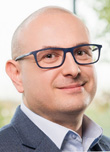 About The Expert:
Tomasz Szelag is the head of clinical operations at Ryvu Therapeutics.