
Proving CNS Target Engagement With Neuroimaging In Early Clinical Drug Development
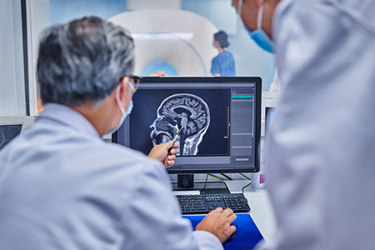
Advancing CNS therapies requires more than demonstrating plasma exposure or tolerability. The critical question is whether a compound reaches the brain, engages its intended target, triggers the expected biological response, and provides evidence strong enough to guide development decisions. This document presents a practical framework for using neuroimaging to build that chain of evidence, integrating PET, MRI, PK/PD data, and functional pharmacology into a decision-oriented strategy.
Rather than treating imaging as an exploratory add-on, the approach emphasizes matching each modality to a specific development question. PET can provide direct insight into target occupancy and molecular binding, while MRI offers repeatable measures of physiological and functional responses that help characterize downstream pharmacology. The strongest evidence packages combine imaging with exposure data, challenge models, physiological monitoring, and predefined decision criteria.
Featuring real-world examples and modality-specific guidance, this perspective highlights how well-designed neuroimaging studies can reduce uncertainty, support dose selection, strengthen proof-of-mechanism, and improve confidence in go/no-go decisions during early clinical development
Get unlimited access to:




Enter your credentials below to log in. Not yet a member of Clinical Leader? Subscribe today.