
Repurposing Three FDA-Approved Drugs For A New Stroke Recovery Strategy
A conversation between Neuro-Innovators CEO Howison Schroeder and Advisory Board Member Ken Phelps and Clinical Leader Executive Editor Abby Proch
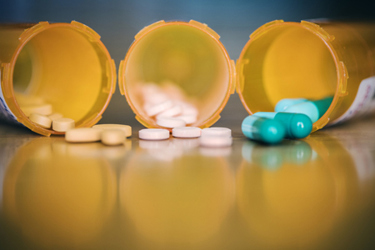
What do telmisartan, metformin, and cilostazol have in common?
They’re already FDA approved drugs. They all have studied neuroplastic properties but might also be a combined pathway to enhance neuroplasticity, says Neuro-Innovators CEO Howison Schroeder.
Neuro-Innovators is developing the use of the three drugs as NIV-001, paired with intensive rehabilitation therapy, to improve function in patients recovering from chronic stroke. The endeavor is aided by Ken Phelps, who Schroeder calls “Mr. 505(b)(2).” Throughout his career, Phelps has supported more than 1,000 505(b)(2) submissions to the FDA.
In this interview, Schroeder and Phelps explain why Neuro-Innovators is pursuing a polypharmacology strategy, how the 505(b)(2) pathway lends operational efficiencies, and why objective measures such as the Fugl-Meyer assessment are central to the trial design.
With the NIV-001 trial, you’ll be studying a combination of three FDA-approved drugs paired with robot-assisted rehabilitation. What makes this a unique proposition?
Howison Schroeder: Back in my prior company, Neuro Kinetics, we had developed a highly sensitive neurofunctional measurement tool. We found that with frequent testing, we observed a neuroplastic response. As a result, we thought that if we added a drug that enhanced neuroplasticity e.g., fluoxetine, we should see an accelerated, expanded response.
That study has not yet been done. The homework I did afterward identified a lot of opportunities for new intellectual property and a need to combine concepts for successful neuroplastic strategies. Given the complexity and adaptability of the brain along with the limitations due to the blood brain barrier, we had to come up with something that's more complicated, sophisticated, and that integrates neuropharmacologic and neurobiologic strategies. We researched on well over 2,000 different drugs to find out which ones had published support for neuroplasticity.
We narrowed our list focused on chronic stroke survivors as our patient population. We actually started with four drugs, but we thought that would be too complicated for the FDA and zeroed in on these three. Nobody's put these three together. I can't tell you how many people said AI will give us this answer. It won't, because there's no database to tell you. On which to build a model.
We picked these three for the variety in their mechanisms of plasticity and because all three take different excretory pathways through the body. And those all become the epicenter of our current IP. We're taking these three generic drugs off the shelf in commercially available doses and putting them into patients to see what kind of a signal we get.
Historically, when people have done compound strategies with neuro drugs, they see synergies. We are hopeful and expect that the dosages we'll finally put into a single pill will be less than the commercially available doses now.
How does designing a trial with FDA-approved drugs differ from a doing so with an investigational drug?
Ken Phelps: When it gets into the 505(b)(2) arena, we're required to fulfill all the requirements for an NDA, but it depends on where we get that information. Typically, in a new drug, you do all the studies. But in a 505(b)(2), we find ways to satisfy the FDA's requirements in novel and different ways. There is already information about these drugs that we can use. Most importantly, all the time-consuming and expensive preclinical studies are likely to be satisfied by everything in the literature.
Howison, how did you decide to introduce robotic therapy?
Schroeder: We're using robots in this assisted therapy, but we do not expect to go to the FDA with robots as part of this combination.
Neuroplasticity exists in almost everybody, no matter how old you are. We get into ruts, for lack of a better term, but neuroplasticity never really goes away.
Research has shown that intensive physical therapy without robots provides equivalent results to intensive physical therapy with robots. We found that if you do intensive therapy with robots, it becomes pretty cost-effective and more consistent. The human part creates more variability and takes greater energy and more time. And, of course, that's what gets reimbursed or not.

How did you decide to use the Fugl-Meyer assessment as the study's primary endpoint for this patient population?
Schroeder: Fugl-Meyer is the gold standard for evaluating stroke, according to the FDA. Roughly 60%-70% of the Fugl-Meyer’s made up of motor movements, something objective and functional. I can measure beta amyloid and have a derivative of what may or may not drive Alzheimer's, but simply suppressing beta amyloid doesn't necessarily address the problem. By dealing with a functional measure, we can get somebody to move their arm 10% better it is measurable and repeatable. In multiple prior studies, stroke survivors can gain a rough 3 to 4 point change in their Fugl-Meyer score. But, to feel the clinical difference at home, one needs to affect a 5 point change or better. Such a change can mean a survivors can suddenly reach their arm up, open the cabinet, and pull out the jam for their peanut butter and jelly sandwich. We believe that this pharmacotherapy is going to enable that clinical difference.
Poor outcome measures are a key contributor as to why neurologic studies are so costly and so often fail. By picking an objective metric, we don't need 800 subjects to prove improvement. If I've got some subjective metric like cognition, it just drives up my effect size and my power calcs pretty dramatically and very costly. We expect to see results in a relatively small patient population. By way of example, the Vivistim pivotal study had 108 patients. The data is objective. If it works, it works. This is an important part of our strategy and allows us to manage size, time, and money.
Phelps: The FDA knows about inter- and intra-site variability, as do sites. We have training tools to control that. That's all part of putting together a clinical trial for the next step, and we'll be able to work within an established group of investigators who have worked with this endpoint in mind.
Why was it important to include secondary endpoints that have more to do with quality of life?
Schroeder: They're important to know and watch and monitor. We are also taking blood samples before, during, and after treatment. We've got four biometrics we're going to be looking at. But there's so much more opportunity within the blood samples to look at what changes chemically and when it aligns with this objective outcome measure. We've been talking to diagnostic companies about participating in this study to deal with potential phenotypes and allow us to build a neuro drug database. That's also a secondary outcome measure of sorts.
I don't think it's going to be part of the submission, because the FDA has said Fugl-Meyer score works for them. The one thing you don't want to do with the FDA is throw in any more variables than you need.
Phelps: The current study is exploratory, and we'll decide based on what we find in this study whether we're going to continue evaluating blood markers or expand them in future studies.
Speaking of future studies, what's next for you all?
Schroeder: Patients really can't handle more than about six weeks of therapy, and six is where the Spaulding Center feels they get the greatest effect. So, we're pre-dosing for two weeks, then doing therapy for six. We're going to start having data before the end of September. That short duration also keeps costs under control. And once we get through this, the next is to prepare a pre-IND package, putting these three drugs together and a clinical study designed for our dosing study.
There's a company in France that ran a clinical trial for three generics to treat Charcot-Marie-Tooth disease. They found synergies, and we expect to see no different. Unfortunately, they did not manage their clinical trial effectively. But it gives us a healthy, helpful road map.
About The Experts:
 Howison Schroeder, cofounder and CEO of Neuro-Innovators, has over 20 years of experience in neuroscience medical devices and pharmaceuticals. Prior to founding Neuro-Innovators in 2021, he held leadership roles at Neuro Kinetics and Neurolign Technologies, where he advanced neurodiagnostic technologies, identified drugs to be repurposed for concussions, and secured key patents combining neuroplastic drugs with medical devices. His entrepreneurial vision identified the polypharmacology approach underlying NIV-001. Schroeder has published in the Journal of Head Trauma Rehabilitation and presented to the U.S. Army Medical Materiel Agency, Veterans Administration, and Federation of European Neurosciences Societies. He holds degrees from Hobart College and The Pennsylvania State University.
 Ken Phelps, advisor to Neuro-Innovators, has decades of experience in pharmaceutical development, regulatory strategy and manufacturing. In 2003, he founded Camargo Pharmaceutical Services, a full-service drug development partner specializing in the FDA’s 505(b)(2) regulatory pathway. His expertise has supported the successful FDA approval of numerous drug products. Prior to founding Camargo, Phelps held executive roles at Duramed Pharmaceuticals across regulatory, clinical and medical affairs, project management and quality control. Earlier, he held global leadership positions at Merrell National Laboratories, overseeing quality assurance, quality control and process technology. He began his career conducting drug metabolism studies of potential carcinogens at the Eppley Center for Research in Cancer and later established a laboratory and manufacturing operation focused on sterile blood collection tubes.