
RWE Increasingly Supports Rare Disease Research As RCTs Alone Fall Short
A conversation between Senior Vice President of Global Medical Affairs, Chiesi Global Rare Diseases, Rachele Berria, MD, Ph.D., and Clinical Leader Executive Editor Abby Proch

Traditional clinical models aren’t meeting the needs of rare disease patients.
In ultra-small, heterogeneous populations, RCTs are proving to be only partially effective in wholly accounting for the patient experience. And so, RWE has emerged not as a supplement but as a critical component of evidence generation. RWE informs trial design, captures longitudinal patient experience, and addresses ethical and practical barriers inherent to randomized controlled trials.
In this Q&A, Chiesi’s Rachele Berria, MD, Ph.D., discusses how RWE is reshaping rare disease drug development strategies, from leveraging registries and patient-reported outcomes to navigating evolving regulatory expectations.
Clinical Leader: Real-world evidence is reshaping development strategies in rare disease. What is limiting about traditional clinical trial data collection that RWE can improve upon?
Rachele Berria, MD, Ph.D.: Real-world evidence moved from a nice-to-have into something that is essential, especially in rare disease research. The calculus is not forgiving. I'm doing due diligence now on a disease that affects a few hundred people in the world. It takes years to diagnose them. And so, a traditional trial model is not built for reality. We had to adapt to find where the evidence lives — in clinical records, disease registries, and daily experiences of patients and caregivers. Before we design any trial, we look at the patient journey and patient caregivers, and then we start interviewing them. RWE does not replace the scientific rigor. It enriches it and tells us what's happening to patients between clinic visits and over the years across different healthcare systems.
In rare conditions, why does an RCT not suffice, and where does RWE make the difference?
RCT is the gold standard for a reason, but in rare diseases, it becomes almost like its own barrier. Because when you have a disease that affects only 200,000 patients globally, randomizing with a placebo arm is scientifically challenging, ethically debatable, and practically impossible.
With alpha-mannosidosis, for example, we literally could not run an RCT in the classical sense. So, we built the SPARKLE registry, a prospective multinational cohort study that enrolled treated and untreated patients in Europe and follows them for up to 15 years.
Another example is homozygous familial hypercholesterolemia, a condition that is so rare and so severe that children, if left untreated, may actually die by the age of 18. Our pediatric trial, APH-19, used a single arm, open label design with a running period. So, you stabilize a patient and then each patient serves as his or her own control. That design gave the regulatory rigor without the need for a placebo, because the population was so hard to recruit for.
More generally, I noticed a trend of platform designs being utilized, especially in oncology, where multiple questions can be asked within one protocol. I think the real question in rare and ultra-rare disease is not, “How do you run the perfect trial?” but “How do you generate meaningful evidence when you have only a handful of patients in the world?”
Earlier, you mentioned regulatory acceptance of these various trial designs outside an RCT. How do you communicate your choice with regulators, and what challenges have you come up against in convincing a regulator that this is the right path?
I see the regulatory bodies being significantly more receptive than they were years ago to this kind of innovative evidence. And the rare disease space has been the driver of this evolution from the FDA and even the EMA. We're fortunate at Chiesi, because we built a strong collaboration with the regulatory agencies on both sides of the Atlantic. They're not only transactional conversations; it's an ongoing dialogue.
One caveat is they don't accept just any real-world evidence that comes to them; you need to guarantee methodological rigor in the way that data is collected, the transparency about the limitations of your findings, and articulate clearly how the real-world evidence complements the controlled evidence. This is something that enriches the controlled evidence, so our job is to meet the regulatory agencies and engage early, so there's no surprise at the submission review time. The times of submitting RWE as an afterthought are long gone; they expect that piece to be part of the evidence package.

When you work with the FDA versus the EMA or another regulatory body, are there any special considerations?
It depends on the disease and the sub team that reviews that specific disease. A little bit is driven by the therapeutic area itself and the fact that you have pockets of populations that are more affected. To give you an example, hypercholesterolemia and lipodystrophy have large cohorts in Turkey. Those prevalence considerations drive the discussion and the data that the regulators want to have.
Additionally, what we try to do is understand how a decision from one regulatory body can be taken into account by another regulatory body. You assume that the FDA and other health authorities talk to each other, but in case that's not true, we are sometimes the one saying, “We submitted to this authority, this is the data package that we had, and this is their response. What else would you need to see?”
Industry is increasingly incorporating patient-reported outcomes as endpoints. How has that evolved specifically to rare disease?
That's the area I find the most energizing and the hardest to tackle because, for decades, the endpoints have been enzyme levels, biomarkers, and imaging findings — and those matter. But if a patient cannot climb a set of stairs or go back to school, in the case of children, those are the endpoints that matter. So, how do we tackle this?
We supplement a lot of evidence with patient surveys. What we've done at Chiesi in Fabry disease is survey nearly 300 adult patients in the U.S. and Canada. The key insight was that approximately half of the patients currently on enzyme replacement therapy saw symptoms getting worse in between infusions, but only 48% had shared that with their clinician.
That was a tremendous insight to take back to the patient advocacy groups and eliminate any misalignment. Because if you let it grow, that may result in a clinical study that is not designed the proper way.
What are the challenges in validating patient-reported endpoints or patient surveys when you have such a small population?
One of the biggest challenges is the heterogenicity in rare disease. Two people with the same genetic mutation may have a totally different clinical presentations and symptoms. Epidermolysis bullosa (EB) is a perfect example. It may vary from simple blistering all the way to skin cancer. And so, designing an outcome measure that really encompasses all of this is really hard.
Another issue that keeps me up at night, because I'm very keen on establishing health equity, is language and cultural translation. When we have a tool designed in one language, sometimes the translation does not lend itself to a different cultural reality. So, we do many qualitative grounding methods to make sure that we smooth these differences.
It's really hard when you don't have the luxury of large, validated data set; you have to be very deliberate, patient-centered, and collaborative from the beginning. Otherwise, you validate the wrong instrument very beautifully, but it will not be used, and that would be problematic.
In the years ahead, what factor will change how we generate evidence for rare disease clinical trials?
I'm quite optimistic about the future, and I see three big forces that will play out. The first one is AI and predictive analytics, because it can accelerate how we identify patients and shorten the diagnostic odyssey.
The second one is digital health technology, such as wearables, remote monitoring, and decentralized trials, which allow us to capture that data continuously and passively, thereby reducing the burden on patients.
The third and probably most important one is collaboration across industry, academia, regulators, and patient advocacy groups. There's no single trial, no single data set that will really crack the code; the next advance is really working all together. And there's keen interest from every party that I talk to. Ultimately, if there's enough trust with each other, we share data, we share risk, and we share the credit for the benefits of patients and their families.
Editor’s note: This transcript has been edited for clarity.
About The Expert:
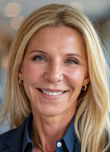 Rachele Berria brings more than 18 years of pharmaceutical experience to her role as senior vice president, medical affairs at Chiesi Global Rare Diseases. Throughout her career, she has guided over 25 innovative therapies from discovery to launch to lifecycle management
Before joining Chiesi, Rachele served as vice president, head of medical for U.S. biopharmaceuticals at AstraZeneca and held global leadership roles at Sanofi, where she led the medical strategy for diabetes. Her foundation in clinical development began at Roche, where she built partnerships across R&D and commercial teams to deliver impactful trials and drive collaboration.
Rachele is board-certified in obstetrics and gynecology, holds a fellowship in diabetes and metabolism, and has authored 40+ peer-reviewed publications. She remains dedicated to advancing medical science with empathy and purpose.