
Safety Is The Mantra In Kivu Bioscience's ADC Trials For Solid Tumors
A conversation between Kivu Bioscience CEO Mo Trikha and Clinical Leader Executive Editor Abby Proch

In a crowded antibody-drug conjugate (ADC) landscape, differentiation hinges on improving the fundamental risk–benefit equation. Kivu Bioscience is advancing two clinical-stage candidates, KIVU-107, a PTK7-directed ADC, and KIVU-305, a CEACAM5-directed ADC, with a deliberate focus on safety, tolerability, improved efficacy and sustained dosing. This approach addresses a longstanding limitation in the field, where toxicity has often constrained efficacy by forcing dose reductions and treatment interruptions.
In this conversation, CEO Mohit Trikha outlines how Kivu’s strategy integrates disciplined clinical execution with a clear scientific thesis: Safer ADCs enable higher effective dosing, which in turn may drive deeper and more durable responses in solid tumors. He also discusses how parallel trial execution, global site strategy, and close collaboration across stakeholders support rapid, data-driven development.
Clinical Leader: How do you approach leadership at Kivu as you bring KIVU-107 and KIVU-305 into trials?
Mohit Trikha: By way of my hobbies and my spare time, I've learned to do high-altitude hiking. When you're above 10,000 feet, backpacking and climbing up, you start at 5 a.m. And when the sun goes down, there are consequences if you don't make the next campsite. I bring those same values that timelines matter, and drug development, like hiking, is a team sport. No one gets left behind. Our mantra is that cancer patients are waiting-let’s make every day count.
I lead the company, but a leader doesn’t always have to be in the front. I am reminded of the time when my son and I were hiking up the base camp of Mount Everest and on the last 1,000 feet, I was exhausted and he helped me by carrying my backpack. You have to recognize that titles don't matter; everybody is a leader and should be accountable for their deliverables.
Your two ADC candidates are going into the clinic. How did your team decide these are suitable for in-human trials?
We asked ourselves: Where is there unmet medical needs in patients with cancer, and how can we improve upon standard treatment options?
We are working in a highly competitive field, so don't go in and develop something that is a “me too.” Develop a best-in-class. Some of the first-generation ADCs that ‘107 and ‘305 are developed to improve upon had safety liabilities.
You have to have efficacy, of course, but you also want an improved safety profile. Our ADCs need to overcome those limitations. We call that a therapeutic index or a risk-to-benefit ratio. And that's how we said we wanted to go into that space. We want to make kinder, gentler, and more efficacious ADCs. If we want to conquer cancer then need to keep both efficacy and safety in mind as we develop our medicines.
You're running the two trials in parallel. What are some of the shared operational frameworks, things that you're doing in both?
My leadership team and project teams, we go on walk-and-talk sessions — a 107 walk-and-talk session and a 305 walk-and-talk session. We ask each other: What lessons did we learn? What went well? Are there lessons to be learned that could help the second program as well as the first program?
The second piece is you have to collaborate. It's not just always talking to the principal investigator, but also with the sites, the staff, the CROs, and the CDMOs. Our approach is not that you're working for Kivu or for that CRO or that PK/PD vendor or that academic medical center, you're working for the patients and the project. We were able to move quickly because we assumed noble intent to be capital and patient efficient.
With your walk-and-talks, what can you enable in that environment as opposed to an office building?
Your blood pressure and cardiovascular functions ramp up, and some of that extraneous conversation goes away. When I hike, I use my words very carefully because I am huffing and puffing.
Also, when you talk to people in an informal way, there's an energy transaction that happens that you don't get from sitting in a conference room. Walking and talking allows us to lower our barriers and go back to assuming noble intent. It's not about what Mo is saying. Mo is just proposing ideas, but somebody else should feel empowered to make a decision. When you're in that walk-and-talk session, it allows people to mix and match.

For KIVU-305, you've got the ethics approval and the clearance for doing a first-in-human study in Australia. How are you using this geography strategically?
We think about clinical drug development in global terms. For example, we are based here in California, but we can synergize and streamline activities with other global regions such as Australia where standards of care are very similar to that of the United States. Australia is the high quality of work, the overlap in work hours, and certain processes that are quite streamlined.
Study start-up at academic medical centers in the United States can take time, and we have found that Australia cancer centers of excellence provide an opportunity to start clinical trials more quickly even as we open our sites in the United States. Time matters. Money I can find, but no one can give me time back. And for our patients, time is the most precious commodity.
You mentioned competition in ADC drug development. How do you stand out to sites and PIs in a competitive market?
Competition is really good because it helps bring the best therapies to patients. It brings out the best in us, too. We actually share with sites more than just a site feasibility questionnaire-we share the science and the data to support why our ADCs should be evaluated in patients.
We've structured an approach that if you get to a certain milestone, then CROs get paid. And if there is a challenge with recruitment, be clear and courageous and say, "Look, you are not performing to the level that we expected. How can I help you perform to the level that we are expecting? Where did the communication break down?” Talk about it, and see how we can do what's right for the project.
And how do you stand out with your science?
When you're partnering with patients and sites to conduct a first-in-human oncology clinical trial, your primary objective is safety. Cancer patients who participate in the first-in-human clinical trial are brave. When we do preclinical work, ADCs have an incredible amount of efficacy in laboratory models. Unfortunately, those preclinical models do not always directly translate to activity in patients with cancer because there are limitations.
At Kivu, we want safer ADCs that enable us to increase the dose. Only a small percentage of an ADC actually penetrates the solid tumor. Typically, 1% to 5% of an ADC actually penetrates the solid tumor. Our ADCs are differentiated because we are treating patients at a very high dose. By keeping patients on a higher and tolerable dose thus minimizing dose reductions and interruptions , we allow the patient to get a response and stay in that response. I'm a big believer that if you want to improve duration of response, then come in with safer ADCs.
That's an area that has been underappreciated because ADCs are an overnight revolution 40 years in the making. The problem was most of those earlier ADCs had toxicity and patients couldn't tolerate it. We are improving the tolerability bar, which in turn will improve the efficacy bar. So that's the approach we're taking to differentiate us from others.
If you succeed in demonstrating these best-in-class profiles for each of the programs, how do you continue to scale?
We're 16 months out with almost two programs in the clinic. I'm a big believer in collaborating with investigators, sites, patients, and CROs and CDMOs but also with investors and Big Pharma.
I know Kivu’s limitations. I know what we do really well. We are rapid and agile, but to advance these programs into larger studies, we need to collaborate. So, that's the approach we're taking.
We are here to serve patients. Now, the best way to serve patients sometimes is to allow the transfer and set up collaborations with larger organizations. So, know your weaknesses, but focus on your strengths and don't forget your guiding principles and vision statement.
Editor’s note: This transcript has been edited for clarity.
About The Expert:
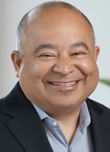 Mohit (Mo) Trikha, Ph.D., is the CEO of Kivu Bioscience. He brings over 25 years of drug development expertise in oncology and has been instrumental in advancing more than 40 programs from target identification to clinical trials in oncology. Previously, Mo was a venture partner at Apple Tree Partners and led oncology early development at AbbVie, where he oversaw the development of discovery-stage programs to clinical proof of concept, focusing on ADCs, bispecifics, and CAR T cell therapies. He has contributed to the development of key drugs such as Kadcyla, Polivy, and vismodegib, and chaired collaborations with leading institutions like TeneoBio, Calibr, and The Scripps Research Institute. Earlier in his career, he held roles at Genentech, Centocor/Johnson & Johnson, and Triphase Accelerator. Mo earned his B.S. in biochemistry from California State University, Los Angeles, and his Ph.D. in biochemistry and molecular biology from the University of Southern California.