
Stock Options: Choosing The Right Viral Inoculum For An Early-Phase Norovirus Trial
A conversation between Cocrystal Pharma, Inc. President and Chief Scientific Officer Sam Lee, Ph.D., and Clinical Leader Executive Editor Abby Proch
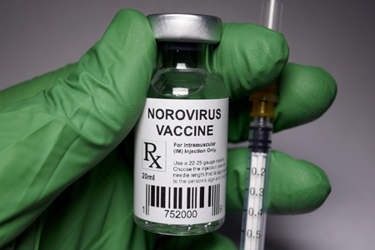
For norovirus antiviral development, the success of a human challenge study can hinge on one practical question: Does the inoculum reliably create the disease being studied?
In this conversation, Sam Lee, Ph.D., president and chief scientific officer of Cocrystal Pharma, discusses the company’s Phase 1b human challenge study evaluating CDI-988, an oral norovirus protease inhibitor, against the Snow Mountain Virus strain.
Lee explains why the quality, availability, and regulatory qualification of viral stock can become a major bottleneck for sponsors. He also shares lessons learned about how infectivity rates shape whether a small study can produce meaningful data.
Clinical Leader: Cocrystal chose a human challenge study for this Phase 1b trial design. What did that involve?
Sam Lee, Ph.D.: The advantage of a human challenge study is determining the efficacy of the treatment in a really well-controlled environment. Our study recruited 40 subjects. So, it's a small study. However, the endpoints are really clear: symptoms and viral load.
At each site, we have 10 isolated units that staff and PIs constantly monitor. Once we introduce the inoculum, norovirus, it takes about two days to develop the symptoms, and symptoms will last about five days. That's a key window to evaluate symptom as well as stool and emesis samples for viral load quantitation.
After five days, the immune system takes care of all the illness, and we keep the subjects another week to ensure they have no acute gastroenteritis. Our goal is that we want to prevent any contamination for potential outbreaks.
Is there anything about your challenge study that differentiates itself from other norovirus trials?
Yes, previous trials used different strains of norovirus, such as GII.11, which is the Norwalk original norovirus strain and GII.24, followed by T11.
We chose our strain based on a publication by Dr. Nadine Rouphael and Emory University about the Snow Mountain Virus. They carefully look at the titer — how much of the inoculum they need to create the disease — as well as the inoculum’s availability, stability, and infectivity rate. It's been really well characterized in terms of virus stock.
What lessons have you learned about operating challenge studies that you have brought into this and future trials?
As a drug developer working on antiviral diseases, once we demonstrate the safety of the compound or vaccine, we want to get to the next stage as quickly as possible. Challenge studies are one of the huge advantages. You can quickly initiate the study and get the result. You also have to establish the infectivity rate while you maintain safety. Because this is a small study, if you don't establish infectivity rate, you may not get meaningful data.
The infectivity rate is controlled by the quality of stock virus and how well it creates the disease, similar to a naturally occurring situation. If you achieve a poor infectivity rate, say 20% or 30%, then everything becomes a challenging issue. When we conducted the first cohort, we confirmed the infectivity rate before we actually introduced our drug to a study group. We were really happy to see that based on the publication as well as our experience.
If you don't achieve a good infectivity rate, how do you remedy that?
It would depend on the clinical protocol. If the protocol states clearly the goal for the infectivity rate, and we don’t meet it, we would pause the study and investigate whether we need to increase the inoculum. We’d also have to check with the regulators to make sure they agree with us. If not, the study would have to be paused because it's not good clinical practice to recruit healthy volunteers, create the disease, and not have a meaningful outcome.

How do you find partners for the inoculum?
The real bottleneck in this trial was the viral inoculum. Worldwide, there are few CROs that conduct norovirus clinical trials and claim to have the best inoculum in terms of stability, viral titer, and FDA approval. In our experience, that inoculum should be available for biotech and pharmaceutical companies as well as academic institutes. If you want to use their inoculum for clinical trials, that's a bottleneck.
CROs are charging a lot, but can they guarantee the quality? You really want to start with the well-characterized inoculum. At this point, we have two options: the CRO that has qualified viral inoculum approved by regulators or NIH sponsor studies. In our case, this original Snow Mountain Virus that we're using is funded by NIH. So, Emory University and the University of Northa Carolina, they conduct the trial, they isolate the sample from patient, and then they scale up and create the stock virus.
Finally, how closely do you work with regulators, global health organizations, and partners in human challenge trials?
We did interact with the FDA for the Phase 1b CDI-988. We appreciate their responses, questions, and very smooth communication.
Also, the stock virus that we're using was generated by Emory and UNC. They contacted the FDA to get approval to use their stock virus for our study. That process was managed by a different FDA division, but we appreciate the effectiveness.
We have also conduced a challenge study in the U.K. It's a different regulatory environment, and we communicated through our CRO, who dealt with the MHRA. Overall, we're happy with that process.
About The Expert:
 Sam Lee, Ph.D., currently serves as the president and chief scientific officer at Cocrystal Pharma and has over 25 years of anti-infective drug discovery research experience. Prior to Cocrystal, he managed anti-infective drug discovery projects for eight years at Icos Corporation (Nasdaq: ICOS). At Icos, Dr. Lee was responsible for incorporating protein crystallography and structural screening technologies into Icos’s research and played a key role for developing phosphoinositide 3-kinase (PI3K) delta inhibitors, which ultimately yielded an FDA-approved product. He received his Ph.D. in biological sciences from the University of Notre Dame and completed postdoctoral training in viral biochemistry with Dr. I. R. Lehman at Stanford University. While at Stanford, Dr. Lee founded and was CEO of Viral Assays in Cupertino, CA.