
Sustainable Patient Engagement: Your Enrollment And Representation Depend On It
A conversation between Boehringer Ingelheim Head Of U.S. Clinical Development Operations Karen Correa, Ph.D., and Clinical Leader Executive Editor Abby Proch
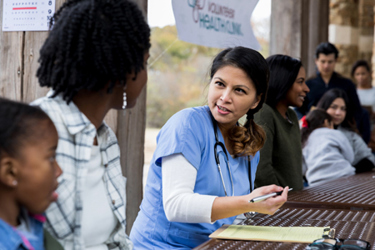
If you’re looking for community engagement to be the salve for lagging patient enrollment, you’re already too late.
Drawing on her work around community partnerships and representative enrollment, Boehringer Ingelheim VP of Clinical Development Operations Karen Correa, Ph.D., explains how early and sustained awareness can help patients, providers, and community organizations better understand clinical research before a specific trial opportunity appears.
For sponsors looking to improve access and representation, Correa makes the case that early education is a strategic capability that must be built into the trial planning from the start.
Clinical Leader: How well do sponsors currently recognize and embrace the idea of early patient awareness and education?
Karen Correa, Ph.D.: Many sponsors and companies have been making significant progress in recognizing that patient awareness and education are critical to enrollment success, particularly when it comes to improving representation. Early education is particularly important for representative enrollment because limited awareness and understanding remain persistent barriers to participation. When communities are not represented, the results may not fully reflect the people we ultimately develop the treatments for.
However, there is still a gap between understanding the importance of early engagement and consistently operationalizing it across the organization. Most organizations now include representation goals in their clinical development plans, but they need to recognize the value of community partnerships and patient-centered engagement: patient awareness, education, and representation. They all should be built into our trial planning from the beginning rather than introducing it in response to recruitment challenges.
We need to bring our sponsors together with our CROs, our investigators, our health assistants, and our community advocates so we can have a shared approach to providing access and to enable participation on the community’s terms.
Do you ever encounter hesitation or barriers to execution from sponsors?
Unfortunately, global study allocations and site selection pressures can favor our larger, globally-prioritized sites. That makes it difficult for our community-based sites to secure opportunities in trials. Patient and community advocates can keep our local access representation and patient reach visible in study planning and portfolio-level decisions. Those advocates can help connect our sponsors with trusted health systems, community organizations, and patient-friendly educational resources that make trials more understandable and approachable.
Are CROs or sites supporting these engagement efforts, and how so?
Absolutely. Sites and CROs serve as active community engagement partners rather than becoming involved only when recruitment begins. Our community health systems provide a familiar setting and connections to providers and networks already serving our local patients. We have sponsors, CROs, investigators, and advocates that can work together to support conversations about access, choice, and participation. And then we have our industry partners who can stand behind each of our community sites to provide resources as well as the trust and support they need to thrive.
And of these efforts, are they typically one-offs? Or are folks continuing community education and outreach from a program or company point of view?
Individual events can be valuable entry points into clinical trials, but to be sustainable, we need trust-building that requires more than a single open house or an awareness activity. We need structured community engagement strategies and an ongoing events calendar that can move outreach from an ad hoc activity to a coordinated and scalable model. Continued community engagement strengthens our long-term relationships with our providers, our health systems, and our community networks already serving local patients.
One-offs serve a good purpose in getting people to enroll. What benefit does a long-term initiative bring?
The continual outreach helps build familiarity. The word we always hear is “trust.” When we have a structured community engagement strategy, an ongoing event calendar, aligned messaging, and repeatable processes, we can sustain outreach across our studies and our therapeutic areas. When we're integrating our community engagement and representation with our patient advocacy, our site engagement, and our study planning terms, we can sustain a strategic capability rather than a one-time initiative.

For something to be sustainable, there has got to be infrastructure in place. What internal partners should be at the table, and what should they be doing?
Representation, patient advocacy, and site engagement teams need to have a common engagement strategy. Site engagement and patient recruitment and retention teams can help identify and support community-based sites that reach historically underserved populations. Feasibility, site identification, study planning, and portfolio decision-making must also be involved to enable access and representation to influence site recommendations from the beginning.
How can site-level partners play an ongoing role, and what do they need from the sponsors to help execute that?
Community-based healthcare professionals and educators can serve as trusted local channels to help patients understand clinical research. They can discuss available opportunities with patients’ families as well as other healthcare providers. Because they work within the settings where the patients are already receiving their care, they can help connect that general awareness with practical pathways to research. Sponsors need to provide accessible, compliant educational materials so providers can use them. This information is about having it locally available for studies and sustained partnerships as well as resources and support for the community sites so they can succeed.
When you build this infrastructure, how do you know what’s working or what’s not?
What does not get measured does not improve. So, sponsors can evaluate the impact of ongoing education through a combination of quantitative as well as qualitative measures. This includes site and patient feedback. You can have a brief survey that's conducted at community events and assesses patients’ understanding. It also can assess the trust and the readiness for a patient to consider clinical research. These insights can be complemented by reviewing trial enrollment demographics before and after the engagement. These activities determine where the outreach was either helping broaden the awareness or even participation among the community study it intends to serve.
Digital tools are good for engagement as well. We have QR codes on patient-facing documents. Those can help sponsors track the interaction with educational resources, and they can identify which materials or outreach channels are most effective.
And then healthcare providers can be measured through participation in education. You can follow up with the site and look at the changes in their referral activity. So, once they got that education, what did their referral activity look like afterward? These indicators can help show where their outreach is strengthening the referral pathways and supporting informed trial discussions and decisions.
If a team is just building out this capability, what should they prioritize?
First, set expectations. Things don't happen overnight, but they need to begin by identifying trusted community partners, health systems, providers, advocates, and research networks that already understand and serve the attendant population that they're trying to reach.
They also need to establish a structured engagement strategy, like an event calendar, align with relevant internal teams, and develop compliant, accessible educational materials that can be used consistently across different community settings. And then last, but not least, they need to embed representation and patient reach into their site identification from the outset. You can't do it after the fact. Using disease prevalence and data and representation strategies must support community site recommendations.
Editor’s note: This transcript has been edited for clarity.
About The Expert:
 Karen Correa, Ph.D., is the head of U.S. clinical development operations at Boehringer, bringing over 30 years of experience in the pharmaceutical industry. Dr. Correa is a health and wellness coach, a published author, a STEM speaker, and a passionate mentor. She is recognized as a subject matter expert in FDA and EMA inspections; community, site and patient engagement; health policy and advocacy; and representation in clinical trials. She also contributes her expertise across multiple boards, with particular recognition for her involvement with the CAMCare Health Corporation Board.