
Takeda Keeps Patients The Focus Of PDTs For Rare Disease
A conversation with Kristina Allikmets, head of R&D, plasma-derived therapies (PDT) business unit, Takeda
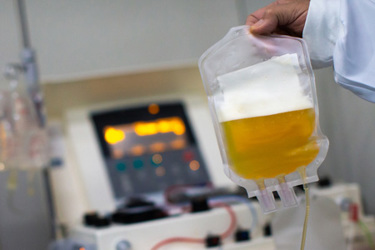
Plasma-derived therapies (PDTs) have transformed care for thousands living with rare, chronic, and complex conditions. Unlike conventional medicines, PDTs are produced from human plasma donated by healthy individuals, making them a precious resource for patients whose lives depend on replacing missing or deficient proteins.
Both the intricacy of PDT manufacturing and the patient’s lived experience highlight critical barriers to access and ongoing treatment. In this Q&A, Takeda’s Kristina Allikmets shares how her team incorporates patient voices and prioritizes innovations to reduce treatment burden, expand access, and develop care solutions tailored to the unique challenges of rare disease.
Clinical Leader: What are plasma-derived therapies (PDTs)? What are some of the diseases that can be addressed through PDTs?
Kristina Allikmets, MD, Ph.D.: PDTs are medicines used to treat rare, chronic, and complex conditions. They are designed to replace missing or deficient proteins in human plasma – the straw-colored liquid that makes up about half of our blood – and are distinct from other medicines because they can only be made from plasma obtained from healthy individuals who choose to donate. Plasma cannot be manufactured, making it a scarce and critical resource needed to help save and change lives.
PDTs treat a range of diseases, including immune deficiencies; neuroimmunological disorders; blood volume replacement; alpha-1 antitrypsin deficiency; hemophilia and coagulation disorders; and hereditary angioedema. For some patients treated with PDTs, therapy may be lifelong and no other effective treatment options exist, such as for patients with primary immunodeficiencies (PI).
The need for these therapies continues to grow as diagnosis of rare diseases improves and additional therapeutic uses are found for PDTs. For example, a better understanding of the causes of secondary immunodeficiency (SID)*, in which the immune system is weakened by an underlying condition or external factor like certain cancer treatments that can be effective, but cause immunosuppression, is encouraging more research into understanding the role of PDTs for this population of patients.
What is the most challenging aspect of the work that you do?
Plasma-derived therapies are unique in many ways. We rely on a finite resource – plasma from healthy donors – as the raw material for our therapies. Despite the generous donations from donors worldwide, plasma is a scarce and vital natural resource that thousands of people around the world rely on every day. Then, after a long and complex production process (up to 12 months), administration itself can be complex as these therapies often involve multi-step infusions of large volumes of liquid, which can be time consuming or uncomfortable. This is why one of our main areas of innovation is focused on how to alleviate patient burden.
What about the most rewarding or fulfilling aspect?
The most fulfilling aspect is working day in and day out to make potentially life-changing treatments more widely available and easier for patients around the world to use. PDTs offer us the opportunity to help more and more people while maintaining our commitments to our current patients. Any decision we make must always benefit the patient and help us serve them better, and to do this we include the patient voice early in the drug development process. Our interactions with patients not only impact our drug development, but they also remind us why we do the work we do in the first place: to improve the lives of people with rare and complex chronic diseases.
Can you elaborate on how Takeda prioritizes patient centricity and innovation to address the specific challenges faced by rare disease patients?
We gather patient and caregiver insights throughout our R&D process. This direct engagement allows us to understand real-world needs and refine our study protocols to ensure endpoints are clinically meaningful.
For example, for patients living with chronic inflammatory demyelinating polyneuropathy (CIDP), daily life can be profoundly impacted by progressive muscle weakness, fatigue, and pain, among other symptoms. Therefore, in our efforts to address these challenges with our PDTs, we focus on trial endpoints reflecting meaningful improvements in a patient’s functional ability, mobility, strength, and treatment satisfaction.
In addition, feedback from these patients has consistently highlighted the burden of frequent, lengthy treatments and their desire for simplified preparation of therapy administration. This direct patient insight has guided our research and development to exploring new formulations that may offer higher potency or reduced volume and devices designed to reduce the number of administration preparation steps.
Lastly, beyond novel formulations and devices, we are leveraging the latest technological advancements to improve the overall patient experience – from diagnosis to treatment and ongoing support. This includes developing companion apps and support platforms that improve physician-patient dialogue, increase connectivity, and support automated disease monitoring to simplify care. These innovations are designed to help further personalize treatment and empower patients in managing their condition, ultimately aiming to alleviate their daily challenges.

In clinical research, what are some of the challenges you face, and what are some exciting innovations or approaches that could address them?
When it comes to clinical research, our PDT R&D team faces the task of overcoming decades of established thinking around IG therapy and administration to develop new or improved solutions that are well-tolerated and efficacious while better meeting the needs of our patients with respect to convenience and ease of administration. We are currently focused on three main areas of innovation:
- IG Formulation: We are investigating the potential to deliver a higher concentration of IG in each dose for certain patient populations, which would allow for less volume of therapy and potentially reduce patient burden.
- Device Development: We are developing devices to simplify treatment administration and reduce the number of steps involved.
- Integrated Care Solutions: We are working to enhance the overall patient experience through personalized solutions to help improve disease management, such as digital apps that walk through the process of therapy administration step-by-step.
What are some of the most significant unmet needs in the rare disease community? What about the most significant barriers to care?
Managing a rare disease is challenging, following an often-difficult journey to diagnosis, and treatment can add another layer of complexity. For those administering PDTs at home, the process can sometimes feel overwhelming. From storing multiple boxes of supplies like needles, syringes, and refrigerated medications, to following potentially complex administration procedures, it can be a lot to handle.
We recognize the impact this can have, not just on physical space but also on the emotional and mental well-being of patients and their families. A patient’s complete journey must always be top-of-mind and it is why we are committed to minimizing treatment burden and making management of lifelong diseases easier, driving forward holistic complete care solutions.
What is Takeda's strategy for expanding access to treatments for rare, chronic, and complex diseases, particularly in underserved regions?
Given increasing patient need for PDTs, we’re pursuing investments in disease awareness, new technologies, geographic expansion, novel therapies and formulations, and efficiencies to increase access to these therapies.
Expanding access to these treatments globally requires careful navigation of complex regulatory frameworks and sensitive supply chains, particularly as plasma is a human-derived product with unique handling requirements. Increasing source plasma supply is also key to enabling broader access, and that requires strong partnership between the public and private sectors. A great example of this in action is the collaboration we have with UNITAR (United Nations Institute for Training and Research). As part of this UN-led initiative, UNITAR created the Plasma4Life website, which increases awareness, nurtures partnership, and facilitates access to the latest scientific knowledge and best practices for growing global plasma supply, with the aim to support countries in finding their own locally designed solutions.
What are Takeda's goals and priorities in advancing innovation for patients living with rare, chronic, and complex diseases?
PDTs provide a unique vantage point that can help shed light on new approaches that can both enlarge and refine our view of patient-centric innovation. Distinct from traditional drug discovery, the limited nature of plasma and the unique environment in which we operate mean that we must look creatively both at how to serve more patients and how to serve each one better.
My dedicated PDT R&D team is focusing on minimizing treatment burden and making the management of lifelong diseases easier. We are doing this by:
- serving more patients by expanding our indications and pursuing regulatory approvals in new geographic markets; and
- redefining the patient experience by working to develop new formulations and devices that reduce patient burden and support patients at home.
By leveraging deep patient and caregiver insights, decades of real-world evidence, and the latest technological advancements, as well as fostering a continuous learning cycle – from donor to patient – we are focused on improving the patient experience.
*Takeda’s immunoglobulin therapies are not indicated for secondary immunodeficiency in the U.S.
About The Expert:
 Kristina Allikmets, MD, Ph.D., is head of R&D in the plasma-derived therapies (PDT) business unit at Takeda. She leads the PDT R&D team that develops clinical programs across multiple indications, creates devices for administration of plasma products, and includes strong pharmaceutical and translational sciences groups. Over the past 20 years, Dr. Allikmets has worked in biopharma drug development, advancing products across multiple disease areas and a variety of therapeutic modalities. Dr. Allikmets has held various leadership roles in Takeda, serving most recently as a chief executive of a “spin-in” company within Takeda Global R&D, with a responsibility to build and lead a small biotech-like company within Takeda R&D. Dr. Allikmets holds an MD and a Ph.D. in cardiovascular research from University of Tartu, Estonia. She’s certified in cardiology and internal medicine and practiced for almost 15 years before joining the pharmaceutical industry.