
Taking On Patient Recruitment From Another Angle — The Payer
A conversation between Medzown CEO Jennifer Carter, MD, and Clinical Leader Executive Editor Abby Proch
When we talk about patient recruitment, we usually talk about the process by which the sponsor, CRO, site, and perhaps a vendor or patient advocacy group team up to find patients for a clinical trial. Each bear some varying degree of responsibility. Often, the conclusion is that one or more things weren’t done correctly, efficiently, or appropriately to engage the right patient population and enroll them in a study.
But what if another player could help?
That’s what Medzown is attempting. They’re working with health plans and self-insured employers as a member benefit, coming at the recruitment challenge from another angle.
In this Q&A, Medzown CEO Dr. Jennifer Carter discusses the challenge of patient recruitment, particularly for precision medicine, and how coalescing around clinical care data might be a better “in” for recruitment.
Clinical Leader: Patient recruitment is a perennial issue. What has been your experience with recruiting, and what are you doing to improve it?
Jennifer Carter: Based on my experience as founder of N-of-One and creating treatment strategies and helping many people navigate their care journeys, it became clear that there was this huge gap between what was available in development and what was accessible in the clinic. You could go from one place where you were told about certain treatments to another place and be told about other treatments. There was no underlying infrastructure that tied it all together. As I watched the development of these diagnostics and therapies, I saw it was going to get much harder — that the knowledge and the data were going to become more esoteric.
There are thousands of these great drugs in development and hundreds of thousands of patients who need access, but it's really financially unsustainable. They're very expensive to make and to develop. So, we have to figure out a system that works for the benefit of the patients but also can be robust enough to be deliverable.
At Medzown, we're working with health plans and self-insured employers to provide a member benefit to help patients with very complex diseases get better, faster access to cutting-edge treatments.
How should we understand the difference between personalized medicine and precision medicine?
In the early 2000s, it was called personalized medicine. And then once diagnostics made it more precise by providing insights into genomic and proteomic changes that are causing disease, the concept shifted to this notion of precision medicine, which is really targeting specific mutations or changes in a patient's disease that can lead to more precise treatments. It's underpinning all the targeted therapeutics for the treatment of those diseases.
There is quite a bit of overlap in the concepts, and they are often used interchangeably, but personalized medicine sometimes can be more about population health, and precision medicine may mean more targeted. But personalized also refers to highly personalized therapeutics such as personalized cancer vaccines.
What do you see as the biggest challenges in patient recruitment for precision medicine, and why do they exist?
They're very systemic. Starting on the clinical side, patient data is so fragmented. You have challenges with EHR systems that don't talk to each other. Labs aren't really plugged in, either. And then there are different trial databases, which are not necessarily kept up to date or designed as an information system for helping patients get access to clinical trials. It’s certainly hard for patients and families to navigate those challenges, and it’s even hard for physicians who don't have the time to manage that for all their patients.
Clinical trials also have never really been considered as part of the care continuum, so they're often thought of late in the patient's disease. And then when you look at all the criteria for getting into the trials, it can be very challenging for the patients to meet those criteria.

Are there specific ways in which sponsors or site teams underestimate how difficult recruitment can be for precision medicine?
This gets back to many of the precision medicine or targeted therapy trials looking for small populations of patients. The testing and identification of these patients can be very variable. Patients may not be tested at the right time. Patients also may not have the time or the wherewithal.
The eligibility criteria are complex, and some are getting more complex, which means it's harder and harder for patients to meet those criteria and for trials to find the right patients. I think also, for physicians, the referral pathways are challenging, slow, and inconsistent. There's a lot of fragmentation of information and even contact information. It’s a very tough system from beginning to end for patients to get navigated toward the right trials.
What patient populations are most likely to be missed by current recruitment strategies?
There are certainly socioeconomic, cultural, and language barriers, depending on where you live. Even if you live right around the corner from an academic medical center, that center has only a certain number of trials. If you're not a candidate for those trials, you may not hear about the trials that may be at another center, even if it’s in your city or town. Even at that level, it's fragmented. Then you layer on the other factors, and those create even more challenges for patients.
It's really important to help anyone get access to the drugs and treatments that they need regardless of where they live. If someone has breast cancer in the city and someone has breast cancer in a rural environment, everybody should still be able to get access to the same opportunities for good treatment.
Where do you see the biggest opportunity for improving recruitment?
After all these years of working in this system, I see that challenges exist at every level and at every node along the pathway of getting patients to trials. What's the right platform that can translate this complex clinical data into real action for the patients and the providers? We need to support both because it's a time-consuming, complicated process, and we need to integrate fragmented data to create real-time access and opportunities for enrollment in trials at scale.
What needs to change across the ecosystem to make recruitment more seamless for patients?
It starts with education about the value proposition and with having the right resources and connectivity of information and data to find appropriate trials and treatments for patients. We have to try to determine what is going to work for each patient. That's why we call it precision medicine management at scale, because there's not a one-size-fits-all solution.
It's really important to think about how we solve the challenges around fragmentation, education, and knowledge access and then create the platform that closes the first and last mile gap for the patients so they can get access to those trials.
Editor’s note: This transcript has been edited for clarity.
About The Expert
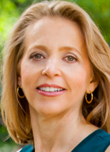 Jennifer Levin Carter, MD, MPH, MBA, is a leader and innovator in precision medicine, known for building transformative companies at the intersection of data, technology, and patient care. She founded and led N-of-One, Inc. until its acquisition by Qiagen, developing award-winning solutions for cancer patients worldwide. Her experience as a managing partner at Sandbox Industries and Blue Venture Fund inspired her to launch Medzown, where she addresses the challenges of advanced therapy access. Dr. Carter holds degrees from Yale, Harvard Medical School, Harvard School of Public Health, and MIT Sloan.