
The FDA Could Clear The Path For A Strep A Vaccine. Why Hasn't It?
By Josh Morrison, founder and president, 1Day Sooner
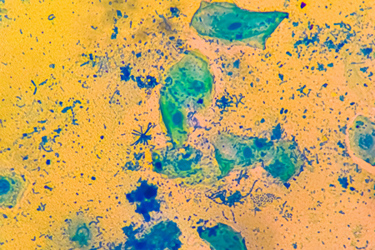
Strep A is familiar to most Americans as an unpleasant childhood illness. It usually begins with a sore throat and ends with a visit to a doctor and a course of antibiotics. But that familiarity obscures a massive global disease burden. Strep A causes roughly 500,000 deaths a year, most of which occur in lower-income countries. Rates of strep A have also been climbing in high-income countries for over a decade, and the increase in the United States has particularly alarmed experts. Strep A is also developing resistance to some existing antibiotics, so its impact is likely to increase.
A vaccine would change this, and science has brought one within reach. Jim Dale's 30-valent candidate, StreptAnova, has completed a Phase 1 trial with no serious safety signals. In the trial, it proved immunogenic without evidence of autoimmunity (which is linked to rheumatic fever). A Brazilian candidate, StreptInCor, has registered a Phase 1/2 trial. Moderna is developing mRNA versions in partnerships with Dale's team at the University of Tennessee and with researchers at the University of Queensland. These are promising developments.
And yet, no strep A vaccine is currently in Phase 3. In 2022, I argued that we needed to invest in strep A vaccine development and use controlled human infection model (CHIM) trials to accelerate the process, a move that the World Health Organization supports. There are signs of progress on both fronts. Researchers in Australia have developed a viable CHIM model for testing vaccines. After reviewing data demonstrating that Strep A has a similar disability-adjusted life year (DALY) burden to HIV/AIDS, Coefficient Giving (a major philanthropic donor in global health) documented that annual funding for strep A research sits at roughly $14 million — compared with $1.5 billion for HIV/AIDS. They identified strep A as neglected, but also as tractable and recently committed to funding accelerated strep A vaccine research.
Adequate funding has been an important obstacle, but it isn’t the only one. Manufacturers won't invest in Phase 3 trials for neglected disease vaccines when the fixed cost of approval is high relative to expected returns. As a result, unclear and outdated FDA regulations are still slowing the pathway to progress on strep A. Because uncertainty compounds already weak commercial incentives, this has a global impact. The United States accounts for more than 40 percent of the global pharmaceutical market, so uncertainty about U.S. approval can weaken the commercial case for products whose largest health benefits would occur elsewhere. This suggests that avoidable regulatory uncertainty may be slowing strep A vaccine development well beyond the United States — and not for the first time.
In 1979, the FDA issued a narrow rule that prohibited the use of Group A strep organisms in vaccine research. This was a response to a genuine safety concern. In a 1969 JAMA report, two of 21 children vaccinated with a type 3 streptococcal M protein developed definite acute rheumatic fever, with a third case classified as probable. This was a rate notably higher than in their unvaccinated siblings. The researchers advised a cautious approach to strep A vaccine research moving forward. The rule was limited in scope. The prohibition focused on strep A vaccines made with antigens that hadn't been sufficiently refined from bacterial cultures. But researchers and funders, who were understandably uncertain about the limits of the rule, treated it as a blanket moratorium on strep A vaccine work.
When the FDA finally revoked the rule in 2006, the agency conceded that the regulation "was never intended to apply to the development of Group A streptococcal vaccines that had adequate testing" but had nevertheless "been perceived to cover these products as well." A narrow safety rule helped suppress an entire field for decades because researchers and funders could not tell where the FDA’s line actually was. That same period saw the development of the Hib vaccine and HPV vaccines, and the eradication of polio from the Americas, but research on strep A remained stagnant.
The Mistakes We’re Repeating
The 1979 misstep is easy to see in retrospect because it was one identifiable rule. It didn’t need to prohibit all strep A vaccine development to slow progress. It only needed to generate uncertainty among researchers and funders. Today's pattern — accumulated and diffused obstacles with no single cause — is harder to see, but it’s producing the same result. Fortunately, it’s no less fixable.
The key to accelerating a strep A vaccine may well lie within adjustments to the Prescription Drug User Fee Act (PDUFA). PDUFA funds roughly half of the FDA's drug review budget and sets the terms on which the agency works with sponsors. First enacted in 1992 amid mounting pressure over the pace of HIV/AIDS drug review, it is renegotiated every five years. Those reauthorizations are when structural changes to the FDA actually happen.

The next renewal will happen in 2027. Former FDA Commissioner Marty Makary had announced his intention to implement “common-sense reforms” that will increase Phase 1 manufacturing flexibility for cell and gene therapies. Such a reform holds promise, though it would only address a small piece of the problem, and now the certainty of that pledge is unknown. A reauthorization that makes only incremental changes will not do enough to accelerate strep A vaccine development, nor will it smooth the pathway that could bring vaccines for other neglected diseases through to Phase 3. There are several more significant policy reforms that could make a difference.
The United States should adopt a notification-based pathway for first-in-human trials, modeled on Australia's Clinical Trial Notification (CTN) scheme. This is a reform the Senate HELP Committee under Bill Cassidy proposed in a February 2026 report on FDA modernization. Under the CTN, sponsors do not seek prior scientific approval from the federal regulator, the Therapeutic Goods Administration. Instead, a Human Research Ethics Committee evaluates preclinical data, dosing rationale, and manufacturing summaries alongside the ethical case. Once the committee and the host institution sign off, the sponsor notifies the agency, pays a fee, and the trial can begin. Australia has run this system for roughly three decades without clear evidence of worse safety outcomes, and first-in-human studies there often begin substantially faster than in the United States.
In the U.S., in contrast to Australia, sponsors must compile a full IND application before a Phase 1 trial can begin, which can mean a dossier of hundreds to thousands of pages, with complete preclinical reports, a detailed manufacturing module, and the full clinical protocol. In an FDA analysis of its oncology division, fewer than 10 percent of initial INDs were placed on clinical hold within the 30-day safety review, with manufacturing and clinical deficiencies the most common causes. Resolutions can take months, and that delay can be the difference between a program that advances and one that shuts down.
For the reform to work, Congress will also need to clarify what current good manufacturing practice (cGMP) means at Phase 1 scale. Phase 1 investigational drugs are formally exempt from the detailed requirements of 21 CFR Part 211, but the underlying statute still requires manufacturing in accordance with cGMP, which is an undefined standard for early-stage production. To avoid enforcement risk, sponsors and contract manufacturers default to commercial-scale interpretations even for limited Phase 1 batches. An amendment defining cGMP for early-stage investigational drugs, or authorizing the FDA to set a phase-appropriate alternative, would let sponsors right-size manufacturing to the actual risk of a small, short, and closely supervised study. For a neglected disease vaccine, early evidence is often a financing milestone. It’s the point at which donors and manufacturers decide whether a candidate is worth the far larger expense of Phase 2b or Phase 3 development.
The 1979 ban has also had lasting regulatory effects. Strep A vaccine developers still operate under unusually intense concern about autoimmune and cardiac safety. Developers are expected to layer in additional safety checks, like echocardiogram monitoring for rheumatic heart disease, that other vaccines do not require. Manufacturers have been hesitant to absorb the extra cost. And while Murdoch Children’s Research Institute developed a viable strep A controlled human infection model in 2021, none of the candidates currently awaiting Phase 3 funding have used it, in part because the FDA has not established a clear pathway for incorporating CHIM data into a U.S. approval package. A CTN-style notification regime would not answer every endpoint question, but it would lower the cost of the smaller, information-dense early studies needed to answer them: CHIM trials, immune-bridging studies, and safety monitoring work that can make Phase 2b and Phase 3 decisions less speculative.
Congress could also create a reciprocity pathway for products approved by peer regulators. If a drug or vaccine has been approved by the European Medicines Agency, the United Kingdom's MHRA, Australia's TGA, Japan's PMDA, or Health Canada, the FDA could treat that approval as presumptively valid. The FDA could reserve the right to object with cause, rather than requiring sponsors to re-run the evidentiary gauntlet from scratch. The United States already accepts peer country judgments in domains where the technical stakes are no lower — most notably aircraft safety, where the FAA and its EU, Canadian, Brazilian, and Japanese counterparts now reciprocally accept each other's certifications for civil aviation products under formal bilateral agreements. The analogy is an imperfect one — biologics have population-level risks and require more surveillance after being introduced to the market — but it shows that the U.S. already uses structured reliance on peer regulators in high-stakes technical domains.
Without reciprocity, a successful vaccine candidate out of Australia or Brazil would still face significant regulatory hurdles that could deter funders from investing in development. Requiring the FDA to independently re-adjudicate the entire evidence package for a vaccine already approved by a peer agency, where it will be subject to post-market surveillance, is slowing the pace of biomedical progress. A bill has already been introduced supporting reciprocity for potentially lifesaving treatments and it warrants consideration as a part of PDUFA renewal. At the moment, it’s languishing.
Reciprocity would let developers build a commercial case on evidence accepted by trusted peer regulators, lowering the fixed cost of pursuing U.S. approval and making vaccines more commercially viable for smaller and poorer markets. It would end the quiet asymmetry by which the FDA exports its caution to the rest of the world without exporting any responsibility for what that caution might cost.
What PDUFA 2027 Could Do
The reforms outlined here would matter on their own, but they sit within a larger clinical trial abundance agenda that has been gathering momentum for several years. It’s a push to make medical evidence cheaper, faster, and more accessible to generate. Adjacent proposals include risk-based monitoring of trials, formal regulatory frameworks for human challenge studies, AI-augmented FDA review, and shared infrastructure for rare disease platform trials. PDUFA 2027 is the natural vehicle for the cluster of reforms tied most directly to FDA practice, and strep A is a useful test case for how much regulatory changes could deliver on cures for neglected diseases.
The funding case for neglected disease vaccines has been made and is being met by a sophisticated philanthropic sector. The lesson of the 1979 rule is not only that bad regulations can block progress. It is that unclear regulations can do the same thing. For diseases with weak commercial incentives like strep A, regulatory ambiguity and excessive fixed development costs can become decisive barriers. PDUFA 2027 is an opportunity to reduce those barriers without lowering safety standards.
About The Author:
 Josh Morrison is the founder and president of 1Day Sooner, a non-profit organization that represents healthy participants who altruistically enroll in clinical trials and advocates for policies that maximize the benefit of their efforts. He also founded Waitlist Zero and the Rikers Debate Project. He holds a JD from Harvard Law School.