
The Patient Advocacy Strategy Behind Skyhawk's Rapid Enrollment
A conversation with Skyhawk Therapeutics and Clinical Leader Executive Editor Abby Proch

It’s not every day you get a group of clinical research professionals eagerly chiming in on their recent trial success. But it’s really not that surprising given the way Skyhawk Therapeutics runs its clinical operations — with unwavering dedication to quality and a near obsession with patient proximity.
In this Q&A, Skyhawk’s Cofounder and CEO Bill Haney; Director of Clinical Operations Samantha Seepersad-Nayee; Senior Manager, Community Engagement Maddy Mack; and Cofounder & Distinguished Senior Scientist Kathleen McCarthy weigh in on the enrollment success of their recent Phase 1/2 and 2/3 trials in SKY-0515 for Huntington’s disease. That success, they say, comes from their insistence on getting as close to the patient as possible.
Their discussion explores how patient advocacy groups helped build trust, extend responsible communication, and keep trial decisions grounded in the realities facing patients and families. Just as important, the experts describe the value of proximity — visiting sites, meeting clinicians and advocacy leaders, understanding local cultures, and staying close enough to patients to hear what they need.
Together, they offer a practical look at how thoughtful collaboration, direct engagement, and high-quality execution can accelerate clinical development without losing sight of the people the trial is meant to serve.
For the Phase 1/2 trial for SKY-0515 in Australia and New Zealand, what were some of the factors — operational, regulatory, or otherwise — that made you choose those locations?
Bill Haney: We chose Australia and New Zealand because the spirit of collaboration was so good. They're very gifted clinicians. They have very sophisticated, thoughtful, compassionate, and experienced patient advocacy groups. The regulatory environment is flexible but with very high standards.
But it's got to be quality first — the quality of your connection with the patients, with the clinicians, the science, the clinical trial design, and a compassionate wrapper around all of that. You're asking not only what is good for the trial but what is good for the patient and their family.
After that, speed matters, because these are folks with a progressive deadly disease. If I benchmark our trial against companies going after the same disease with the similar mechanism of action, we're recruiting at multiple the pace. And I think that's about direct engagement; that's actually going to meet the clinician, the patient advocacy group leader, and the family. It means that the most senior and effective folks are personally engaged, making sure that everything is understood and ensuring the data is clear.
And I think that's also allowed us to run a trial a lot differently than had we just hired a CRO and said, "Please go roll up a lot of sites, and get us some patients."
You mentioned the value of having in-person connections. How did Skyhawk facilitate that?
Haney: First, we decided who on our team would give the patients and their clinicians the information they wanted without being intrusive. We decided it would be our CMO and CSO meeting them in person. They went repeatedly, and they continue to go as the trials open in eight countries.
Plus, the patient advocacy leaders are incredible. Their level of scientific insight, their compassion for patients, their relationships with multiple generations of families, their intimacy with the challenges of that family around this disease — they’re really doing God's work.
You found success in Phase 1/2 and moved on to a Phase 2/3, also in Australia and New Zealand. What made you stay?
Haney: We stayed there, in part, because they had done what they said they would do. And frankly, we had done what we said we would do. We built a relationship of trust because we both watched each other perform. Our inclination was to do more with the people we already trusted. And I think they felt the same way.
We also felt a commitment to the patients, the advocacy groups, and the people who wanted to be on the trial but didn’t fit. Our confirmatory trial was designed to enroll 120 patients by the end of August 2026. We had already reached 144 patients in April 2026, so we extended it. We kept saying yes. We're almost 20% higher, and we did it four or five months earlier.
Samantha Seepersad-Nayee: Continuity was also a factor. The same Human Research Ethics Committees, the same site network, and investigators already trained on the protocol and its endpoints (including the added volumetric MRI measure) carried directly into FALCON-HD's Phase 2/3 design — our Phase 1/2 was a 120-participant, randomized, double-blind, placebo-controlled, dose-ranging study that later expanded to 12 sites across Australia and New Zealand. Reusing sites avoids re-vetting new investigators, retraining coordinators, and rebuilding supply chains from scratch, all of which shortens study start-up time.
You’ve credited patient advocacy and in-person communication as factors in meeting your enrollment goals quicker. Are there any other elements that contributed to such an interest in the trial?
Haney: We’ve got best-in-disease data. Mutant Huntington's protein reduction is the goal, and doing it safely is the prime goal. It's very easy to measure, and studying it, whether you're doing it in the mRNA or the protein, is very clear.
The mechanism of action is also advantageous: a once-a-day pill, 30-hour half-life. With a 14-hour brain operation, patients would understandably have reservations about that, and sites would be less qualified to do that. If it was irreversible like the gene therapies are, that's, again, another daunting thing for a patient. The hospital doesn't have to be skilled in an MRI-guided brain probe. It's not a slice into your spinal column and injected quarterly. Since we are showing the best data with the most convenient modality and, I think, frankly, we're the most responsive to the patients, we are in a pretty good place.
Maddy Mack: Our patient advocacy groups contributed in so many ways: community events, webinars, digital communications, social media, and on-the-ground support that helped extend the reach of our study communications in a meaningful and responsible way. Just as importantly, they helped us understand the questions and concerns coming from the community, which allowed us to communicate more clearly and supportively.
From a patient advocacy perspective, enrollment was not only about opening sites. It was also about building trust, raising awareness, and working with local partners who could help connect families to accurate information and encourage conversations with clinical trial sites.

Meeting enrollment goals ahead of schedule has the benefit of allowing the first patient, presumably, to be dosed sooner and thereby drive an overall quicker trial. But is that always the case?
Seepersad-Nayee: Not necessarily — it depends on where the critical path actually sits. If enrollment itself is the bottleneck, as is common in rare disease, finishing early genuinely pulls forward dosing and downstream, interim, and final data readouts. But if the constraint is elsewhere — a fixed follow-up duration (FALCON-HD's blinded treatment period runs 18 months regardless of enrollment speed), drug supply, or a regulatory review clock — enrolling faster mainly shortens the gap between last-patient in and last-patient out rather than moving up database lock. The clearest time savings show up in reaching interim safety and efficacy looks sooner, de-risking the program earlier for partnering and financing conversations and reducing the overhead of keeping a large site network open and staffed.
What are some possible unintended impacts of a quick enrollment, and how do you address those?
Seepersad-Nayee: More patients enrolling in a shorter window than planned means CRAs and data managers may need to scale to keep query resolution and source data verification on pace.
Sites that trained on an expected pace may face a compressed screening/consent window, raising the risk of protocol deviations or inconsistent rater training (important for subjective endpoints like cUHDRS).
Faster than planned enrollment can strain investigational product (IP) inventory, packaging, and site-level drug accountability if forecasting assumed a slower ramp up.
As Sam mentioned, quick enrollment has its benefits and possibly a few detractions. How do you view the role of quick enrollment and overall trial speed?
Haney: My particular focus isn't on time savings, it's on what's best for patients. I'm in a spiritually rich landscape of being written to by patients and their clinicians daily, and they have a rapidly progressing disease that is fatal, for which there are no treatments. So, speed feels like the best. But quality is first — a quality study you can rely on with data that confirms the drug is safe and effective. But after that, speed matters because people are dying. There isn't any alternative treatment or combo treatment; this is a monotherapy against a monogenetic disease where the gene identification and biomarkers are unambiguous. In this case, where it's fatal and there's no disease-modifying therapies, then speed really matters after quality.
Skyhawk has now opened trials in Latin America and a few other countries. Kathleen, you are familiar with Latin American cultures and speak Spanish. How did that impact your decision to open those sites?
Kathleen McCarthy: It makes quite a difference in terms of building relationships and in selection and execution of our clinical sites. Many of the sites mentioned that a member of the sponsor team has never visited their sites. Visiting the site and speaking the language gives you a window into the strengths and weaknesses of the site and patient experience.
We then understand how we can help support the site most effectively and revise the protocol to adapt to any cultural or local norms for the clinical setting. Another benefit of these visits is building workshops at the local level to discuss the outcome measures, clinical scales, and work on reducing inter-rater variability.
And culturally, it goes beyond language. Understanding how families in these communities think about a hereditary neurological disease, how advocacy groups operate locally, and how healthcare systems function differently country to country — all of that shaped how we approached site engagement from day one.
You also opened sites in Canada, Georgia, and soon, the U.S. What was attractive about these locations?
Seepersad-Nayee: Some Latin American countries and Georgia have well-characterized HD populations and existing registries or KOL networks (useful for feasibility and rapid identification of eligible patients). Fewer competing HD trials in some of these countries can mean less competition for the same eligible patients. Broadening genetic/ethnic and healthcare-system diversity strengthens the eventual data package for multiple regulators.
The U.S. is entering later than the other eight countries, consistent with the pattern of prioritizing regions with faster regulatory and site-activation timelines first, which speaks to the reasons for including Canada and Georgia.
Kathleen, how much did previous relationships with investigators or advocacy groups influence which sites were prioritized?
McCarthy: Previous relationships did not exist but we did immediately connect with local and global patient or clinical research groups, such as the Latin American head of CHDI, to have frequent meetings in Spanish to understand the clinical and healthcare context for which we were opening sites. We quickly learned that many neurologists in LATAM play important global roles in the field of Huntington’s and connected with them personally by visiting sites to build a strong foundation. We also developed clear patient instructions adapted to local context to help them beyond translating protocols. And feedback from these early meetings helped us make protocol amendments prior to enrollment.
Finally, Bill, if you were to give any advice to a fellow biotech, what would it be?
Haney: Unfortunately, I keep looking all my life for that magic answer, and I never stumble into it. My advice to myself and others is to be deeply and personally engaged in the details.
There's a bit of a tendency in biotech to mail it in. There's a CRO who'll take care of it. It’s not that the folks running the biotech don't care, it's just hard to do your best work by assigning something you care deeply about to somebody who, no matter how wonderful, cares less deeply and almost by definition knows less.
Sites know when they're not talking to the person who is deciding. When it's a life-or-death decision, sites are just more comfortable talking to and feeling that the person who cares is the person deciding.
About The Experts:
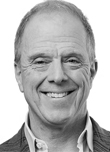 Skyhawk’s Co-Founder & Chief Executive Officer Bill Haney started his first company as a college freshman, inventing and building air pollution control systems for power plants. Since then he has started or helped start more than a dozen technology companies. Bill was a founding member of the national environmental advisory board for the U.S. EPA, the President's Circle for the National Academy of Sciences, has won a Humanitarian Award from Harvard Medical School, an Achievement Award from the ACLU, and serves or has served on boards for Harvard, MIT, State and Federal Government agencies, and the World Resources Institute. Bill holds a BA from Harvard College and was a Kennedy School Fellow from 1997-2001.
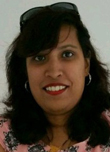 Samantha Seepersad-Nayee is director of clinical operations at Skyhawk Therapeutics. She has over 25 years in the industry, spanning both sponsor and CRO environments across Europe, South America, and North America. Samantha has spent roughly a decade leading clinical operations functions, including CRAs, site managers, data managers, and project leaders, guiding teams to meet metrics and deliverables on time and within budget. Her broad clinical trials management background covers Phase 1-4 studies across a wide range of indications, including protocol implementation, site monitoring, on-site data management and collection, and significant expertise in EDC.
 Maddy Mack, MBA, is senior manager of community engagement at Skyhawk Therapeutics, where she leads global patient advocacy and community engagement efforts supporting the company’s clinical development programs. She partners with patient organizations, advocates, key opinion leaders, and other stakeholders to advance patient-centered engagement strategies and strengthen connections between the patient community and clinical research. Maddy brings a multidisciplinary background spanning healthcare program and project management, business development, marketing, strategic partnerships, and communications.
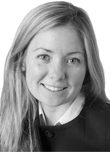 Kathleen McCarthy, Skyhawk’s co-founder & distinguished senior scientist, is a leading expert in developing small molecules that target RNA-splicing. She has more than 15 years of experience in the discovery and development of small molecules targeting RNA including the first approved small molecule to modulate RNA splicing, Evrysdi (risdiplam), for treatment of Spinal Muscular Atrophy (SMA). Kathleen began her career by co-developing a treatment for Spinal Muscular Atrophy (SMA) as a pre-clinical scientist at the SMA Foundation. Prior to her work in drug discovery and development, Kathleen completed a Fulbright Fellowship at the Swiss Federal Institute of Technology, ETH, and graduated with honors in Chemistry from Wellesley College.