
The Promise Of Bispecifics In The Quest For Outpatient Immunotherapy
A conversation between START San Antonio Associate Director of Clinical Research Drew Rasco, MD, and Clinical Leader Executive Editor Abby Proch
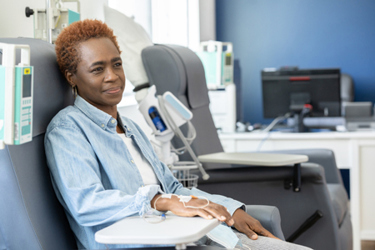
As immunotherapy enters a more complex and operationally demanding phase of oncology research, clinical investigators are navigating both scientific promise and real-world constraints. In this conversation, Drew Rasco, MD, reflects on the evolution of the field and highlights how novel therapies such as bispecifics are both challenging and intriguing for principal investigators (PIs). Dr. Rasco offers a candid perspective on how his site selects immunotherapy cancer trials, what features cause both site and patient burden, how logistical realities can complicate their delivery, and what qualities he’s looking for in next-generation immunotherapies.
Clinical Leader: How has the immunotherapy landscape evolved in recent years?
Drew Rasco, MD: The immunotherapy landscape has changed quite a bit. Initially, several PD-1/PDL-1 and CTLA-4 inhibitors got approved. Then, we saw a lot of combination studies with novel immunotherapy drugs being added to anti-PD1, but it was always hard to tell how much additional efficacy there really was compared to the single agent anti-PD-1. So, we sort of hit a plateau with new immunotherapy developments in solid tumors. But now, we are seeing a new wave of T-cell engagers and bispecifics.
These bring different toxicities that are somewhat more challenging to manage. With typical immunotherapy side effects, chronic problems can develop over weeks or months. And they've been around so long that we now have a pretty good handle on how to treat them — pneumonitis and colitis, for example. Whereas with T-cell engagers, we're now seeing acute reactions that require urgent monitoring and treatment. That's not necessarily what we're used to. It can be more challenging logistically when someone's having cytokine release syndrome (CRS) symptoms, and I need to act on that in the next few minutes versus seeing someone at their appointment next week to talk about their diarrhea.
How did these T-cell and bispecific therapies become part of your repertoire?
When START San Antonio first started those trials, we had not done any that required inpatient observation. In fact, for a long time we said no to any study that required inpatient hospitalization because it simply added more complexity. The hospital has its own IRB. The hospital needs to be a part of the budget agreement; we have to agree on the cost of a hospital room. We don't need them to bill the patient’s insurance company; they bill us, and then we pass that on to the sponsor. There are logistical challenges in making sure all those things happen just right.
However, as we started to see more protocols with T-cell and bispecific therapies come through our protocol review process, we decided that long-term we're going to have to figure this out.
And now it's become more routine, although every once in a while, there are still little hiccups with regard to protocol specified activities or specialized samples taken at the hospital but needing to be processed at our site. Our site is not very far from the hospital, but sometimes we use a courier to get that sample.
How has this type of trial affected your approach to patient care?
We're having situations where a patient is in the hospital and the nurse is calling us in the middle of our clinic day saying, "The patient is spiking a fever." This is something that we never had to deal with before. And sometimes, there's tension during these CRS-type reactions, because we know that if we give tocilizumab, it will almost instantly solve the problem and make our lives easier. However, it's costly, and drug companies lean toward not administering it because doing so too readily might make their drug look hard to administer.
Still, that's changing. A lot of companies are getting more comfortable with earlier administration of tocilizumab. There's growing evidence that it doesn't impact the efficacy of the treatment, which is always one of the concerns with immunotherapy. We went through the same thing with PD-1 inhibitors and steroids. As time went on, we learned that steroids didn't impact efficacy. The field is leaning more toward early administration of tocilizumab, with some trials even premedicating. Hopefully, the cost of that will come down with time, but it is a challenge.
One of the opportunities then is to engineer these molecules to have less CRS so they can be given more easily as an outpatient. Admitting these patients to the hospital is very costly.
Is there a clear-cut path to do so?
Speaking about CD3 targeted T-cell engagers, pretty much all of those protocols require some element of observation in the hospital, and it can range from 24 to 72 hours of observation. It's also quite variable how many times patients have to be hospitalized. This is another practical and ethical consideration. You have patients with terminal cancer that may have limited time and yet you're asking them to spend time in the hospital when they could be at home. It's not always easy to convince somebody that they should go on this type of trial. I had one patient recently who was required to spend 24 hours in the hospital once a week for three consecutive weeks. Naturally, some people may have issues with childcare or taking off work for that amount of time. This gentleman happened to be from out of town, so that was two hours of driving each way, too.
I have another trial requiring two different hospitalizations two weeks apart, but each one is for three days. That's six days out of someone's life that they're spending in the hospital. I'm not saying it's not necessary for the safety, but there is an opportunity to improve on this, so that it'll be easier to enroll to some of these studies. Many patients are going to say, "Hey, give me the study that doesn't require staying in the hospital," and I don't blame them. But some of the newer drugs are also targeting CD28, and other targets, which are less likely to induce CRS.

For patients, is hospitalization one of the biggest barriers when they enroll in a trial? What else might be off putting?
A lot of times patients in early phase studies may not have a lot of other options. I haven't had anyone flat out say, "Well, no, I'm not doing this because of the hospital requirement," but I've definitely gotten some side-eyed looks like, "Oh really? I have to do that?".
But it's also a potential barrier for the doctor and staff.
There's a lot of extra paperwork to prepare for the hospitalization. We have to coordinate transportation. Patients are usually treated with these drugs in our clinic and then once their day is done somewhere around three, four, five in the afternoon, they get transferred to the hospital. We always worry that they're going to react to the drug in that witching hour when we're trying to transfer them. And that could be problematic. It hasn't happened yet, but I feel like statistically it's going to happen.
Sometimes, patients get to the hospital, and the inpatient unit isn’t quite ready for them. Despite all our efforts to make it a seamless transition, occasionally there are some minor bumps in the road. This is the nature of hospitals. It can be a fluid situation with hospital bed availability, etc. It really requires constant communication between our site team and the hospital team.
These therapies demand a lot of you. How do you stay informed and prepared to administer this kind of care?
As an investigator, I’m always trying to stay as engaged as possible with the sponsor and aware of what is happening at other sites. We are getting busier, with more studies and more complex studies. It's harder to be as up-to-the-minute connected with the study, but it's really important for drugs like this.
There are a few trials where I haven't treated a patient yet, but I know other sites’ patients are starting to have CRS issues. Therefore, I know that with our next patient, we're pretty likely to have CRS. I’ve been mentally preparing for that. If I get a phone call from the hospital about my patient having fever, I need to be ready to act.
Experience does come into play with these molecules. The more of these trials that you've done, you tend to see the gamut of mild and severe reactions, and you are more comfortable knowing what to do in any of those scenarios.
When presented with a new immunotherapy trial, what would you consider a slam dunk, and what would be a trial to avoid?
It really depends on a number of factors, including the tumor types that are eligible, how difficult we envision enrollment will be based on all the eligibility criteria, and how much do we think this molecule could really move the needle and potentially help our patients. If it's a very novel target, we're more likely to take on the trial. If it's the 10th drug that hits a certain target, we might pass. But something more novel, even if there's hospitalization and CRS possibility, we're pretty open to it.
Sometimes, it depends on the timeline. I don't want to sign up for six new studies next month that are all T-cell engagers that are all going to require a hospital visit. That means every week I'm going to have several patients in the hospital, so it's an extra layer of work and time that I can’t devote to other studies. But we are routinely still signing up for many of these trials because staying on top of the science is so critical. One of the biggest issues with these drugs is they haven't been as successful for solid tumors. There are two of these bispecific T-cell engagers that are approved for solid tumors (small cell lung cancer and uveal melanoma), but as a class they have been much more successful for hematologic malignancies thus far.
But we're looking for the next wave of transformative therapies in solid tumors, and there's a reasonable possibility that some of these T-cell engagers will be just that.
To give an example, I’m currently working with a T-cell engager for prostate cancer. I have a gentleman that came to me, and his baseline PSA was around 40 and was doubling about every month or so. And he's now on a T-cell engager, and his PSA is around 0.2. It's the lowest it's been in a decade. He feels great, and he plays golf almost every day. So, I've seen the possibility that this category can be transformative, but I've also seen them not work. It tends to be a mixed bag with immunotherapy. You see either a grand slam or a strikeout.
If you could sit down with a sponsor company developing a drug in this category, what would you ask for?
I'm looking for the next generation of T-cell engagers with lower risk of CRS and complications. For example, those targeting NK cells versus T-cells. If NK cells are activated, they don't tend to cause quite the robust hyperinflammatory cascade that T-cells do. There are also newer agents that have a modified affinity for binding to CD3 — enough to activate but not so much that you're having CRS.
From the bone marrow transplant and heme doctors, I’ve heard that with a lot of these T-cell engagers and CAR-T therapies, because they have a moderate to high rate of fever and complications, they have started using wearables to measure vital signs, which then sends the information to the doctor via an app. If the patient’s having CRS at home, it will trigger an alert, and they will be told to go to the hospital.
We've not seen this very much in solid tumor studies. But say that with a drug with a relatively low CRS risk, maybe 80-90% of people don't really need the hospital, maybe they could have a wearable device that would alert us if an issue arises. Maybe they're staying close by, and we could have them quickly admitted to the hospital if necessary. That's another way of transitioning toward outpatient care to be easier on everybody.
Editor’s note: This transcript has been edited for clarity.
About The Expert:
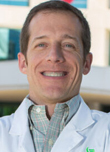 Drew W. Rasco, MD, is associate director of clinical research at START San Antonio. He is board-certified in both hematology and oncology. Dr. Rasco completed medical school at the University of Texas Health Sciences Center in San Antonio, TX; his residency in internal medicine at the Emory University School of Medicine in Atlanta, GA; and fellowship in hematology and oncology at the University of Texas Southwestern Medical Center in Dallas, TX.
Dr. Rasco and his partners at START have led a large number of Phase 1 clinical trials, including those which contributed to the FDA approvals of pembrolizumab, cemiplimab, abemaciclib, copanlisib, and countless others. Dr. Rasco also served as principal investigator for the combination of lenvatinib and pembrolizumab, which received FDA approval for endometrial (uterine) cancer.