
The Rise Of Antimicrobial Resistance And Strategic Research Imperatives For 2026
By Gregory G. Mario, MBA, president and CEO, TAXIS Pharmaceuticals
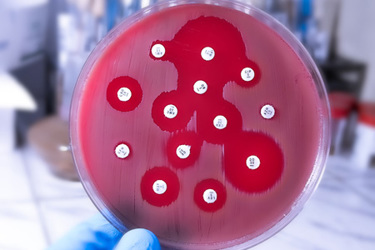
The ground beneath our feet is shifting. The foundational promise of modern medicine — that bacterial infections are a solvable problem – is being severely tested by an accelerating crisis: antimicrobial resistance (AMR). 2025 brought its share of unsettling news, from drug-resistant gonorrhea sparking alarm to carbapenem-resistant infections reaching unprecedented levels. These events are more than just statistics; they are urgent signals demanding a reevaluation of our approach to antibiotic discovery and clinical development.
2025: A Year Of Alarming Trends And Stalled Innovation
The past year served as a stark reminder of the escalating threat posed by AMR and underscored the fragility of our current defenses. Carbapenem-resistant infections (CRE), for instance, surged by 69% in the U.S., with particularly infectious NDM strains rocketing an alarming 461%.1 The jump in Shigella resistance, from near-zero in 2015 to 5% in a recent Western U.S. outbreak, further illustrates the pervasive nature of this challenge.2 Even the resurgence of measles, while viral as opposed to bacterial, signaled broader cracks in our public health preparedness and vaccine coverage, serving as a powerful reminder that our system is under strain.3 These instances aren't isolated outbreaks; they are the early tremors of a larger collapse in our antimicrobial defenses.
Despite these escalating threats, we continued to see a persistent innovation paradox within clinical trials throughout 2025. For decades, antibiotic innovation has been predominantly incremental, focusing on second-generation, third-generation, and combination drugs built upon old scaffolds, such as cephalosporins and tetracyclines. The number of truly novel therapies (those with new mechanisms of action) entering Phase 1 clinical trials continues to fall short of what the escalating crisis demands. While some promising candidates moved through early stages in 2025, the pipeline for game-changing, broadly effective antimicrobial agents remains thin, particularly against the most formidable gram-negative threats. Additionally, in terms of funding, there were continued calls for increased NIH and public investment, but a tangible shift in the volume of funded breakthrough trials, especially for novel chemistries, has not yet been realized. And the economic disincentives for antibiotic R&D remained a significant hurdle, though policy discussions began to gain traction.
Clinical Trial Imperatives For 2026
The biggest risks ahead undeniably lie in gram-negative infections, which are notoriously difficult to treat due to their impressive defenses: robust cell wall barriers that prevent many antibiotics from even entering the cells and highly efficient efflux pumps that actively eject antibiotics that do manage to reach their target. Consequently, there could be a rising prevalence of threats such as carbapenem-resistant Enterobacteriaceae (CRE), including E. coli and Klebsiella species, as well as carbapenem-resistant Acinetobacter baumannii and Pseudomonas aeruginosa.4 Alongside these, sexually transmitted diseases like gonorrhea and chlamydia are unfortunately expected to show accelerating resistance trends.5
The most crucial, yet often underestimated, hurdle in developing these novel antibacterial therapeutics is successfully navigating Phase 1 clinical trials. This initial phase is the key to unlocking future solutions. While bacteria may behave similarly in rodent and canine trials, it's their potential toxicity in humans that remains the primary challenge. The grim reality is that the time is approaching when even simple bacterial infections, once easily managed, could become untreatable, posing a dire risk. This situation underscores the vital importance of developing truly innovative AMR therapies and the need to effectively convey this urgency to policymakers and the public alike.
Despite these immense challenges, antibiotic development is evolving toward greater precision and intelligence. The industry had significantly shifted toward narrow-spectrum, precision antibiotics designed to target only the offending pathogen. This approach offers a dual benefit: protecting the patient's crucial microbiome and drastically reducing collateral damage, thereby lessening the evolutionary pressure for new resistance.

In 2026, we expect to see a growing number of clinical trials explicitly designed around these targeted approaches, with advanced diagnostic tools playing a pivotal role in patient selection and stratification. This trend is set to accelerate beyond 2026 as diagnostic capabilities become even more sophisticated, allowing for rapid, precise identification of pathogens.
Complementing this, AI is set to play a transformative role in 2026 and beyond, fast-tracking target identification, molecular design, and resistance prediction. AI's influence will increasingly extend to optimizing clinical trial design itself, aiding in patient recruitment, predicting outcomes, and accelerating promising candidates into trials by refining candidate selection and anticipating potential toxicities. It will likely help researchers overcome barriers that have stalled discovery for decades, with innovators increasingly exploring AI-enabled platforms to shorten the path from concept to clinic, signaling a new era of AI-assisted antibacterial discovery.
The challenge of combating antimicrobial resistance is immense, but the ingenuity of science, coupled with strategic collaboration, offers a clear path forward. We cannot afford to fail — for the sake of this generation and those that follow.
References:
- CDC report finds sharp rise in dangerous drug-resistant bacteria. U.S. Centers for Disease Control and Prevention. September 2025. https://www.cdc.gov/media/releases/2025/2025-cdc-report-finds-sharp-rise-in-dangerous-drug-resistant-bacteria.html.
- Multidrug-resistant Shigella flexneri outbreak affecting humans and non-human primates in New Mexico. National Library of Medicine. USA. May 2025. National Library of Medicine. https://pmc.ncbi.nlm.nih.gov/articles/PMC12092818/.
- U.S. measles cases hit highest level since declared eliminated in 2000. Johns Hopkins School of Public Health. July 2025. https://publichealth.jhu.edu/ivac/2025/us-measles-cases-hit-highest-level-since-declared-eliminated-in-2000.
- The rapid spread of carbapenem-resistant Enterobacteriaceae. National Library of Medicine. September 2020. https://pmc.ncbi.nlm.nih.gov/articles/PMC5140036/.
- Antibiotic-resistant gonorrhea is on the rise globally. American Sexual Health Association. Nov 2025. https://www.ashasexualhealth.org/antibiotic-resistant-gonorrhea-is-on-the-rise-globally/
About The Author:
 Gregory G. Mario, MBA, is the president and CEO of TAXIS Pharmaceuticals, with more than 20 years of experience in the life sciences industry in clinical research, information systems and technology, business development, marketing and sales, licensing and acquisition, and private equity financing.