
To Take On Transverse Myelitis, Researchers Must First Address Heterogeneity And Misguided Outcome Measures
A conversation between Irena Dujmovic Basuroski, MD, Ph.D., UNC School of Medicine Department of Neurology, and Clinical Leader Executive Editor Abby Proch
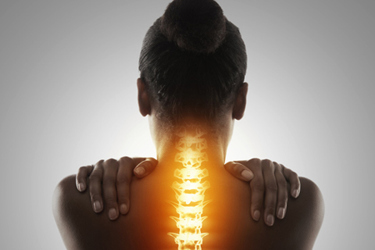
Heterogeneous across the board — from its underlying causes and mechanisms to clinical presentation to prevalence in certain ethnic and racial groups — transverse myelitis is a rare inflammatory disorder of the spinal cord that creates significant challenges for clinical researchers.
From unclear disease etiology and limited biomarkers to the lack of validated, disease-specific outcome measures, researchers must navigate obstacles that affect trial design, patient recruitment, endpoint selection, and regulatory confidence.
In this interview, Irena Dujmovic Basuroski, MD, Ph.D., discusses why transverse myelitis remains difficult to study, how multicenter collaboration and adaptive trial designs may help, and why better clinical, patient-reported, and biomarker-based measures are essential to advancing the field.
Clinical Leader: What is transverse myelitis, and what makes it difficult to study compared to other neurological or neuroimmune diseases?
Transverse myelitis is the inflammation of the spinal cord typically resulting from infection or autoimmune causes. However, idiopathic transverse myelitis happens in up to 30% of patients.
It is very difficult to study because it is so heterogeneous not only in etiology but in presentation, meaning it can be very mild or it can cause permanent disability. And then it's very rare. The prevalence of transverse myelitis in the U.S. is around 7.9 per 100,000.
When you have such a rare disease, you cannot put together enough cases to power your study. We need to stress the importance of multicenter studies. And those studies need to be diverse from racial and ethnical standpoints because some causes of transverse myelitis may be more common or more severe in some ethnic groups.
The disease can also have a variable clinical course. Some are monophasic; it is one episode and that's it for life. But in some patients, it may be recurrent. If it comes back, the outcomes and definitive disability accumulate over time. And we still don't have a good way to predict whose disease is going to come back.
To diagnose it, we rely on clinical presentation, an MRI of the spinal cord and brain, a spinal tap or a cerebral spinal fluid testing, and blood testing. Some diseases have identifiable biomarkers, some do not. It's not an easy process.
How does that complexity impact clinical research?
The first challenge is that we don't have clinical or patient reported outcome (PRO) measures that are specifically validated for transverse myelitis. Right now, we are using clinical outcomes and PROs used in multiple sclerosis and spinal cord injury. The first step is to find specifically validated clinical outcomes and PROs.
However, since the transverse myelitis population is very heterogeneous, it'll be ideal to define those outcome measures per disease group. For example, idiopathic transverse myelitis is the under-researched disease group; it’s a very needy disease group that requires specialist and researcher attention.
And then designing the trial is also challenging. There are mild cases that may not need very strong treatments. And there are severe cases where you give the best treatment and it doesn't work.
Adaptive trial designs, such as SMART, are promising. Instead of answering the question “Does this specific treatment work?,” this trial type will answer the questions, “What is our best first line treatment, and how do we escalate or deescalate the treatment to make it applicable to an individual patient?”
We also lack biomarkers for the cause of idiopathic transverse myelitis and for predicting the treatment response, recovery, and recurrence risk. We have some, but we need more.
Per available data, we know that if the patient does not start to improve in the first three months after the initial episode of transverse myelitis, it is less likely that they will reach a meaningful recovery. Recovery in the first three months is one of the clinical biomarkers we use when trying to give prognostication to our patients.
Also, if we see radiological signs of tissue damage and necrosis of the spinal cord, that is not a good predictor of recovery. Data also show that if the patient comes too late to the healthcare setting and they have already reached a maximum level of disability before they start treatment, that is also a poor prognostic sign.
So, it's very important to educate our patients, providers, healthcare system, and the community on the importance of suspecting transverse myelitis when the patient presents, diagnosing it promptly, and starting treatment.

You mentioned that current outcome measures are built upon those for MS. Where do they work, and where do they fall short?
Multiple sclerosis affects the spinal cord, brain, and cranial nerves (that originate in the brain). Outcome measures built for MS capture all those components, such as vision, cognition, speech, swallowing, and coordination in addition to muscle strength, mobility, sensory changes, bowel/bladder/sexual function. However, if the person has only transverse myelitis and does not have brain or for eye nerve involvement, then we need to have outcome measures that will focus only on spinal cord function, which includes mobility, muscle strength in arms and legs, sensory changes, some components of coordination, bowel, bladder and sexual function, and some other autonomic functions. If you can have a specific set of outcome measures only built around spinal cord functions, it may be more sensitive to detect any changes in that functionality.
What will it take to develop more appropriate outcome measures?
It'll take designing multicenter studies that will validate the clinical outcomes and patient-reported outcome measures specific to transverse myelitis. PROs are the questionnaires we give to patients and ask them, "Can you tell us about your bladder function, about your pain, about muscle spasms, and about your quality of life?" Clinicians, then, are looking at the same functions, but through the clinician perspective when using clinical outcomes. Then, these can serve as reliable outcome measures in a transverse myelitis trial to test the efficacy of drug interventions or non-drug interventions.
If you could create a trial that solves some of the design issues, what would you do?
We are currently in the final stage of creating a biorepository for patients with transverse myelitis of any cause. The biorepository will collect spinal fluid as well as blood, saliva, and tears from people with transverse myelitis, collected at their baseline, that will be followed longitudinally. The data might hopefully help us answer, “Can we identify biomarkers of idiopathic transverse myelitis? Can we identify biomarkers of treatment response, recurrence risk, and long-term disability outcomes?”
But as I said, the first step would be identifying reliable outcomes. It's important to get reliable, disease-specific outcome measures first and incorporate in the trial design a lot of different components, not only clinical and radiological, but a lot of body fluid biomarker components so we can better understand the disease process and capture the reasons for such heterogeneity between people.
Finally, let’s talk your work in non-invasive neuromodulation. Can you describe how it might play a role in helping researchers better understand spinal cord function?
Non-invasive means that there is no associated invasive intervention, such as surgical procedures. We’re currently working with Openwater’s Open-LIFU, a non-invasive, low intensity focused ultrasound device, to stimulate the spinal cord. We are looking into whether, and to what extent, it can improve spinal cord function and symptoms of spinal cord lesions in patients that have already reached the maximum recovery they can achieve through medications and physical therapy.
There are many patients who recover very well after transverse myelitis, some who never recover, and about one-third who are somewhere in between. They recover to some extent, but not completely. In the study, we’re focusing the ultrasound beam at the level of the lesion in the spinal cord and testing below and above it as well, to see what works best.
Editor’s note: This transcript has been edited for clarity.
About The Expert:
 Irena Dujmovic Basuroski, MD, Ph.D., is a professor of neurology at UNC Chapel Hill Department of Neurology. Her current research explores spinal cord function in transverse myelitis.