
Two Parallel Trials, A Potential New Option For Protection From COVID-19
A conversation between Invivyd Chief Medical Officer and Chief Epidemiologist Michael Mina, MD, Ph.D., and Clinical Leader Executive Editor Abby Proch
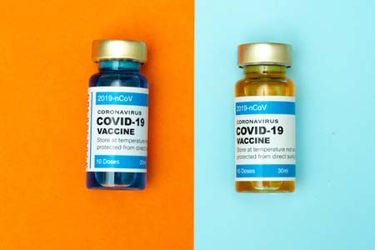
COVID-19 vaccine uptake remains low, driven in part by side effects and tolerability concerns with mRNA vaccines. Meanwhile, immunocompromised individuals often can’t mount a strong vaccine response at all.
Monoclonal antibodies (mAbs) offer another route to protection, but they raise a question of their own: Could a highly potent neutralizing antibody interfere with the vaccine response?
That’s the question the FDA put to Invivyd, and the company set out to answer it with LIBERTY, a Phase 3 trial running alongside its pivotal DECLARATION study of VYD2311, an intramuscular mAb injection for COVID-19. LIBERTY compared a mAb alone, an mRNA vaccine alone, and the two combined.
In this Q&A, Michael Mina, Invivyd’s chief medical officer and chief epidemiologist, walks through the findings, including some the team didn’t expect. He explains how the combination affected adverse events and injection site pain, whether the vaccine response was blunted, and what the results could mean for immunocompromised patients and future partnerships with vaccine makers.
Tell us about LIBERTY and DECLARATION and what they’re designed to achieve in tandem.
Michael Mina, MD, Ph.D.: DECLARATION is our pivotal Phase 3 trial to look at the clinical efficacy and benefit of VYD2311, a mAb that is effectively a very close analog to PEMGARDA, or pemivibart, for immunization against COVID-19. The neutralizing titers are about 10 to 15 times greater than pemivibart, which has also allowed us to move administration from IV to an intramuscular injection, very much like a vaccine today.
Much more interesting, in my opinion, is LIBERTY. This study originated from discussions with the FDA, which asked: If you give mAbs that target the COVID-19 spike protein, will there be interference with the vaccine? For example, if somebody gets a mAb today, should they not also get a vaccine at the same time? You might expect that a very highly potent neutralizing antibody would interfere with the vaccine response by just masking the epitopes.
And so we asked the question in a Phase 3 double-blind, randomized, placebo-controlled trial, LIBERTY, where we have three arms: one arm getting only the mAb, one arm getting only an mRNA vaccine, and one arm getting both the mAb and the mRNA vaccine to understand safety and tolerability of the three different approaches and the immunogenicity. Specifically, what did the neutralizing antibody titers look like after we give a mAb, after we give a vaccine, or after we give both combined?
One of the most important and interesting findings was really on the tolerability and side effects of the vaccine versus the mAb versus both combined. Many entities have acknowledged that one of the major reasons for low uptake in mRNA vaccines for COVID-19 today is side effects and tolerability issues. In the COMPARE study, Sanofi also found that over 90% of mRNA vaccine recipients had safety, tolerability, or systemic side effects associated with the vaccine.
We ran the LIBERTY study and saw something very similar with the COVID-19 mRNA vaccine. We had 91.4% of vaccine recipients with a treatment-emergent adverse event, and around 68% had a systemic adverse event associated with vaccination alone. Of the mAb patients, 56% experienced a treatment-emergent adverse event. And the grades of those adverse events were also lower with the mAb.
The mAb had an unsurprisingly reduced side-effect profile, which makes sense. It's a noninflammatory substance versus an mRNA vaccine, which is highly inflammatory by definition. It drives flu-like symptoms for many people.
A very interesting piece that we were not expecting came from LIBERTY’s third arm. In that group comparison, the individuals who got both the mAb and the vaccine had a significant reduction over the vaccine alone in treatment-emergent adverse events and systemic adverse events, both in the short term and over the 56-day duration of the study.
And one of the most surprising findings was actually the injection site reaction. The mRNA vaccines are famous for how much people's arms hurt after they get the vaccine, but the mAb in the other arm dramatically reduced the amount of pain people were feeling in the arm. The mAb had about a 25% injection site reaction when administered alone. The vaccine had around that received the vaccine injection 90%, and the combination had about a 75% injection site reaction rate. We saw this interesting decline, which tells us that the mAb might be reducing the systemic inflammation associated with the vaccine.

Back to the FDA conversation regarding LIBERTY, do you recall its rationale for the three-arm trial?
The FDA asked whether the administration of the mAb interferes with the benefits somebody might gain from the vaccine. When you give a vaccine, you expect a certain amount of neutralizing antibody titers in that vaccine response. You want your neutralizing titers to go from low to high. The agency was concerned that if you get a mAb at the same time or beforehand, your vaccine won't work as well. So, we answered by measuring the neutralizing antibody titers in all three arms.
We found there was no effect when giving both the mAb and the vaccine versus the vaccine alone. The neutralizing antibodies created as a direct vaccine response were identical in both of those arms. Because we know the features of the mAb, we can actually create blocking agents. And when we block all of our mAbs, we see that the curves are completely identical between the two groups.
We also saw the combination of the two gives improved safety and tolerability signals, does not blunt the vaccine response, and gives a much higher overall neutralizing titer than the vaccine alone, which points in interesting directions for us. Maybe there's a world where, during COVID-19 waves and things like that, individuals who are immunocompromised might get both an mRNA vaccine and a mAb.
The power and benefit of a mAb shine brightest in somebody who is particularly susceptible specifically because they can't generate their own immune memory response. And so they don't drive a good response to a vaccine. A mAb is sort of a gift, if you will. It doesn't require the immune system to be operating. You can just receive the neutralizing antibodies and gain protection in a more direct fashion.
LIBERTY and DECLARATION overlapped. Were there any efficiencies gained by doing that?
Certainly time. I wish I could say resources and money, but that's not so true. We actually used two different CROs to run these. They were two completely different studies. But we didn't want to wait till DECLARATION was completed to run this.
If we could go back, would we have made LIBERTY a subset of DECLARATION? Probably not, because this study design is so distinct. With DECLARATION, there were some limitations on how soon a participant who received a vaccine could enter the study. Whereas with LIBERTY, we actually explicitly vaccinate individuals as part of the study design. So, they were significantly distinct enough.
And they do work well to illustrate the role of a mAb in the future once it's in an injectable format.
Personally, I applaud the FDA for really pushing us in that direction for LIBERTY, even though these are different products entirely. The agency wouldn't normally ask companies to run a trial with competing or adjacent products. In fact, from what we can tell, this is the world's first Phase 3 study to put two completely different immunizing modalities head-to-head in the same study. And it has provided us with a wealth of information, including opportunities for partnering with vaccine companies to reduce the vaccine side effects while greatly boosting the protective levels of neutralizing titers.
About The Expert:
 Michael Mina, MD, Ph.D., joined Invivyd in March 2026 and serves as chief medical officer and chief epidemiologist. He is a physician, immunologist, epidemiologist, and biotechnology executive with deep expertise in infectious diseases, immunology, and public health. Mina currently lectures at MIT Sloan and Dartmouth College, among other schools on an ad hoc basis, and previously served as a professor at Harvard T.H. Chan School of Public Health, Harvard Medical School, the Broad Institute of MIT and Harvard, and Brigham and Women's Hospital. He is widely recognized for his work on immune response, infectious disease pathogenesis, and transmission dynamics, as well as for translating scientific insight into public health strategy and innovation. During the COVID-19 pandemic, he advised governments, institutions, and health leaders in the United States and internationally, including both the Trump and Biden administrations, and helped create and lead the U.S. government’s Home Test to Treat program.