
What ChatGPT Ads Will Really Mean For Clinical Trials
By Ross Jackson, consultant
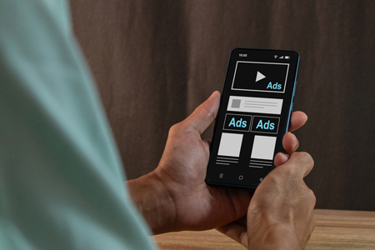
When news breaks about a new advertising platform — particularly nowadays one powered by AI — the same reactions tend to follow. Excitement. Anxiety. Overconfidence. And an understandable rush to be first.
I’ve seen this pattern play out repeatedly over the past two decades or so. My own career has run alongside the evolution of digital advertising itself — from early search engines, through the rise of Google Ads, the emergence and reinvention of social media advertising, and into today’s AI-mediated systems of discovery and recommendation.
And, while each time the technology changes, the fundamentals don’t.
That perspective shapes how I view the recent announcement that advertising will begin appearing inside ChatGPT. For some, it might signal a step too far — the contamination of a trusted environment. For others, it may be framed as a revolutionary new channel that will finally solve long-standing commercial or recruitment challenges.
In practice, it is neither.
As I explored in a previous Clinical Leader article, AI health assistants may be used to surface clinical trials earlier in patient journeys, not by enrolling patients but by increasing awareness within broader health conversations. Advertising inside conversational AI is best understood as the next logical step in that same progression — a shift in where and when people encounter information, rather than a change in how decisions are ultimately made.
No Health-Related Ads - For Now
Although ChatGPT has suggested it will refrain from running health-related advertising - meaning that clinical trial recruitment ads and similar promotional health content will be excluded from their advertising platform - this stance is likely a temporary feature of the platform’s early rollout rather than a permanent industry norm. Both Google and Facebook have previously restricted sensitive health categories before building systems of controls, certification, and targeting safeguards that allowed regulated health advertising at scale.
Given the immense value of AI platforms as discovery and referral channels, it is reasonable to expect that generative AI ecosystems will progressively open up to vetted health-related ads, including clinical trial recruitment, once appropriate guardrails are in place. Over time, this could create new opportunities to connect patients and research sponsors more efficiently than ever before.
AI In Advertising Isn’t New, It’s Just More Visible
AI has been shaping digital advertising for many years, even if it has often remained out of sight.
Search engines such as Google increasingly rely on AI-driven systems to interpret intent, understand queries, and prioritize results — a process that has accelerated with the introduction of generative AI features such as Gemini. Microsoft’s Copilot similarly blurs the boundary between search, synthesis, and recommendation, offering interpreted answers rather than lists of links. And on social platforms such as Meta’s Facebook, machine learning already determines which ads are shown to which users, when they appear, and which creative variants are most likely to perform well.
In that sense, ChatGPT does not introduce AI into advertising. What it introduces is a different interface, effectively bringing advertising into AI rather than AI into advertising.
This isn’t the birth of AI advertising. It’s the moment when users finally notice it.
Historically, advertising automation has been tolerated because it operates in the background. Decisions were made by algorithms but experienced by users as feeds, results pages, or banners. Conversational AI brings those decisions into a more visible dialogue-based space, where relevance is perceived rather than assumed.
That visibility matters. But it doesn’t change the underlying truth that advertising systems have been “intelligent” for some time already.
From Search To Interruption To Conversation
To understand why advertising inside ChatGPT feels different, it helps to distinguish between three broad advertising models that most life sciences organizations will already recognize.
Search advertising responds to explicit intent. A user actively searches for information — about symptoms, treatments, or trials — and relevant ads appear on top of or alongside those results. The relationship is transactional and overt.
Social or interruptive advertising works differently. Ads are shown regardless of current intent, relying instead on sophisticated algorithms to infer relevance based on behavior, demographics, and patterns. The user may not be seeking anything related to the content of the ad at that moment, but the platform predicts interest.
Conversational advertising represents a third model. Here, relevance is established through dialogue rather than keywords or feeds. Ads may appear because a user is already exploring a topic, asking questions, or working through uncertainty. In simple terms, this is closer to a trusted colleague saying, e.g., “Have you heard about this?” than it is to a banner ad or sponsored link.
Essentially, these ads won’t appear next to content. They’ll appear inside context.
That structural shift — from interruption or retrieval to conversation — is the most important change to understand.
What Conversational Ads Change — And What They Don’t
It’s important to be clear about what advertising can and cannot do in clinical research.
No online ad, on any platform, converts a patient directly into an enrolled trial participant. Enrollment remains mediated by sites, coordinators, screening processes, informed consent, and clinical judgment.
ChatGPT ads are no different.
Where they may differ is when and where awareness is created. Instead of interrupting attention or responding to a transactional search, conversational ads may surface the existence of trials during moments of exploration, such as when patients or caregivers are seeking understanding rather than necessarily making a decision.
For patient recruitment teams, that distinction matters. Awareness is rarely the only bottleneck in recruitment, but it is often the first. Encountering trial information earlier does not guarantee participation, but it can shape the framing of later conversations with clinicians and sites.
Conversational advertising, of the sort that will be featured within ChatGPT, changes when patients encounter trials, not what ultimately convinces them to participate.
Who Will Actually See ChatGPT Ads
One practical distinction worth noting is that advertising inside ChatGPT will initially be shown only to users on free or low-cost tiers of the platform. Paid subscriptions will remain ad-free. This is a notable difference from search and social platforms, where advertising has historically been the default experience for the vast majority of users.
It is obviously too early to draw firm demographic conclusions, but it is reasonable to expect that free and low-cost tiers skew toward general users — for example, patients and caregivers —using conversational AI for practical, everyday information rather than professional or enterprise use.
For clinical trial awareness, that should prove very valuable. Many patients who eventually consider trial participation begin their journey outside formal healthcare settings, exploring symptoms, diagnoses, or options long before eligibility or referral are in play.
Organic Conversational Discovery Is Already Happening
Importantly, conversational AI systems are already functioning as discovery mechanisms, even without advertising.
Practitioners in other fields report a steady stream of referrals originating from ChatGPT when users ask open-ended questions such as “Who should I speak to about X?” or “Is there a credible approach to Y?” These recommendations are not promotional. They emerge from repeated public signals — clarity, consistency, and usefulness across the available information ecosystem.
For clinical research, this reinforces a broader point. How trials are represented publicly increasingly determines whether they appear at all. Visibility is shaped less by promotional effort than by how well information fits naturally into explanatory narratives, as outlined in my previous article.
The Predictable Mistakes Sponsors Will Make
As with every new platform, the greatest risks are organizational rather than technical.
Some sponsors will over-index on novelty, treating conversational advertising as a shortcut rather than a complement. Others will expect a new channel to compensate for unclear patient value propositions, overly complex protocols, or downstream operational friction. Metrics will be borrowed from other platforms without considering whether they reflect meaningful progress.
New channels don’t fix old problems. They expose them faster.
In regulated environments such as clinical research, this exposure can be unforgiving. Increased awareness without preparedness can place additional strain on sites, coordinators, and investigators if expectations are misaligned.
Conclusion
There is no doubt that advertising inside conversational AI will change how and when clinical trials enter health-related discussions. That alone makes it worthy of careful attention from sponsors and others interested in effective patient recruitment.
It’s also worth remembering that platform dominance in emerging technologies is rarely settled early. In the early days of search, services such as AltaVista, Yahoo, and Ask Jeeves all appeared well positioned before Google ultimately emerged as the default – not because it was first, but because its interface, relevance, and monetisation model aligned most closely with user intent.
We are likely at a similarly early stage with conversational AI. Different platforms will experiment with different economic models — advertising, subscriptions, enterprise licensing, or hybrids — and it remains unclear which balance will prove most durable.
The more interesting question isn’t whether ChatGPT ads will be seen, as they clearly will. It’s how they’ll be judged.
That’s where things become genuinely different.
About The Author:
 Ross Jackson is a patient recruitment specialist and author of the books The Patient Recruitment Conundrum and Patient Recruitment for Clinical Trials using Facebook Ads.
Having started out with digital marketing in 1998, Ross quickly developed a specialty in the healthcare niche, evolving into a focus on clinical trials and the problems of patient recruitment and retention.
Over the years Ross branched out from the purely digital and now operates in an advisory capacity helping sponsors, CROs, sites, solutions providers, and others in the industry to improve their patient recruitment and retention capabilities — having advised and consulted on over 100 successful projects.