
What Sites, Sponsors, Vendors, And CROs Can All Agree On
By Abby Proch, executive editor, Clinical Leader
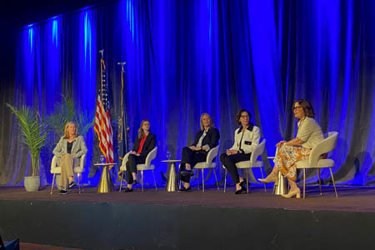
Ask anyone across the clinical research ecosystem about the biggest problems in clinical research and inevitably the feedback will involve a critique of some other entity’s role in the process.
The sponsor asks too much of sites and patients. The vendor isn’t delivering as promised. The site is slow and understaffed. The CRO sends way too many — or too few — messages.
But last week, at Life Sciences Future SW, there was no finger-pointing across the stage. Representatives from a site, sponsor, vendor, and CRO instead sat together to pinpoint pains they all feel and offered their hopes for future progress and partnership in research.
The Pain Points
Informed consent, but not really
Informed consent forms may legally illustrate a patient’s understanding of and decision to enroll in a trial, but Parexel Chief Patient Officer Stacy Hurt argues it doesn’t necessarily inform the patient. What’s needed, she said, is more intervention.
“It's really an investment in an additional level of patient navigation and patient education to make sure that the patients fully understand what they're getting into.”
Additionally, Hurt noted the harm placebo arms can have in patient consent and eventual enrollment, noting, “One of the primary reasons why patients don't enroll in trials is fear of placebo. Could you imagine being a cancer patient, you failed two standard of care drugs, a clinical trial is your last chance, and you get a placebo?”
Too many points of contact
GSK’s Lara Luciano and UPMC Enterprise’s Nicole Ansani, PharmD, have worked on trials together before. What’s worked for their partnership is having fewer points of contact between the two giant companies, which have dozens of people contributing to trials in one way or another.
“When you have central points of contact, like they have in Lara's position” — in global monitoring and site engagement — “and with myself, you're able to really start to identify and flag issues early,” said Ansani.
That’s where data can help, too.
“There's a lot of excitement… but at the core of activation and doing things quickly, communication is one of the keys between the site and the sponsor,” said Ansani.
Speaking of, communication breakdowns seem to be a common factor in other challenges, too.
Back-and-forth budgets and contracts
More than 50% of budgets take 61 days or longer to complete, according to a member survey by the Society of Clinical Research Sites. And while panelists didn’t discuss this stat specifically during the panel, they certainly echoed the survey’s findings, which also noted financial misalignment and CRO and sponsor responsiveness as contributing factors.
Ansani sees that impact on trial activation. In the future, she wants standardization and AI to help set up structures and repeatable processes that can enable budgeting, contracting, and IRB approvals to happen in parallel.
Chelsea Osterman, MD, and her team at Tempus AI are already on it.
“As part of our trial network, we're using a standardized clinical trial agreement,” said Osterman. “We have a standardized rate card, so it is exactly the same for every single site, every sponsor, every trial. And that saves literally months of negotiation back and forth over what amounts to minutia that truly does not matter.”
IRB bottlenecks
Another area prime for standardization is IRB approval itself.
It’s a “huge bottleneck,” said panel moderator and CytoAgents CEO Teresa Whalen, RPh.
“Every time we do a protocol. It seems like FDA is the easy part. And then we’ve got to go back to all the IRBs. Some are central, some are local, everybody wants their own consent forms, and it's just this never-ending negotiation that has to be repeated… every time you make a change.”
Hurt noted the challenge but said they’ve found a regular, reputable IRB that’s worked well because “everything's very standardized, easy to follow, systematic.”

Decentralization is still a thing
Hurt reiterated what many have said before — the simple fact that trials cannot be designed in a vacuum. It’s curious that they still are, as we are all patients and understand the complexities of navigating daily life to attend something as innocuous and straightforward as wellness visit.
“So many patients that I talk to have to upend their entire lives to participate in a trial. They have to quit their jobs. They have to move in with parents, something like that. And that's not how it should be,” said Hurt. “I'm referencing this protocol that I was reading this morning with all of these site visits, and the email said, ‘Well, the sponsor isn't willing to reduce the number of assessments and the number of site visits.’”
Hurt asked, why not decentralize?
“What can we take to eCOA, or what can we take to eConsent, or what can we do remotely?" she asked.
Because that’s the way, she said, that trials can better fit into a patient's life, especially for those who are underserved and have the greatest need.
“That's how we should be utilizing technology.”
The Promise
Data collection for just about everything
With all the data collected and available now, Ansani is looking forward to its many uses, including designing more specific trials, identifying patients more quickly, making sure that patients are engaging in trials, or following up with post-marketing research.
“We have [an] opportunity for data to cut across the clinical trial in each and every stage to bring improvements,” Ansani said.
Luciano agreed, adding she’d like to integrate it early. “Alleviating administrative burden to get to activate. It's a huge pain point across the industry.”
More than just RCT designs
For Osterman, it’s the opportunity to explore more innovative trial designs, such as those used by I-SPY 2 that uses Bayesian adaptive randomization to enable individualized patient assignment to therapy arms and Lung-MAP that follows an umbrella design to test multiple drugs in patients who are most likely to benefit based on genetic markers.
Osterman said such designs allow researchers “to rapidly assess what works and what doesn't work so we can understand what is not worth pursuing as quickly as possible” as well as reduce administrative burden by combining essentially several trials into one.
Likewise, Hurt looks forward to innovative trial designs. She said she is excited for digital twins and their role in replacing placebo arms, which she noted deter patients from enrolling.
Highly specific patient recruitment
Osterman also sees great promise in using AI to stand up trials quickly and in very niche ways. Specifically, she recalled working with Allegheny Health Network in Pittsburgh to identify a patient with non-small cell lung cancer and a HER2 mutation, which she said counts for only 3%-4% of patients with lung cancer.
Despite the rarity of the mutation, Osterman and team found multiple clinical trial options for that patient and stood up one for them at AHN in just seven days.
“It still is mind boggling to me that that patient came into clinic and there was no trial option available. There was just the routine standard of care that we know does not work very well for these patients. And then he comes back into clinic a week later, and there's a trial that's been brought there just for that patient.”
Patient engagement from the start
As one would expect, Hurt, who serves as Parexel’s chief patient officer, also saw promise in continuing to involve patient and site input into trial design.
“Patient engagement is not a rescue strategy. It is an initial strategy. And in trials with patient and site input, it's shown that recruitment has been accelerated by 25%, dropout is reduced by 10% and amendments have been reduced by 10%. So, there's definitely value in bringing in that patient voice from the very beginning.”
Together, Forever
Perhaps by next year’s convergence, things will change for the better. But, even if we improve in one regard, we’ll still be looking to what’s next on the docket. And maybe that’s the way it should be, because if research partners want each other to keep communicating and innovating in individual trials, conversations like these must happen into perpetuity.