
What To Look For In Rare Disease Partnerships, With Origami's Beth Hoffman
A conversation between Origami Therapeutics CEO Beth Hoffman and Clinical Leader Executive Editor Abby Proch

When you know, you know.
It’s a phrase people often use to explain how they choose a life partner. Sure, there are many concrete attributes they can rattle off to validate why that person is a good choice to spend the foreseeable future with. Yet, few can deny the importance of a gut feeling, a spark.
With clinical research partnerships, it’s not all that different.
To learn more about the practical and, at times, intuitive approach to clinical research partnerships, we heard from Origami Therapeutics’ Beth Hoffman on the company’s deal with Ipsen to develop protein degraders for neurodegenerative diseases, which they identified using a proprietary phenotypic screening method to target specific genetic mutations. In the company’s search, it looked for a partner with shared goals and commitment.
Tell us about existing treatments, and those in development, for the treatment of Huntington’s disease.
There's nothing that's disease modifying and really not many medicines are even ameliorating symptoms. So, there is a huge unmet need.
Most of our competition is going after medicines that need to be delivered directly into the brain. By their nature that means you need a great hospital, a medical center, and a neurosurgeon. As a result, we can't get the drugs to many of the people who need them.
The other element is that, due to that delivery system, the drugs don't get to all of the cells, all of the brain regions, all of the body that needs the treatment. It's a partial treatment at best.
And so that's why we focus on small molecules, which will be able to treat the whole brain as well as the whole body.
Origami recently entered a partnership with Ipsen. How does that work?
The initial phases are a research collaboration. We get an up-front payment, and we do the research in order to advance the compound to a point where Ipsen has an option to license it. From there, we are entitled to milestones and, ultimately, royalties as the drug progresses through clinical trials and commercialization.
Is this Origami’s intent across its pipeline, to work with partners?
Venture capitalists have not been funding startups to as great a degree in the past several years as everybody would've hoped, including the VCs. So, partnering is a way to make sure we are advancing our asset and serving the patients and their families. But will we do that for everything? Not likely, although at some point, we might out-license other assets. The successful partnering is also a validation of our platform. It validates our approach, and it speaks to the pharma quality data that we've produced.

What were your criteria when looking for a partnership for this program?
At BIO last year, Ipsen approached us. There appears to be a bit of a trend: We met with several pharma companies and they were all looking for earlier assets. Typically, biotechs think they need Phase 1 clinical data to partner with pharma, but it turns out that pharma now wants to make sure things are done right rather than take an asset that is IND-enabled or in Phase 1 but is missing data that they would have wanted. Now, they are making sure they won't have to backtrack. This was a common theme.
Additionally, we're a small company going after rare inherited neurodegenerative diseases. Both rare disease and neuroscience are strong suits at Ipsen, and they don't have their own internal early research. That's a place where we can use our expertise and our proprietary know-how to get to the point where Ipsen will take over.
It's a very good match for us, as Ipsen is very dedicated to making sure this is successful. You get a good feeling when people are digging through all of your data and asking insightful questions. Ipsen is very collaborative.
At what point do you hand things off, or do you maintain hands on in the partnership as it goes into human trials?
The research to find the compound that will be a clinical development candidate and move forward into IND-enabling studies is our responsibility. In addition, our responsibility is to work on biomarkers. Ipsen will take over the IND-enabling studies themselves, as well as clinical development.
If companies like yours are looking to partner with a larger pharmaceutical company to develop their asset, what is your advice?
Preparation is essential and should be viewed as a long game. I went to scientific meetings, presented posters, and gave talks. I participated on panels so people could understand and appreciate what we're doing. At BIO and other partnering meetings, I met with potential partners and sought advice.
You need to listen and to hear what individual companies are looking for and are interested in. We talked to a couple of other companies besides Ipsen, but they had strict criteria about what data they needed to see before partnering but which we did not have. Not everybody will be interested, and that’s okay.
I've also been on the other side. It is an advantage that I've worked at Lilly, Amgen, and Vertex and been involved in potential in-licensing and investment opportunities. It's always about identifying a champion, finding where there's a spark. It’s important to take a multi-pronged approach and cast a wide net.
It isn't just “do X” and that'll be enough. You have to talk to a lot of people. It takes a while. Nobody's making a decision after a 30-minute meeting. That's where you have to keep talking and follow up to see who's really interested.
About The Expert:
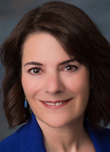 At Origami Therapeutics, Beth Hoffman, Ph.D., is creating a new approach to discovering curative medicines for neurodegenerative diseases, leveraging 20 years’ experience in CNS drug discovery and discovering therapies for Cystic Fibrosis (CF). Prior to Origami, she was a research & development executive at Vertex Pharmaceuticals, Amgen, and Eli Lilly & Co. She contributed to 30+ programs that advanced to clinical trials, four marketed drugs for CF (Kalydeco, Orkambi, Symdeco, Trikafta), and one marketed non-opioid drug for pain (Journavx). Dr. Hoffman received her A.B. in molecular biology from Wellesley College and a Ph.D. in cell biology from Johns Hopkins University. She was chief of the Molecular Pharmacology Unit at the National Institute of Mental Health and was awarded the Prize of the Anna Monika Foundation for depression research. Dr. Hoffman serves on the board of directors for Biofrontera Inc., the scientific advisory board for the Tau Consortium of the Rainwater Charitable Foundation, and the National Board of Trustees for Huntington’s Disease Society of America (HDSA).