
Why Oncology Programs Can't Rely On An Inside View Alone
By David Adler, MD, Ph.D., MBA

During a decade leading oncology programs in clinical development, I became accustomed to asking difficult questions about the program in front of me. Is the biology convincing? Is the clinical hypothesis strong enough to justify exposing patients to an experimental therapy? Can the trial answer the question it is designed to answer? Are our assumptions about patients, biomarkers, safety, feasibility, and clinical benefit strong enough to support the next development decision?
Clinical development demands that kind of scrutiny. But over time, I came to appreciate a limitation that is easier to see after spending years inside development teams: A team can understand its own program extraordinarily well and still have gaps in the information needed to make the best decision, sometimes gaps it does not recognize until another perspective exposes them.
The reason is simple. Clinical development is organized around programs. The information relevant to a decision is not. Some of it may sit with investigators who see several competing studies, sites that see cumulative demands on the same research infrastructure, patients who experience the protocol differently from those who designed it, or physicians whose treatment choices later reveal whether assumptions made during development matched clinical reality. That led me to a question I now think deserves more attention: What relevant information exists outside the program that could inform or influence the decision we are making inside it?
Knowing The Program Is Not The Same As Knowing The Decision
Development teams accumulate enormous expertise about their programs. We know the preclinical data, emerging clinical evidence, safety findings, biomarkers, competitive landscape, regulatory considerations, operational assumptions, and unresolved risks.
I spent years participating in that process, and I continue to believe deeply in its value.
What changed for me was recognizing that some consequences of a development decision may sit outside the natural field of view of the program making it.
A development team may conclude that a trial is feasible based on estimates of the eligible patient population, anticipated screen failure rates, and the recruitment capacity of proposed sites. An investigator at a major recruiting center may know that several other studies will be recruiting substantially from the same population at the same time.
A development team may have a clear scientific, clinical, or safety rationale for each biopsy, imaging assessment, blood draw, and visit. A patient experiences the cumulative burden of all of them.
A program may begin with a clear view of unmet need. Several years later, new medicines and changing treatment patterns may alter the clinical landscape in which that program will eventually arrive.
None of those examples necessarily makes the original analysis wrong, but they do make it incomplete.
Feasibility Shows The Problem Clearly
Trial feasibility is one place where I came to see this particularly clearly.
When planning an oncology study, we ask how many eligible patients exist, where they are treated, which investigators have access to them, which sites can execute the protocol, and what enrollment rate is realistic.
Those are essential questions.
But consider a rare cancer or narrowly defined molecular population. One sponsor may conduct a thoughtful feasibility assessment and conclude that enough patients and sites exist to support its study. Another sponsor may independently reach the same conclusion. So may a third.
Each assessment can be reasonable.
Investigators and research sites can see something that an individual sponsor's feasibility model may not fully capture: which competing studies are actually recruiting at the center, how their eligibility criteria overlap, how many potentially eligible patients are being seen in practice, and how much capacity the site realistically has to open and recruit across multiple studies.
Several studies may draw from the same finite pool of potentially eligible patients, so recruitment assumptions made for one study cannot always be considered independently of the others. Sites also have finite research staff, treatment and assessment capacity, as well as investigator availability.
We know that oncology trials compete for patients, but we may not realize that some of the information required to judge our study may exist outside our study.
That adds to the original question, “Have we performed a rigorous feasibility assessment?”
Now, we also ask, “Who sees something about feasibility that we cannot see from inside the program?”

Patients And Investigators See Different Things
The same principle applies to protocol design.
In oncology, protocol requirements are included for specific scientific, clinical, safety, or regulatory reasons. Biopsies, pharmacokinetic sampling, imaging, laboratory assessments, and scheduled visits each serve defined purposes within the study.
But the patient does not experience those requirements one at a time. The patient experiences the protocol as a whole. That difference in perspective can matter to recruitment, retention, site execution, and, ultimately, the quality of the evidence the study generates.
Investigators also see the protocol from a different position. They understand how it fits into clinical practice, what other studies are available to the same population, which eligibility criteria or study requirements may be difficult to implement in practice, and where assumptions made during development may look different once the study reaches the clinic.
One of the things I valued most during my years in development was working across disciplines and with experienced investigators. Some of the most useful discussions were not those that provided another answer to the question we were already asking. They were the discussions that revealed an assumption we had not realized needed to be questioned.
That is the type of information development leaders need early, while there is still time to act on it.
Three Questions I Would Ask Earlier
If I were evaluating an important oncology development decision today, I would add three questions to the usual scientific, clinical, regulatory, and operational review.
1. What assumptions depend on the world outside this program?
Patient availability depends on competing studies and treatment patterns. Site capacity depends on what else those centers are being asked to do. The clinical relevance of a question depends partly on how quickly the treatment landscape is changing.
Those assumptions deserve a different level of scrutiny because the program cannot validate them by looking inward.
2. Where is the information that could materially inform this decision?
This is different from compiling a generic list of stakeholders to consult. I would ask what information could meaningfully support, challenge, or refine the assumptions on which the decision depends. Could it strengthen confidence in the planned approach? Could it reveal a reason to modify the protocol, reconsider feasibility, alter the timing or order in which planned studies are initiated within the development plan, or lead us toward a different development choice?
Where that information comes from will depend on the question. It may come from targeted feasibility discussions with investigators and site teams; review of currently recruiting studies and the competitive trial landscape; experience from related programs within the organization; published evidence or real-world data; or established patient-engagement approaches, including patient advisory boards, patient advocacy organizations, and systematically collected patient experience data.
The objective is neither to search for evidence against the decision nor to collect every available opinion. It is to approach the decision with enough openness to identify information that could confirm the assumptions, challenge them, or show that they need to be modified.
3. Are we asking questions while the decision is still reversible?
Timing matters. Investigator feedback after a protocol is finalized may help execution. The same feedback six months earlier might have changed the design.
Recruitment problems may explain why a study enrolled slowly. Recognizing the pattern before launching the next trial may change our assumptions altogether.
As development progresses, some uncertainties are reduced as additional clinical data emerge and we learn more about how the study performs in practice. But if an important assumption is challenged only after major development commitments have been made, the available options may be narrower, and changing course may become considerably more difficult.
Once a protocol is finalized, sites are activated, or patients are enrolling, a significant change may require a protocol amendment, additional regulatory interaction, site retraining, or, when applicable, patient re-consent. It can disrupt execution, delay the study, add to development costs, increase burden on patients and sites, and in some circumstances complicate the interpretation of the evidence being generated.
The greatest value comes when the right information arrives while we still have meaningful choices.
This Is A Leadership Problem, Not A Process Problem
I would be reluctant to solve this by adding another committee. Oncology development already has substantial governance, cross-functional review, external advice, and consultation. More process does not necessarily create better judgment.
The goal should be more selective.
For an important decision, identify the assumptions on which that decision depends. Then ask which can be evaluated adequately from within the program and which depend on information elsewhere.
That changes the purpose of external input. Instead of asking broadly for feedback, we should seek information that can test the assumptions on which the decision actually depends.
After a decade in oncology clinical development, I remain convinced that deep program expertise is indispensable, but I am equally convinced that expertise has a boundary.
The strongest development teams understand their program and recognize when the program itself is too small a frame for the decision they are making.
About The Author:
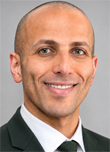 Professor David Adler, MD, Ph.D., MBA, is a senior oncology drug development and translational medicine leader with more than 15 years of experience spanning pharmaceutical development and academic cancer research. He spent a decade in senior medical and clinical development leadership within Bayer AG’s Global Oncology Clinical Development organization, leading oncology programs from preclinical research into the clinic. He currently serves as Chief Scientific & Medical Officer of the PATHORA Institute of Pathology & Tissue Medicine. His work focuses on the strategic decisions that shape the path from scientific discovery through clinical development and help determine whether promising innovations can ultimately become medicines. He also holds academic appointments at the Hebrew University of Jerusalem, Ben-Gurion University of the Negev, and the University of Bonn.