With A Clear Focus And Promising Asset, Crystalys Is Skipping Phase 2 Trials For Gout
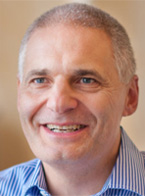
A conversation between Crystalys Therapeutics President and CEO James Mackay, Ph.D., and Clinical Leader Executive Editor Abby Proch

Just two years ago, Crystalys Therapeutics formed with the sole purpose of identifying and developing a new treatment for gout. Now, having found a promising asset in dotinurad, a novel once-daily oral selective URAT1 inhibitor developed by Japan’s Fuji Yakuhin, and later licensed by Urica Therapeutics for the U.S. and Europe, the company is all-in on its Phase 3 clinical trials.
Since the purchase from Urica in 2024, Crystalys has embraced early data from Asian approvals to bolster regulatory conversations and fast-track dotinurad in the U.S. and Europe — skipping Phase 2 trials to save millions of dollars, several years, and the lives of those living with gout.
Co-founder and CEO James Mackay got us up to speed on dotinurad’s progress, as well as shared insights from the company’s clinical decision-making, including the inclusion of an open label extension.
Clinical Leader: Tell us about the current dotinurad trials, and how they’ve been designed.
James Mackay, Ph.D.: Crystalys Therapeutics is currently running two Phase 3 trials with a focus on studying reduction in serum uric acid (the regulatory approvable endpoint) but more importantly reductions in gout flares, and resolution of tophi – the clinical symptoms that are most important for patients Our general gout study (CRYS-301) is 500 patients and our tophaceous gout study (CRYS-302) is 250 patients. We are also planning to open an open label extension (OLE) study for any patient that completes 301 or 302. Finally, we are currently planning two small Phase 2 studies that will start later this year — one study in patients that are intolerant to allopurinol or have failed on Krystexxa and another study combining dotinurad with febuxostat.
For 301 and 302, why proceed with an OLE?
It's primarily for two reasons. One is to collect as much safety information as we can for the FDA and other regulatory authorities. Secondly, we try to collect information that shows there's a durability of response in the patients. The OLE allows us to do both of those things. In addition, it also allows patients who were on the active comparator arm of the trial to swap over to the dotinurad and potentially get the benefit of that new molecule.
Why did you choose to seek your next/last approvals in the U.S. and Europe?
The U.S. and Europe are two of the largest markets for pharmaceuticals and both regions have a very significant unmet medical need for the treatment of gout. We focused on these territories as we have the rights to dotinurad in North America, Europe, and Middle East/North Africa.
In addition to the molecule itself, was the progress that it had already made important to you in the purchasing decision?
Very much so. At the end of the day, you want to see the right safety and efficacy profile for the molecule. Having a molecule that's already gone through the regulatory approval process in two major territories is very reassuring that the molecule is very well characterized. In addition to that, over 2.2 million people have received the drug in the post-marketing setting in Japan, and that's an extremely large safety database. And, over the five years that it's been on the market in Japan, there hasn't been any major change in the prescribing information, so it has a very stable safety profile as well.
You’re not running Phase 1 or 2 trials for dotinurad in the U.S. How did you negotiate with the FDA to skip early-phase trials in the U.S.? What did they require?
Urica Therapeutics had completed a Phase 1a healthy volunteer study and a Phase 1b gout patient study in the U.S. Given the extensive data (>1,300 patients) available from the Asian clinical trial programs and the significant post-marketing exposure (>2.2 million patients) from Japan, we proposed to the FDA and EMA that we should move straight into Phase 3 in the U.S. and EU, to which they agreed. Our U.S./EU Phase 3 program started in September 2025 and will generate a full Phase 3 data set by Q1 2028/Q2 2028.
Once you get to the conversations with the FDA or the EMA, is there a formal process or pathway whereby you skip Phase 1 and 2?
It's based on conversations. We had some Phase 1 data in a U.S. population from Urica, the previous company, which did a Phase 1a healthy volunteer study and a Phase 1b gout patient study. When we submitted our proposal to the FDA for the end-of-Phase-2 meeting, which of course is a funny description because we didn't have a Phase 2, they acknowledged that a wealth of data existed elsewhere, so it was appropriate for us to jump from Phase 1 to 3. That's not a defined process and was very much related to our specific case and discussion with the FDA.
Given the approvals in Asian markets, did you need an ethnic bridging study to move into Phase 3 trials in the U.S.? And how about in Europe?
The FDA and EMA only required the U.S. Phase 1a and Phase 1b studies before allowing us to commence Phase 3.

When would an ethnic bridging study be required?
It's very much a case-by-case basis. Gout is basically the same disease in Asia as it is in the U.S. So, in this case, the FDA was comfortable that the Asian data was relevant to the U.S. The one caveat that they had, which we agree with, is that the Asian data is relevant unless the safety profile in U.S. patients is markedly different once we do the trial.
So, if we see something very different in the U.S. patients compared to what we've seen in the Asian patients, then the FDA – and ourselves, to be honest – would want us to do more work to understand that before we moved forward with an application for regulatory approval. But assuming that the safety profile is similar across the Asian and U.S. populations, then the Asian data will be relevant as part of the filing that we do for the NDA.
Understanding that, was there any impact on your recruitment efforts in the U.S. and in Europe as far as getting the right diverse patient population?
No. The only decision we made was not to have any of our Phase 3 sites in Asia. Normally, you would do that, but given that we had significant Asian data already, we decided that we would limit our sites to the U.S. and Europe.
How have the Asian market approvals enabled any time or cost savings when seeking approval from the FDA and EMA?
We never costed out a Phase 2 program, but based on my previous experience, it probably saved us at least five years, probably more than that, and probably $30 million to $40 million.
Additionally, the Phase 3 trials we are conducting are smaller than would normally be required for a new molecular entity. The regulatory authorities agreed to smaller Phase 3 studies based on the significant Asian clinical trial program exposure and the significant Asian post-marketing exposure.
Anywhere along that continuum of identifying through to studying the drug, was there something you learned that you hadn't previously in the rest of your 30-plus years’ experience?
Probably the realization that there are likely more molecules like this in Japan. I had never previously gone to Japan to find a molecule. I know a lot of people have been going to China over the last eight to 18 months to acquire molecules, but it probably is likely that there's an untapped source of these molecules in Japan because many of the small Japanese pharma companies don't have any capabilities outside Japan, and therefore they solely rely on partners to develop their molecules outside Japan.
Does that mean that smaller companies developing these assets are they harder to find? How do you go about finding something like the gem you’ve found here?
Many of these Japanese companies are privately owned companies, so they're not reporting into a stock market, so it's actually difficult to identify them. And that's where Catalys Pacific , our other cofounding partner, really helped. They have deep ties into the Japan life sciences ecosystem, and they were able to help us identify the molecule and then help us with the discussions and negotiations that proceeded after that. It's about having those close connections into that Japanese ecosystem. Otherwise, it's very difficult to access it because it's a little bit of a black box.
Editor’s note: This transcript has been edited for clarity.
About The Expert: