
Years Before Clinical Trials: The Decisions That Shape The Future Of Academic Cancer Discoveries
A conversation between Professor David Adler, MD, Ph.D., MBA, and Clinical Leader Executive Editor Abby Proch
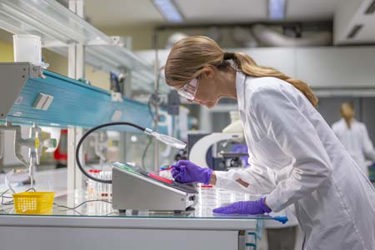
David Adler explains how earlier collaboration between academic researchers and pharma experts can strengthen oncology discoveries before clinical trials.
By the time an oncology program reaches its first clinical trial, some of its most consequential choices may already be years old. These include which tumor models researchers used, how they validated the therapeutic target, whether their research adequately reflected the biology of the intended patient population, and whether they developed a feasible strategy for identifying patients most likely to benefit. Clinical development cannot always compensate for weaknesses in that early evidence.
Professor David Adler has worked on both sides of that divide. He began his career as an academic cancer researcher, worked in senior medical and clinical leadership within Bayer’s Global Oncology Clinical Development organization, and now serves as the chief scientific and medical officer at a precision diagnostics company. At the same time, he conceived and now leads an initiative with the Hebrew University of Jerusalem and Ben-Gurion University of the Negev to bring pharmaceutical development expertise into academic research at an earlier stage.
Adler’s argument is that early research decisions can impact whether promising discoveries eventually become treatments. In this interview, he explains how those early decisions shape oncology development and how the initiative he is leading in Israel aims to equip academic researchers with pharmaceutical development expertise.
Clinical Leader: How did your academic experience impact the way you approached research decisions made years before a first clinical trial?
David Adler, MD, Ph.D., MBA: I came to see a clinical trial less as an isolated starting point and more as the consequence of decisions made much earlier. By the time a team selects its first patient population, it may already have committed to certain disease models, biological assumptions, and measures of response. Some of those choices are difficult to revisit once a program advances toward the clinic.
In early discovery research, it may be entirely appropriate to investigate a therapeutic mechanism using conventional tumor models. But as the potential clinical application becomes clearer, we need to ask whether those models adequately reflect the patients who might eventually receive the treatment.
If the intended population consists of patients whose disease has progressed after several lines of therapy, prior treatment becomes an important consideration. It can select resistant tumor cell populations and alter the biological mechanisms driving the disease. Evidence generated in models that do not account for those changes may therefore have limited relevance to the intended clinical setting.
My experience in pharmaceutical development made me more attentive to the assumptions an experiment can test and those it leaves unexamined. This perspective does not replace the academic research question but rather helps identify what additional evidence may be needed when a discovery shows potential for therapeutic development.
If an academic investigator has not yet developed a drug candidate, what are you proposing they do differently?
I would first ask the academic investigator to describe a plausible clinical context, not to write a Phase 1 protocol. They should ask questions such as: Which patients might someday receive an intervention against this mechanism? What is known about their disease and previous treatments? What result would challenge the belief that the mechanism is therapeutically relevant?
Suppose an academic research group identifies a mechanism whose disruption produces a strong antitumor effect in experimental models. Rather than simply reproducing that finding in additional models, I would want to understand what happens over time. Does the effect persist, or do the tumor cells adapt by activating alternative pathways that allow them to survive? Investigating that question early could fundamentally change the therapeutic development strategy. The findings might suggest that targeting the mechanism alone is insufficient, that a combination approach warrants investigation, or that the initial discovery is unlikely to translate into durable clinical benefit. The objective is not simply to accumulate more evidence supporting a promising hypothesis but to identify its potential limitations while there is still an opportunity to change direction.
A finding can look promising in an academic laboratory but face substantial obstacles to becoming a treatment. How do you determine whether a discovery represents a credible drug-development opportunity?
One important distinction is between demonstrating a compelling biological effect and establishing whether a therapeutic intervention could have the same effect. For example, completely eliminating a gene may produce a substantial antitumor effect in an experimental model, but that does not necessarily mean a drug could achieve sufficient inhibition of the corresponding protein at exposures that patients could tolerate.
We need to understand which uncertainties could fundamentally change the decision to pursue the therapeutic opportunity. These might include whether the biological mechanism is relevant to the intended patient population, whether the necessary degree of target inhibition is achievable without unacceptable effects on normal tissues, and whether the proposed treatment could eventually offer a meaningful advantage over existing or emerging therapies.
Depending on the answers, a research team might decide to focus on a more specific patient population, investigate a different therapeutic approach, or conclude that further drug-oriented development is premature. Importantly, such a conclusion would not diminish the scientific value of the original discovery; it would simply recognize that establishing biological significance and demonstrating a credible path toward a medicine are two different challenges.
Why should academic researchers consider existing treatments and how the treatment landscape may evolve, even when their work is still at the discovery stage?
Because a potential therapy would eventually need to offer a meaningful clinical benefit in a particular treatment setting, researchers must consider not only the treatments patients currently receive but also how therapeutic options may change during the years it takes to advance a discovery through preclinical and clinical development.
For example, a therapeutic mechanism being investigated in lung cancer might ultimately be most relevant to a specific molecular subtype, to patients whose disease has progressed after particular treatments, or to a combination with an established therapy. Each has different implications. If the intended patient population consists of individuals whose cancer has progressed following targeted therapy or immunotherapy, experimental models that do not account for prior treatment exposure may fail to capture important mechanisms of resistance.
As new therapies become available and standards of care evolve, the clinical opportunities for investigational treatments may also change. These developments can influence which patients continue to have unmet medical needs and what additional benefit a new therapy would need to demonstrate to justify its development. Although academic laboratories cannot be expected to predict future market conditions, understanding the potential clinical application of a discovery and how treatment options are evolving can help researchers identify which scientific questions and experiments deserve priority.
How can academic researchers benefit from engaging pharmaceutical R&D specialists while they are still investigating a discovery?
I would begin by focusing the discussion on the scientific hypothesis and the uncertainties that could most influence its therapeutic potential. Academic researchers should explain what they have discovered, which findings provide the strongest supporting evidence, and what important questions remain unanswered. Pharmaceutical R&D specialists can then contribute perspectives shaped by their experience in translating scientific discoveries into therapeutic development programs, helping identify questions that may not yet have been considered within the academic research setting.
I would want such discussions to lead to a clearer understanding of the most consequential research questions and the experiments needed to address them. Depending on the discovery, this might involve refining the relevant patient population, investigating alternative therapeutic approaches, or recognizing that additional fundamental research is needed before moving toward drug development. The value comes from identifying these considerations while researchers still have the flexibility to adjust the direction of their investigations.
At the same time, these interactions must respect the university’s established procedures concerning confidentiality, intellectual property, potential conflicts of interest, and the responsibilities of its technology transfer office. When discussions involve proprietary information or potential partnerships, the appropriate institutional processes should be followed. The intention is to give academic researchers access to additional expertise that can strengthen their scientific decision-making while preserving their academic independence.
You are leading an initiative in Israel built around this idea. What have you established so far, and what remains planned?
I conceived and initiated this effort, the Pharma-Academic Strategic Task Force, and I continue to lead its development at the Hebrew University of Jerusalem and Ben-Gurion University of the Negev. My objective is to bring pharmaceutical development expertise into academic research at a stage when investigators still have the flexibility to shape their scientific work and address questions that could influence the therapeutic potential of their discoveries.
The first component is a practical pharmaceutical research and development course, with initial sessions planned for early 2027. I have already developed the course syllabus and, through my professional network, secured commitments from senior pharmaceutical and biotechnology executives to participate and share their expertise across drug discovery, preclinical research, and clinical development. The course is designed to expose academic researchers to the scientific and strategic decisions involved in pharmaceutical development, particularly how teams evaluate evidence, assess risks, prioritize research questions, and determine whether a promising discovery has a credible path toward therapeutic development. The second component focuses on establishing ongoing connections between academic investigators and pharmaceutical and biotechnology R&D specialists, allowing scientific discussions to begin well before a discovery reaches the stage of a potential licensing opportunity. A third component, a proposed Pharma-Academic Strategic Task Force that would bring together academic and industry experts to evaluate promising discoveries, is in the works.
Some academic researchers may worry that introducing pharmaceutical development earlier could push universities toward industry priorities. How do you ensure that scientific independence is preserved?
The starting point is recognizing that academic research has scientific value regardless of whether it leads to a therapeutic application. The initiative is intended to support researchers who want to explore whether their discoveries could eventually contribute to the development of new treatments, without suggesting that every academic research project should be judged by its potential to produce a medicine.
Scientific discoveries can make important contributions to our understanding of diseases even when their potential applications are not immediately apparent. In some cases, researchers may identify important biological processes without yet knowing how to translate that knowledge into a treatment, while in others, further fundamental research may be needed before any therapeutic application can realistically be considered. These uncertainties are a natural part of scientific progress and do not diminish the value of the underlying research.
It is equally important to recognize that pharmaceutical development specialists bring their own perspectives and assumptions, which academic investigators should feel free to question or challenge. The exchange of expertise should work in both directions, allowing researchers to benefit from industry experience while maintaining the freedom to pursue their own scientific questions, including those without an immediate therapeutic or commercial application. Any discussions involving potential partnerships or intellectual property must also respect the university’s established institutional procedures.
How will you determine whether the initiative is making a difference?
I will focus on whether introducing pharmaceutical development expertise early in academic research helps investigators make better-informed decisions about their scientific work rather than simply measuring attendance, professional connections, or expressions of interest. While these activities can demonstrate engagement, they do not necessarily tell us whether the initiative is influencing the quality or direction of scientific research.
One possible approach would be to ask participating research teams to document their initial therapeutic hypotheses, the main uncertainties they face, and the experiments they intend to conduct. Following their interactions with pharmaceutical development specialists, we could then examine whether these discussions influenced their research decisions, such as reconsidering a disease model, refining a potential patient population, exploring a different biomarker strategy, or recognizing that further fundamental research is needed before pursuing a therapeutic application. It would also be important to examine what the subsequent experiments reveal, since changing a research plan does not necessarily mean improving it.
These are potential measures of impact rather than outcomes the initiative has already achieved. Over time, it would be valuable to investigate whether participating research groups generate stronger translational evidence, establish meaningful relationships with potential development partners, or become better prepared to pursue clinical development. Any such assessment would need to recognize that scientific programs evolve for many reasons and that progress cannot necessarily be attributed to a single initiative.
Ultimately, what matters to me is whether bringing pharmaceutical development expertise into academic research at an early stage helps investigators challenge important assumptions and make more informed decisions while they still have the flexibility to change direction. Success would not necessarily mean advancing more discoveries into clinical trials but ensuring that promising therapeutic ideas are investigated more rigorously and that critical uncertainties are addressed before substantial resources are committed to development or patients are exposed to investigational treatments.
About The Expert:
 Professor David Adler, MD, Ph.D., MBA, is chief scientific and medical officer at the PATHORA Institute of Pathology & Tissue Medicine. He has more than 15 years of experience in oncology research, drug development, and translational medicine, including a decade in senior leadership at Bayer’s Global Oncology Clinical Development organization. He holds academic appointments at the Hebrew University of Jerusalem, Ben-Gurion University of the Negev, and the University of Bonn. His work spans the scientific, medical, and strategic decisions connecting discovery, preclinical development, and clinical development.