
Zymeworks Shares Its Design Rationale (And Wins) In Early-Phase ADC Trials
A conversation between Sabeen Mekan, MD, SVP and Chief Medical Officer, Zymeworks, and Clinical Leader Executive Editor Abby Proch
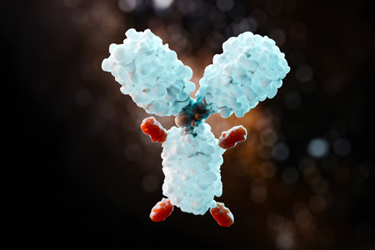
Antibody-drug conjugates have rapidly evolved from early agents like T‑DM1 to a broad, maturing class used across multiple tumor types and lines of therapy. Advances in payload chemistry, linker design, and antibody engineering have widened therapeutic windows and reshaped early‑phase development, prompting sponsors such as Zymeworks to focus on dose optimization, biomarker strategy, and early signs of differentiation.
Here, the company’s chief medical officer, Sabeen Mekan, MD, explores how those scientific gains influence first-in‑human and early study design — covering payload and antibody choices, bystander activity, and the expanded use of PK/PD, safety, and cardiac monitoring to balance efficacy and toxicity.
She also touches on evolving regulatory expectations and the growing role of modeling, simulation, and AI‑enabled biomarker analysis in selecting starting doses, escalation schemas, and target populations.
Clinical Leader: Can you get our readers up to speed on ADCs? How have they matured as a therapeutic class? And how have those changes impacted your approach to an early phase trial design?
Sabeen Mekan, MD: ADCs have come a very long way from the days of TDM1 in breast cancer. Now, ADCs have really mushroomed into multiple therapeutic areas and are being applied in earlier lines of treatment. It's very heartening to see, given my background as an oncologist, how they're helping patients.
In earlier days, the generations were limited by linker instability, as well as suboptimal antibody-to-drug ratios. Because of those constructs, they had very narrow therapeutic windows. Fast forward to today, we have had numerous advances in the payload chemistry, linker design, and antibody engineering. All of these have worked together to really improve the potency, stability, and tolerability of these molecules. And that has led to extremely wide therapeutic windows and applicability in much larger patient populations.
At Zymeworks, we have our own heterodimeric antibody platform for antibody construct, so we really take care in choosing the right antibodies for our ADCs. And we have our own proprietary payload, which we've selected by testing numerous topoisomerase payloads. We then take all those translational elements into the clinic so we can see very early signs of differentiation from other molecules.
One of the key questions in early-phase ADCs is whether this is going to work across a larger population or only in a biomarker-enriched population. Our trials are designed to answer that question early and to see early signs of differentiation, like the safety signals and if they are mainly related to the payload or if there is antibody-mediated toxicity as well. For our first few molecules in the clinic, we're also evaluating the level of bystander activity, because that's important for ADCs. So, we've incorporated all these elements for our topo-based ADCs into the trial designs. Previously, with chemotherapy and large molecules, trials had long dose escalations and single dose expansion cohorts. What we've learned for ADCs is that it's really the balance of efficacy and toxicity that matters. Moving forward into dose optimization early gives you a very good idea of the dose you want to take into your registrational studies.
What kind of operational challenges do ADC trials present — in terms of manufacturing or training your sites or PK/PD sampling? How is that different than a standard oncology study?
ADCs do introduce additional complexity compared to large molecule- or small molecule-only studies, because they're a conjugate — a large molecule linked to a small molecule, which ultimately is the target payload that does cytotoxic damage.

First of all, manufacturing ADCs is quite complicated, and it requires strict control of conjugation chemistry because you want to make sure that the drug-to-antibody ratio remains consistent. The payload handling is very important, and the process requires multiple steps that must be handled carefully. It is really important to make sure the drug supply, particularly in early phase trials, is maintained. It's a combination of getting the ADCs manufactured and getting them in time for our sites, for our patients to use. At Zymeworks, we do global Phase 1 trials right from dose escalation.
Also important for an ADC is the PK/PD. Given the nature of the molecule, we typically do multiparametric analysis. We evaluate both the total antibody, the conjugated antibody, and free payload for PD analysis, and we evaluate anti-drug antibodies as well. This does create additional sampling and analytical considerations compared to small molecule or antibody-only trials.
But we like to address this early so that we have a very good idea of our PK/PD right in Phase 1 dose escalation, which helps us plan dose optimization cohorts and further evaluation of dose before we go to Phase 3. We also try to incorporate cardiac monitoring in our Phase 1 so that we don't have to do additional cardiac studies. We try to be ready for pivotal studies right after Phase 1B dose optimization, and we like to do that without overburdening our patients.
Given the advances in this class, how have regulatory expectations changed as far as preclinical and clinical risk mitigation?
As ADCs have advanced, so has the knowledge of ADCs by regulators, especially regarding the introduction of dose optimization. For cytotoxic agents, the standard was going through dose escalation, finding a maximum tolerated dose, and then moving into expansion. With the second-generation wave of ADCs that we saw starting with Padcev and T-DXd, the industry recognized we needed to do more to find the optimal dose for ADCs. The whole idea of ADCs is that they widen the therapeutic window and reduce the toxicities for typical chemotherapies. As such, the regulators understood that we need to spend more time and have more patient data in selecting the right dose.
The other thing from a regulatory standpoint is that since these are very complex molecules, the conjugation chemistry must be correct, and we must maintain the stability of the molecules. Those have been critical in getting approvals. If you look at the history of CRLs that have come forth for ADCs, there have been more CRLs related to CMC rather than clinical data.
Let's move on to innovations in modeling and simulation and AI-assisted tools. How might they shape the next generation of ADC trial designs?
Modeling and simulation are becoming central to ADC development. We use quantitative systems pharmacology modeling and simulation to determine the starting dose and the escalation schema. There are several reasons for that. We don't want to start with extremely low doses that are not expected to be beneficial. That doesn't help the patients. It doesn't help us in terms of our study timelines either. Having that precise starting dose and escalation schema is critical. At the end of escalation, we still, again, use modeling and simulation for exposure-response and safety to determine what doses to optimize and after that, ultimately, what dose to take forward.
Some of the AI-driven biomarker analysis and patient stratification is coming along as well. In the early-phase trials, we like the clinical data to drive what we do. With AI-driven analysis of biomarkers, like early determination of whether we move forward in biomarker-selected population or broader populations, we can fine-tune our earlier-phase studies by early identification of patients who benefit. This is going to be increasingly incorporated in early-phase trials. Ultimately, as we move forward to phase 1Bs and registrational studies, this may even drive how quickly we can reach those pivotal studies with answers by using fewer patients.
About The Expert:
 Sabeen Mekan, MD, joined Zymeworks in April 2025 and serves as Zymeworks’ senior vice president and chief medical officer. Dr. Mekan previously served as executive director, global development lead for the lung and gastrointestinal cancer franchises with Gilead Sciences. Prior to Gilead, she was the senior medical director, oncology R&D at Daiichi Sankyo U.S., responsible as global clinical development lead for two ADCs. She began her pharmaceutical career as a medical director with Bristol-Myers Squibb with a focus on immune-oncology. Before joining the pharmaceutical industry, she served as an assistant professor at Hofstra North Shore LIJ School of Medicine and attending hematologist/oncologist at North Shore Long Island Jewish Hospital. Dr. Mekan completed her residency in internal medicine at the University of Cincinnati and a fellowship in hematology and oncology at the Staten Island University Hospital (now part of Northwell Health). She is board-certified in internal medicine, oncology and hematology and has authored numerous publications.