
Can We Make Feasibility More Realistic?

By Dan Schell, Chief Editor, Clinical Leader
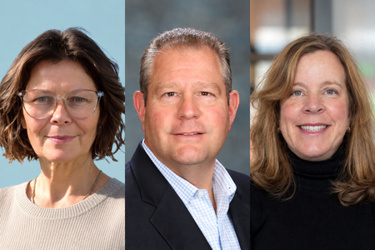
I host seven Clinical Leader Live webinars this year, and I didn’t expect our recent feasibility discussion to solve … well, any problem the industry has wrestled with for decades. Instead, From Feasibility To Reality: Will Your Trial Actually Enroll? offered something more modest: ways to challenge the assumptions behind an enrollment forecast and perhaps make a few practical improvements. Panelists Nick Palumbo, director of feasibility for Oncology and PDT at Takeda; Kasia Harris, country and feasibility head at Astellas Pharma; and Vanessa Gertsen, head of feasibility delivery and site engagement at AZ, Oncology R&D/Clinical Operations, shared their experience and recommendations, rather than evidence that these changes reliably improve enrollment.
I say that only because we all know that every trial is different and has its nuances. So not every strategy works for everyone. Still, it always amazes me when talking feasibility, the amount of confidence we place in numbers without (sometimes) knowing how they were produced, who supplied them, and what did that person know about the protocol? Oh, and what might they have overlooked, or had an incentive to overlook?
Who Is Behind The Enrollment Estimate?
Palumbo described a familiar pressure from his years working at CROs: feasibility conducted under the constraints of business development. Teams have limited time to assemble a proposal, and the deeper analysis after an award may depend on the sponsor’s expectations and the urgency of getting started. A number developed to support a bid can become an operational commitment before anyone has sufficiently examined it.
He raised a similar concern about site questionnaires. A projection may come from an experienced person who reviewed the protocol … or someone making a guess while trying to win the study. Even an investigator who owns the practice has a financial interest in being selected. “We don’t realize who is filling out the feasibility questionnaire all the time,” Palumbo said.
To be clear, Palumbo added a disclaimer at the beginning of our webinar that his comments were his own, not his employer’s, so he wasn’t claiming that sites routinely inflate their estimates. But I’m pretty sure, a lot of them do.
Making things worse, sponsors often contribute to the uncertainty when they provide only a protocol synopsis or draft eligibility criteria. Palumbo recommended following up on specific assumptions, such as whether a particular I/E criterion was considered, rather than automatically cutting every site’s projection by the same percentage.
Gertsen also challenged the amount of information sponsors request. She wanted lengthy questionnaires replaced with questions that help teams make better decisions, using existing site information where possible. “I would really love to see us get to a point where we are assessing a very small strategic amount of questions from sites,” she said. Shortening the form alone won’t improve the forecast; choosing questions that expose protocol-specific barriers might.
Count The Patients Who Could Actually Participate
Harris questioned how readily past performance becomes a prediction. “Historical data is not evidence of future enrollment,” she said. Sure, historical results are useful, but therapies, competing studies, participating sites, and patient segments change. A benchmark needs context before it becomes a target.
Her example (which I loved, BTW) was a database showing 100 potentially eligible patients while the site commits to enrolling three. “Why are they committing to three?” Harris asked. She explained that gap might reflect competition, biomarker requirements, local treatment practices, or a protocol requiring 15 visits where patients normally have five. That discrepancy is an invitation to investigate, rather than automatically favor whichever number better supports the plan.
Gertsen emphasized the demands behind those numbers. “We’re asking for a massive commitment from patients, and in turn, we’re also asking for a massive commitment from sites,” she said. Palumbo pointed to travel, caregiver availability, and time away from work. Travel reimbursement helps, but it doesn’t necessarily replace lost wages. Better technology for finding patients doesn’t resolve those constraints.
Harris described a sponsor’s team that simulated a complex hybrid trial visit and found it difficult to execute. No, this wasn’t a substitute for patient feedback, but it did reveal some practical problems. She also recommended consulting study coordinators during the protocol development process and seeking perspectives outside the U.S. when designing global studies. After all, a protocol’s assumptions about treatment and the patient journey may not survive a change of country.
The Importance Of Challenging The Plausible Answer
Palumbo offered a blunt description of protocol development when multiple business functions add their requests: “Everybody wants their ‘vial of blood.’” Each request may have a rationale, but patients experience the combined burden of those requests. He urged teams to examine whether every procedure is necessary for the main study and whether some additional research could be handled through separate consent.
Of course, some scientific requirements must stay. Harris’s argument for involving feasibility earlier was that teams should identify practical barriers while they can still influence the protocol, rather than discovering them after finalization. Gertsen added that the assessment must continue as circumstances change. That requires time and judgment, neither of which a questionnaire can supply.
Harris’s AI example showed another way confidence can outrun the available information. She compared two studies from the same sponsor with sharply different enrollment rates, asking AI to examine their eligibility criteria. It produced a plausible explanation. But the inputs couldn’t explain differences in competition, timing, country footprint, or participating sites. Experience prompted her to keep asking what else might account for the result.
That’s simple, but super useful advice beyond just suggesting “Let’s use AI to improve X in clinical trials!” A convincing explanation can make us stop investigating, whether it comes from a tool, a database, or a trusted partner. None of these suggestions guarantee enrollment, and our discussion didn’t establish how much improvement to expect. But checking who supplied a number, testing the burden behind it, and questioning, questioning, and questioning an appealing explanation — especially if it comes from AI — are concrete places to start.
Be sure to watch the entire webinar, because I’m just scratching the surface with this summary of what we discussed.