
Clinical Trials Have A Native American Problem

By Dan Schell, Chief Editor, Clinical Leader
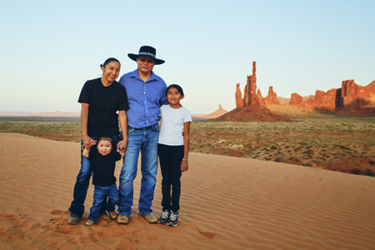
I’ve talked to a lot of people in this industry who are passionate about fixing clinical trials. Not many are juggling as many ideas at once as Kelsey Powell.
When we spoke, she walked me through multiple initiatives she’s working on, some tied directly to clinical research, others not. One of those has nothing to do with trials at all, focused instead on improving how agencies coordinate responses to missing Indigenous women and children. It’s ambitious, complicated, and, frankly, needed. That kind of range tells you something about how she operates.
Powell, who grew up on a reservation and remains closely tied to the Muscogee Creek Nation, is very much a Type A personality. Her energy is constant, her thinking is layered, and her sense of urgency is hard to miss (relentless might be the right word). It’s also what makes her perspective on clinical trials worth paying attention to. Because beneath all of that activity is a consistent theme: Many of the systems/solutions we’ve designed don’t really work for the people they’re supposed to serve.

Awareness: The First Barrier
Powell’s perspective is shaped by her time working in clinical operations across hospital systems and research sites. In that environment, she saw firsthand how entire communities, including the Native populations she is part of, exist outside the reach of clinical trials, not because they refuse to participate, but because they are never meaningfully invited. That gap became personal when her own family navigated a serious medical condition and later discovered a clinical trial had been available all along. No one had mentioned it, and that experience sharpened what she had already been seeing professionally.
In many of these communities, clinical research is not just underrepresented, it is practically invisible. It’s not a matter of patients opting out, they’re never getting in, and that distinction matters more than most people realize. “You can’t expect people to give you their time, their body, and their financial information, and then just trust you,” Powell said. “Especially in communities like this. That’s not how it works.”
History’s Affect On Trial Participation
Any conversation about Native American participation in clinical research quickly runs into a deeper issue. The history is not positive, and it is surely not forgotten. For example, Powell points to well-documented cases where biological samples were used beyond their intended purpose, most notably the Havasupai Tribe case. That case has become a defining example of how gaps in informed consent and misuse of biospecimens can erode trust in research. Blood samples collected for diabetes research were later used to study unrelated conditions like schizophrenia and migration patterns, without consent, a breach that still shapes how many Native communities view clinical research today. “Since the ’90s, tribes have largely stayed out of clinical research,” she said. “And when you understand why, it makes sense.”
That absence is not just a diversity issue. Powell argues it can affect the science itself, noting that if therapies are developed without fully understanding how they will perform across populations, the risks may not be visible until much later. A scenario no sponsor wants to encounter.
Education Before Recruitment
If awareness is the first barrier and trust is the second, Powell believes the industry has been trying to skip both and jump straight to recruitment. Thus, her early efforts took a different approach, focusing on education instead of enrollment targets.
While she was still working at a site, she secured a partnership with Sanofi to test whether community-level engagement could actually move the needle on recruitment. With funding from Sanofi’s diversity initiatives, she launched an outreach effort across Oklahoma focused on Native communities. The approach was simple but effective; show up where people already are, explain what clinical research is, and make it relevant.
She began attending local events — cancer summits, diabetes gatherings, community meetings — anywhere she could connect directly with tribal populations. Instead of pushing enrollment, she focused on conversations about what clinical trials are, how they work, and what participation involves.
The response was immediate.
“We saw hundreds of people engage at a single event,” she said. “Not because we were trying to enroll them in a study, but because we were finally explaining clinical research in a way that made sense to them.”
That experience reinforced a simple but often overlooked point. Lack of participation in a trial is not always the result of unwilling patients. More often, it is a lack of understanding. But through this experience she also learned that even when interest was there, the “system” behind it wasn’t built to support that interest.
So, Powell next began forming relationships with tribal leaders. In some cases, those conversations went further than she expected. Tribal organizations expressed interest not just in participating in research, but in building the “infrastructure” to support it.
A Big — And Risky — Next Step
She decided to leave her site job and, after helping a new regenerative medicine clinic get started (I told you she’s always juggling multiple initiatives), she went into full on build-it-myself mode. And she didn’t start small. She started meeting with the Inter-Tribal Council of the Five Civilized Tribes in Oklahoma, which is composed of Cherokee, Choctaw, Chickasaw, Muscogee (Creek), and Seminole. “Basically, I explained that I understood their stance on trial participation, but I also felt, consequently, that our people were limited with our healthcare options and were missing out on some of what modern medicine has to offer. I said, ‘I know what I'm doing; I know both sides of the issue. Trust me to figure out a solution.’ And they have.”
In addition to tribal leaders, Powell also began meeting with sponsors and sites. In doing so, she started to see a broader pattern. Even when patient interest exists, the system itself makes trial participation harder than it should be. For example, sites wait weeks for sponsor responses. Dropout becomes inevitable when patient expectations (and basic understanding) are not clear up front. Sponsors rely on incomplete or overly optimistic feasibility assumptions. Everyone is working, just not necessarily together.
She decided to tackle this fragmentation problem. If trust is built at the community level, and awareness is built through engagement, then the system itself has to support both. Otherwise, the same breakdowns will continue to happen. What she’s working on reflects that thinking. Rather than focusing narrowly on recruitment, her approach tries to connect the pieces that rarely operate in sync.
The Roots Of The Diversity Problem
It’s at this point in the story that I need to be cautious. As Chief Editor, I don’t normally interview vendors, and I never want to seem like I’m indirectly promoting any solution to an industry problem. What I will say is the platform that Powell has created — P.A.R.T.N.E.R. (Precision, Aligned Research, Trust, Networking, Engagement, and Retention) — is complex and not just software-based. There are elements like tribal liaisons and trainer/educators involved. She says a simple way to describe the platform is, “it’s a central intelligence database and ecosystem that connects sponsors, sites, tribal nations, and patients all together.” There are elements such as accountability scores and readiness and truthfulness tools. And it will work with any EHR and any CTMS system.
I’m trying to be vague not only to protect my editorial integrity, but also Powell’s product, which she showed me portions of during our call. “It’s still new,” she said. “We only have a prototype now, but we plan to go to market in January 2027.” Keep in mind, she built it herself with no formal training and “a little bit of AI.” She also has seven patents for it.
“In this industry, we keep saying we want diversity, but we’re not fixing the reasons patients aren’t joining trials,” concludes Powell. From her perspective, the industry doesn’t have a recruitment problem; it has a trust problem.