
Collaboration Isn't Sexy. That's Kind of the Point.

By Dan Schell, Chief Editor, Clinical Leader
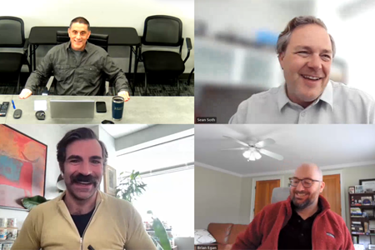
When SCRS launched the Collaborate Forward initiative last year, the goal was modest by design: Stop trying to overhaul an entire industry and start sharing what’s actually working. Several months after my initial conversation with Brian Egan about the early-stage effort, I caught up with him along with SCRS’s Sean Soth and Marcus Maleck to see where things stand now that the playbook — the initiative’s centerpiece — has officially arrived.
The short answer: The playbook is out, companies are reading it, and some are already coming back with questions about how to apply what they’ve learned to their own operations.
From Concept to Collaborating Stories
For Egan, the biggest revelation during the development process was how unsurprising the findings turned out to be. After speaking with more than 15 sponsors, CROs, solution providers, and site networks, a clear pattern emerged — the organizations doing collaboration well weren’t doing anything revolutionary. “This wasn’t aspirational. It was operational for those who were doing it right,” he said. “You’d hear people say, ‘Oh, why weren’t we doing this before? Why weren’t we talking to sites earlier in our processes?’” What set these companies apart wasn’t a proprietary method or cutting-edge technology; it was relationship-building that had simply been made a formal priority.
The playbook organizes those findings around four pillars:
- leadership buy-in
- agreed-upon information governance
- closing feedback loops
- measuring the operational impact of collaboration.
Egan was careful to note that none of those terms are trademarked or invented, they’re meant to become part of the everyday vocabulary people use when evaluating how they work with partners across the clinical research ecosystem.
The “Soft Skills” Problem
Soth traces the initiative’s origins back to a blunt conversation at an SCRS Global Summit right after the Eagle Awards ceremony. (Editor’s Note: For the awards, sites vote to recognize sponsors and CROs that approach site partnerships using best practices. The feedback spans both operational and financial elements, including payment frequency, contract approach, communication, use of technology, and more.) Soth explained to me that, although there are strong sponsor and CRO teams across the industry working to improve clinical operations, from a site’s perspective, the study experience can still be more than frustrating. Decisions and processes often carry business consequences that only the site ultimately bears. “One site attendee approached me after the awards and said they were frustrated,” Soth recalled. “They shared that their organization would not have voted for any of the industry options, including our finalists. They challenged us to rethink how we approach ‘communication.’”
That moment became a spark that led to a working group of roughly 20 organizations and surveys of hundreds of clinical research professionals who helped define what “meaningful collaboration” actually looks like in practice, before the team moved into individual qualitative interviews with the companies that contributed stories to the playbook. “The guidance was simple: Start small,” Soth said. “Share stories and examples of what is working so others can learn from them.” This effort evolved into the Collaborate Forward project and became a new approach to site insights within the Eagle Awards program.
Maleck, who spends much of his time speaking directly with sponsors and CROs on behalf of sites, said the initiative has given him something concrete to point to. “Now, I have this database of stories to say, ‘Hey, that reminded me of something that Sanofi did, or a conversation we had with Advarra,’” he explained. “We’re really talking about some of those softer skills that we need in the industry.” Having documented examples (e.g., Takeda’s “everyone is site accessible” mantra, Sanofi’s practice of gathering site feedback earlier and earlier in each study cycle) means SCRS can move beyond advocacy and into illustration.
Creating FOMO Around Collaboration
One of the more candid moments in our conversation came when Egan acknowledged the marketing challenge embedded in the whole effort. Collaboration, no matter how effective, isn’t a compelling sell on its own. “Technologies are sexy. Talking to your partners? Not sexy. Process improvements? Not sexy,” he said. “What we are going to have is industry leaders saying, ‘We’ve got better startup times. We’re getting better site reciprocity. We’re seeing improved NPS scores.’” The goal, as he framed it, is to create a kind of FOMO around collaboration, making the organizations that haven’t formalized these practices feel the competitive gap.
Early indicators suggest the strategy is starting to work. After reading specific case studies in the playbook, some companies have reached out to SCRS to asking how what they read maps directly to challenges they’re facing. A SCRS board meeting attended by more than 100 people recently opened with a simple question to the room: Who had collaborated with someone else on the call in the past week or two? Every hand went up. “Which goes to show you SCRS is here to be the place of collaboration,” Maleck said.
What Comes Next
For organizations wondering how to engage with the playbook, Egan’s advice is to resist the urge to overhaul everything at once. Pick a single pillar, apply it to one study and then see what happens. He’s particularly optimistic about feedback loops catching on, because sites already have strong feelings (i.e. they hate it when this happens) about investing time in questionnaires and surveys and hearing nothing back. Closing that loop, he argued, fundamentally changes the relationship dynamic and makes future collaboration easier to initiate.
The working group that produced the playbook has taken a temporary pause now that the document is published, but Soth said the next phase of work is already taking shape, with information governance emerging as the area the team wants to explore more deeply. How organizations capture a useful data point is one thing. How they socialize it internally, institutionalize it, and make it actionable across departments is a harder and less-documented problem. That’s where Collaborate Forward is headed, and I, for one, applaud SCRS’s efforts on this initiative.