
Former Big Pharma R&D Exec Shares Thoughts On Outsourcing
By Ed Miseta, Chief Editor, Clinical Leader

By Ed Miseta, editor, Outsourced Pharma and Clinical Leader
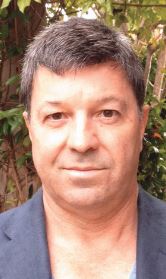 |
| Jim Hauske, president and founder, Sensor Pharmaceuticals |
Jim Hauske is President and founder of Sensor Pharmaceuticals, a company focused on the nexus of inflammation and metabolic disease. A virtual company, Sensor has established business relationships with AMRI, Absorption Systems, MPI, RenaSci, Ricerca and SciLucent. These relationships provide the means to synthesize, screen and assess, in disease models, new chemical entities designed by Sensor. The company has pre-clinical compounds representing several chemo types versus GPR119, GPR120 and TLR-4. All these molecules have demonstrated in vivo activity in relevant animal disease models.
Hauske began his career with Pfizer in Groton, Connecticut where he remained for 15 years and had responsibilities related to every component of discovery in a variety of disease states including infectious disease, inflammatory disease, behavioral disease and metabolic disease. One highlight of this portion of his career was the contributions he made to the project team which discovered the antibacterial Zithromax. He designed and synthesized the first member of the azamacrolide structure class, which provides the core of the marketed drug. Hauske also spent more than eight years at Sepracor, Inc. as senior VP of discovery. In addition to Sensor, he founded PsyCheNomicS, Inc., Ampla Pharmaceuticals, Inc., and Prexa Pharmaceuticals. Hauske shares his wisdom on clinical outsourcing.
Ed Miseta: What are the pros to outsourcing your preclinical /clinical research?
Hauske: I believe the single most significant aspect of out-sourcing pre-clinical research is the ability to control spend. In a sense, out-sourcing has provided a means for discovery program spend to more nearly resemble clinical development spend. During my tenure in the bricks and mortar environment, I was taught clinical development spend is most easily understood to resemble a faucet; that is, the spend for a clinical program is readily modulated and, most importantly, is easily turned completely off.
Miseta: What are the cons to outsourcing your clinical/preclinical research?
Hauske: We must always keep in mind the people we choose to join our teams are the single most important reason we succeed or fail. Although this is true for all discovery and development programs, whether in-sourced or out-sourced, it’s particularly important to know the individuals in the company you select. One needs to develop personal business relationships with the out-sourced management team and those members of the out-sourced team actually performing the work.
As with all human endeavors, it depends on the person. You have to know who will perform the experiment. When Jack Welch ran GE, he fired the trailing 10% of each team every year, noting everyone on the team knew who the trailing 10% were. Presumably, that included the individual managing the team. I observed the same sort of thing in my experience, so there are members of even the best drug discovery and drug development pharmaceutical organizations you would not trust to perform critical experiments. Some of the trailing 10% also found their way into some of the very best outsource providers. Thus, one must take pains to come to some understanding, or an assessment, of the true competency. This takes time, and despite one’s best efforts, in some cases a poor choice of service provider is made. The best way to minimize such an undesirable result is to develop strong personal relationships with a number of individuals within the organization and, especially, those most responsible for creating the corporate culture. When everything is moving along in a project, there’s little, or no, requirement for personal relationship; however, when something goes astray, you need to have strong personal connections to expeditiously get things back on track without causing pain to those actually performing the work.
Miseta: When would you choose to in-source clinical/preclinical research and why?
Hauske: I out-source everything. In my experience the chief reason to in-source must derive from some sort of “specialized” talent/ability/IP/technique only available to your organization and something which the organization is unwilling to divulge to an out-source provider. I really have never had something similar to the recipe for Coke, or Pepsi, which seem to be a well-kept corporate secrets. Although I did have a couple of cases of unique synthetic or biological competency, those cases never really made it beyond a very nice publication.
Miseta: What metrics do you use to determine if you should outsource your preclinical/clinical research?
Hauske: Expense is usually the chief metric; however, on the clinical development side, dealing with FDA is the determiner for my choice of clinical development partner. Unfortunately, in my experience, one pays a significant premium to access outsource clinical development providers with staff of the sort I describe. So, one needs pay a premium, since success in clinic more than offsets budget overruns. I’ve outsourced three clinical development programs. I have no regrets.
Miseta: Describe a situation when you wish you had outsourced sooner and why?
Hauske: I always wished I had outsourced sooner. If the program is successful, the success would have been seen at an earlier date and this impacts IP protection. For those failed programs, outsourcing sooner will define the failure more quickly and ultimately save money. It will also focus one’s attention on the next program and, hopefully, a more successful program.