
From Hint To Headline: FOMAT Acquires Site Network

By Dan Schell, Chief Editor, Clinical Leader
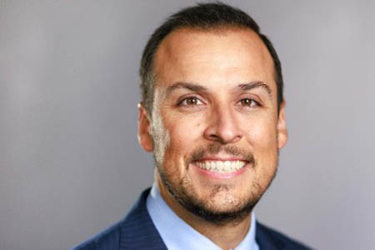
I had seen Nick Focil speak at conferences over the years, but we hadn’t formally met until the recent MAGI Clinical Research Conference. One night, over dinner with a small group, he hinted that something big was coming for FOMAT Medical, but stopped short of sharing details. I told him to keep me in the loop.
Not long after, my desk phone — yes, that relic — actually rang. It wasn’t Nick, but someone from his team looking to set up time for us to connect. We scheduled a Zoom call, and that’s when Nick, FOMAT’s CEO, walked me through the company’s acquisition of the sites associated with Topography Health (Editor's Note: Topography Health will continue to operate as a tech company.). He was also candid about how stressful the process had been, given that this was his first acquisition.
The deal expands FOMAT’s footprint in a meaningful way. The company had built a 26-site network, largely concentrated in California. The acquisition adds another 10 locations across six states, extending that model well beyond its original base. I followed up with a few additional questions over email. His responses are below.
You’ve built FOMAT largely as a California-based, community-embedded network. What specifically made the Topography Health sites the right acquisition to expand that model nationally, rather than continuing to grow organically?
Nick Focil: FOMAT has always believed in building deliberately rather than just expanding for the sake of scale. Organic growth for the past 14 years has worked well for us in California, but it’s inherently linear and takes significant time to replicate the depth of relationships and infrastructure we’ve built across the country.
Topography gave us the opportunity to accelerate our embedded research model nationally with a partner that already shares a similar philosophy around physician enablement and community-based care. Instead of starting from scratch in new markets, we’re integrating into an existing footprint that aligns culturally and operationally, which allows us to scale much faster without compromising quality.
This acquisition significantly expands your geographic footprint and gives you access to a much larger patient database. How do you translate that scale into something sponsors will actually feel: faster enrollment, better diversity, or something else?
Focil: The real value of scale is not just "more;" it is how quickly and precisely we can connect the right patients to the right studies, and how fast we can activate a site to speed up research timelines. By expanding our footprint with Topography's sites, it allows us to identify eligible patients earlier through structured prescreening, reduce screen failure rates, and open studies into sites that are already aligned and operationally ready. From a sponsor perspective, that translates into faster enrollment, more predictable timelines, and more representative patient populations.
Just as importantly, because this scale is built on an embedded model within community practices, it is not passive data. It is real, longitudinal patient relationships. That gives sponsors confidence not only in speed, but in retention, data quality, and overall study execution.
Both organizations have a strong focus on GI studies. Was that therapeutic alignment a primary driver of the deal, or more of a bonus that made integration easier?
Focil: GI alignment was definitely a strength, but it wasn’t the sole driver of the deal. Both organizations have built strong capabilities in GI, so there’s immediate synergy there, especially in areas like IBD, MASH, and GI cancers. That combined infrastructure will make us one of the largest digestive disease site networks in the U.S. where cloning budgets and rapid activation becomes inherent.
That said, the bigger rationale was strategic. How can we accelerate our scale without losing the spirit of our founding? It was about aligning two organizations that both believe in embedded research and community access. The GI overlap simply allows us to realize value more quickly in a TA where both teams already perform at a high level.
FOMAT’s model centers on embedding research in community medical groups rather than AMCs. How does this acquisition strengthen that strategy, and do you see it as a competitive differentiator as site networks continue to scale?
Focil: This acquisition reinforces what we believe is the future of clinical research, which is bringing trials into a community healthcare setting rather than relying solely on academic centers. By expanding this model nationally, we’re able to reach patients who are traditionally underrepresented in trials, work with physicians who are already managing these conditions day to day, and reduce friction for both patients and providers, all translating into better outcomes for drug development sponsors.
As site networks continue to scale, many are becoming more centralized or transactional. Our approach is different. We’re building depth within community practices, not just adding sites to a network. This combination of scale plus true integration into clinical care is what we see as a long-term competitive differentiator.
You mentioned this was your first acquisition and a stressful one. What did you learn going through the process that will shape how you approach future deals — or whether you pursue more at all?
Focil: Any time you do something for the first time, you want to get it right, because you're not playing a game. You're making decisions that affect the future of science, of people's careers, of entire research trajectories. That weight doesn't leave you.
What I'm proud of is that we were methodical. I had an exceptional team around me, and critically, Topography was just as excited as we were. That mutual energy matters more than people realize. It turned what could have been a grueling process into something that genuinely felt right.
I also want to be clear: This wasn't our first opportunity. It was our first that felt right. We passed on others, and I think that discipline is what made this one work. Now, having gone through due diligence and early integration, we have real playbooks. We know what to look for, and just as importantly, we know our non-negotiables. So, whether we pursue more deals will depend entirely on whether the right opportunity presents itself, not on any pressure to do deals for their own sake.